

ADD ANI AS A TRUSTED SOURCE
googleads
ANI Logo
Menu
Science

Do you know time restricted eating affects gene expression in areas of body, brain? Study reveals

Time-restricted eating has been shown in studies to have health benefits, including an increase in life span, making practises like intermittent fasting a hot topic in the wellness industry. However, how it affects the body at the molecular level and how those changes interact across multiple organ systems is unknown. Time-restricted eating has been shown in mice to affect gene expression in more than 22 different areas of the body and brain. The process by which genes become activated and respond to their surroundings by producing proteins is known as gene expression.

ANI Jan 07, 2023 15:39 IST googleads

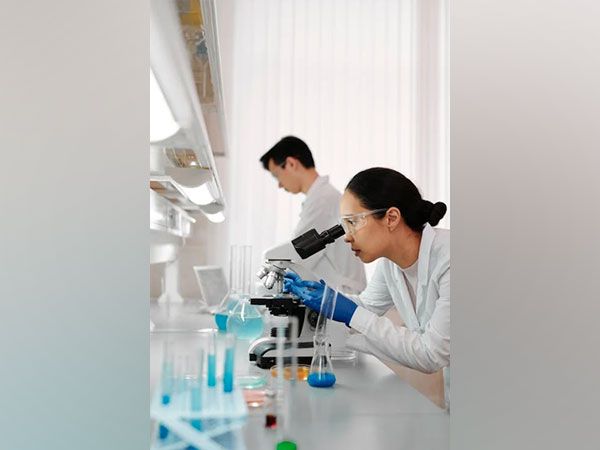
Representative Image

Washington [US], January 7 (ANI): Time-restricted eating has been shown in studies to have health benefits, including an increase in life span, making practices like intermittent fasting a hot topic in the wellness industry.
However, how it affects the body at the molecular level and how those changes interact across multiple organ systems is unknown. Time-restricted eating has been shown in mice to affect gene expression in more than 22 different areas of the body and brain. The process by which genes become activated and respond to their surroundings by producing proteins is known as gene expression.
The findings, published in Cell Metabolism, have implications for a variety of health conditions where time-restricted eating has been shown to be beneficial, including diabetes, heart disease, hypertension, and cancer.
"We found that there is a system-wide, molecular impact of time-restricted eating in mice," said Professor Satchidananda Panda, senior author and holder of the Rita and Richard Atkinson Chair at Salk. "Our results open the door for looking more closely at how this nutritional intervention activates genes involved in specific diseases, such as cancer."

For the study, two groups of mice were fed the same high-calorie diet. One group was given free access to food. The other group was restricted to eating within a feeding window of nine hours each day. After seven weeks, tissue samples were collected from 22 organ groups and the brain at different times of the day or night and analyzed for genetic changes. Samples included tissues from the liver, stomach, lungs, heart, adrenal gland, hypothalamus, different parts of the kidney and intestine, and different areas of the brain.
The authors found that 70 per cent of mouse genes respond to time-restricted eating.
"By changing the timing of food, we were able to change the gene expression not just in the gut or in the liver, but also in thousands of genes in the brain," said Panda.
Nearly 40 percent of genes in the adrenal gland, hypothalamus, and pancreas were affected by time-restricted eating. These organs are important for hormonal regulation. Hormones coordinate functions in different parts of the body and brain, and hormonal imbalance is implicated in many diseases from diabetes to stress disorders. The results offer guidance to how time-restricted eating may help manage these diseases.
Interestingly, not all sections of the digestive tract were affected equally. While genes involved in the upper two portions of the small intestine -- the duodenum and jejunum -- were activated by time-restricted eating, the ileum, at the lower end of the small intestine, was not. This finding could open a new line of research to study how jobs with shiftwork, which disrupts our 24-hour biological clock (called the circadian rhythm) impact digestive diseases and cancers. Previous research by Panda's team showed that time-restricted eating improved the health of firefighters, who are typically shift workers.
The researchers also found that time-restricted eating aligned the circadian rhythms of multiple organs of the body. "Circadian rhythms are everywhere in every cell," says Panda. "We found that time-restricted eating synchronized the circadian rhythms to have two major waves: one during fasting, and another just after eating. We suspect this allows the body to coordinate different processes." (ANI)


Get the App

What to Read Next

Science

Amphibians bounce-back from Earth’s greatest mass extinction

Amphibians bounce-back from Earth’s greatest mass extinction

Researchers at the University of Bristol discovered that ancient frog ancestors survived the biggest mass extinction of species by eating on freshwater prey that evaded terrestrial predators.

Read More
Science

New insights into how cancer evades the immune system: Study

New insights into how cancer evades the immune system: Study

Immunotherapy research primarily focuses on better recognition of cancer cells by the body's own immune system. Researchers at Amsterdam UMC and Moffitt Cancer Center have taken a different approach.

Read More
Science

Strand Life Sciences launches portal for rare disease diagnosis

Strand Life Sciences launches portal for rare disease diagnosis

Marking Rare Disease Day, Strand Life Sciences, a subsidiary of Reliance Industries and a leading genomics research company, has launched the StrandOmics Portal, an innovative digital platform designed to assist doctors in diagnosing rare diseases more efficiently.

Read More
Science

Opposing arrows of time emerge from certain quantum systems

Opposing arrows of time emerge from certain quantum systems

Researchers at the University of Surrey made a thought-provoking discovery. A new study reveals that opposing arrows of time can theoretically emerge from certain quantum systems.

Read More
Science

COVID-19 severity may be predicted by White Blood Cell Count

COVID-19 severity may be predicted by White Blood Cell Count

A COVID-19 diagnosis is no longer as frightening as it used to be, thanks to developments in treatment choices. However, a new study reveals that leukocyte (white blood cell) count may now be used to identify who is more likely to develop more significant disease symptoms.

Read More
Science

Thermal imaging may help fruits, veggies stay fresher longer: Study

Thermal imaging may help fruits, veggies stay fresher longer: Study

Before your favourite produce arrives at the grocery store, it must be carefully harvested and stored for extended periods of time. A recent University of Georgia assessment argues that new temperature sensing devices could make that procedure considerably easier, as agricultural issues are exacerbated by changing climates.

Read More
Science

Study reveals how reminders can eliminate age-related memory loss

Study reveals how reminders can eliminate age-related memory loss

A recent study from UT Arlington showed that setting reminders can reverse some age-related memory deficits. The findings represent a significant breakthrough in tackling the cognitive issues that older persons confront, particularly in the context of prospective memory, which is the ability to remember to complete an intended activity at the appropriate time, such as taking medication or attending appointments.

Read More
Science

Cancer cells of fat may enhance cancer treatment

Cancer cells of fat may enhance cancer treatment

A study by Van Andel Institute scientists suggests that restricting cancer cells' access to fat may enhance the effectiveness of certain cancer treatments.

Read More
Science

Biomarker may predict response to immunotherapy in liver cancer

Biomarker may predict response to immunotherapy in liver cancer

According to a preclinical study conducted by Weill Cornell Medicine researchers, it may soon be feasible to detect whether individuals with hepatocellular carcinoma, a kind of liver cancer, may benefit from immunotherapy.

Read More
Science

Study finds novel approach to treat neurological diseases

Study finds novel approach to treat neurological diseases

The matter of what causes complicated neurological disorders like Alzheimer's or multiple sclerosis continues to perplex scientists and doctors, with unknowns impeding early diagnosis and successful treatment.

Read More
Home About Us Our Products Advertise Contact Us Terms & Condition Privacy Policy

Copyright © aninews.in | All Rights Reserved.


