

ADD ANI AS A TRUSTED SOURCE
googleads
ANI Logo
Menu
Science

DNA sequence helps in understanding origins of jaws: Study

Researchers at Uppsala University have discovered and characterised a DNA sequence found in jawed vertebrates, such as sharks and humans, but absent in jawless vertebrates, such as lampreys. This DNA is important for the shaping of the joint surfaces during embryo development.

ANI Nov 30, 2022 23:15 IST googleads

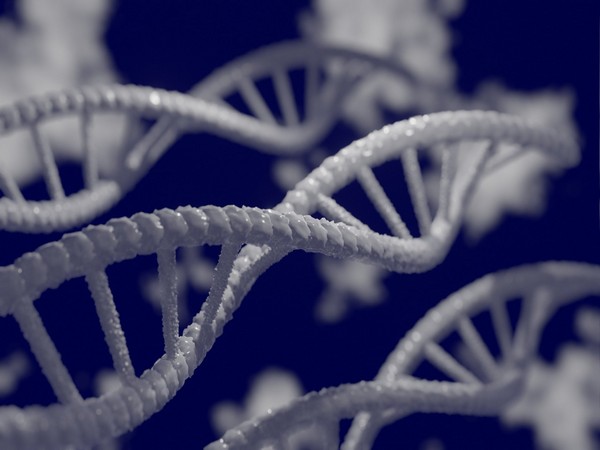
Representative Image

Washington [US], November 30 (ANI): Researchers at Uppsala University have discovered and characterised a DNA sequence found in jawed vertebrates, such as sharks and humans, but absent in jawless vertebrates, such as lampreys. This DNA is important for the shaping of the joint surfaces during embryo development.
The vast majority of vertebrate species living today, including humans, belong to the jawed vertebrate group. The development of articulating jaws during vertebrate evolution was one of the most significant evolutionary transitions from jawless to jawed vertebrates, taking place at least 423 million years ago. The lower and upper jaws were initially connected by the primary jaw joint. However, during the evolution of mammals this moved to the middle ear to enhance hearing and was replaced by the secondary jaw joint, which is how humans are constructed today.
The primary jaw joint is formed during embryonic development and has an active gene which contains sequence information for a specific protein -- transcription factor Nkx3.2. This protein has long been thought to have played a major role in the evolution of this jaw joint, but little was known before about how its gene activity is regulated in the jaw joint cells.
Typically, genes are activated with help from DNA sequences, known as enhancers, that do not contain gene sequence information. Furthermore, such 'regulatory' DNA can contribute to the activation of the gene only in a certain cell type and can be conserved among different animal species.
"We searched through the genome sequences of many different vertebrate species and only found the DNA sequence near the Nkx3.2 gene in jawed vertebrates -- not in jawless ones. When we injected these DNA sequences from jawed vertebrates into zebrafish embryos, they were all activated in the jaw joint cells. The fact that their ability to activate has been preserved for over 400 million years shows how important it is for jawed vertebrates," notes Tatjana Haitina, researcher at Uppsala University, who led the study.
"In experiments where we deleted the newly discovered DNA sequence from the zebrafish genome using the CRISPR/Cas9 technique, we saw that the early activation of the Nkx3.2 gene was reduced, which caused defects in the jaw joint shape. It turned out that these defects were later repaired, suggesting that there is additional regulatory DNA somewhere in the genome that controls the activation of the Nkx3.2 gene and is waiting to be discovered," adds Jake Leyhr, doctoral student student in the research team.
The researchers hope that their discovery is an important step towards eventually understanding the process behind the origins of vertebrate jaws. (ANI)


Get the App

What to Read Next

Science

New insights into how cancer evades the immune system: Study

New insights into how cancer evades the immune system: Study

Immunotherapy research primarily focuses on better recognition of cancer cells by the body's own immune system. Researchers at Amsterdam UMC and Moffitt Cancer Center have taken a different approach.

Read More
Science

Tool for detecting problems during protein synthesis

Tool for detecting problems during protein synthesis

Protein synthesis in eukaryotic cells--found in plants, animals, and fungi--involves more than just the straightforward ribosome assembly of amino acids.

Read More
Science

When devices can read human emotions without a camera: Study

When devices can read human emotions without a camera: Study

Tokyo Metropolitan University researchers employed long-term skin conductance measurements to distinguish between emotions. Volunteers were given videos representing frightening scenarios, family bonding, and humour, while their skin conductance was measured.

Read More
Science

'Nuroscience study results can be better predicted by AI'

'Nuroscience study results can be better predicted by AI'

Large language models, a type of AI that analyses text, can anticipate the results of proposed neuroscience studies more correctly than human experts, according to a new study led by UCL (University College London) researchers.

Read More
Science

Gut microbes play role in regulating stress responsiveness

Gut microbes play role in regulating stress responsiveness

A groundbreaking study has revealed the critical role of gut bacteria in regulating stress responses through interactions with the body's circadian rhythms.

Read More
Science

Cancer cells of fat may enhance cancer treatment

Cancer cells of fat may enhance cancer treatment

A study by Van Andel Institute scientists suggests that restricting cancer cells' access to fat may enhance the effectiveness of certain cancer treatments.

Read More
Science

Bacterial vaccine demonstrates potential as cancer treatment

Bacterial vaccine demonstrates potential as cancer treatment

Columbia researchers developed probiotic bacteria that train the immune system to eliminate cancer cells, paving the way for a new class of cancer vaccinations that take advantage of bacteria's innate tumour-targeting abilities. These microbial cancer vaccines can be tailored to each person's specific original tumour and metastases, perhaps preventing future recurrences.

Read More
Science

Alternate method to study changes during DNA replication process

Alternate method to study changes during DNA replication process

Researchers at Colorado State University discovered an alternative way for studying alterations during the DNA replication process in lab settings using genetically modified yeast. The novel methodology provides a clearer picture than current pharmacological methods for understanding cell cycle arrest, a fundamental mechanism critical to cancer treatment and genetic concerns.

Read More
Science

Alzheimer’s disease can damage brain in two phases

Alzheimer’s disease can damage brain in two phases

Alzheimer's disease may cause brain damage in two stages, according to new research supported by the National Institutes of Health (NIH) that uses sophisticated brain mapping methods.

Read More
Science

Study finds new ways to prevent, treat type 2 diabetes

Study finds new ways to prevent, treat type 2 diabetes

Pancreatic cells, like human cells, have a limit to how much stress they can handle before they start to break down. Through overstimulation of these cells, certain stresses like inflammation and hyperglycemia lead to the onset of type 2 diabetes.

Read More
Home About Us Our Products Advertise Contact Us Terms & Condition Privacy Policy

Copyright © aninews.in | All Rights Reserved.


