

ADD ANI AS A TRUSTED SOURCE
googleads
ANI Logo
Menu
Science

Disproportionate fall in safe working hours due to heat exposure for poeple living in deforested locations, finds study

Washington [US], January 2 (ANI): A team of researchers studied how many safe working hours people living in the tropics have lost due to local temperature change associated with deforestation during the past 15 years.

ANI Jan 02, 2022 13:38 IST googleads

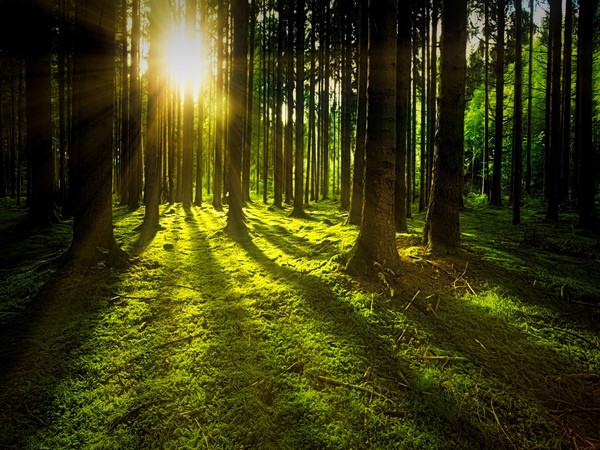
Representative image

Washington [US], January 2 (ANI): A team of researchers studied how many safe working hours people living in the tropics have lost due to local temperature change associated with deforestation during the past 15 years.
The study has been published in the 'One Earth Journal'.
"There is a hugely disproportionate decrease in safe work hours associated with heat exposure for people in deforested locations versus people in forested locations just over the past 15 or 20 years," said first author Luke Parsons, a climate researcher at Duke University.
"There is a small amount of climate change that has happened over the same 15-year period, but the increase in humid heat exposure for people living in deforested relative to forested locations was much larger than that from recent climate change," he added.
Previous research had revealed deforestation is associated with an increase in local temperature. Trees block out the sun's radiation and provide shade. They also cool down the air via evapotranspiration, a process when plants transport water from the soil then evaporate water from the leaf surface, similar to how sweating cools the skin.
"The trees in the tropics seem to limit the maximum temperatures that the air can reach. Once we cut those trees down, we lose that cooling service from the trees, and it can get really, really hot," Parsons said.
"In the Brazilian Amazon, for example, where huge swaths of the rainforest have been cleared in the last 15 or 20 years, the afternoons can be up to 10 degrees Celsius warmer than forested regions," he added.
The study went a step further and estimated the number of people who live in locations affected by warming associated with deforestation. Using satellite data and meteorological observations, Parsons and his team tracked the local temperature and humidity in 94 low-latitude countries with tropical forests, including countries in the Americas, Africa, and Asia, from 2003 to 2018.
They estimated that in recently deforested locations, almost 5 million people lost at least half an hour of safe work time per day -- when the weather outside is too hot and humid to safely conduct heavy labour. Among them, at least 2.8 million people are outdoor workers that perform heavy physical work in the agriculture and construction sectors. Heavy physical work increased the heat generated within the human body, which when combined with hot and humid environments, increased the risk of heat strain and heat-related illnesses, including heatstroke, which can be fatal.
"Those tropical locations are already on the edge of being too hot and humid to safely work because of climate change. Deforestation may push these places over the edge into even more unsafe work environments," Parsons said.
Notably, this study estimated that there are nearly 100,000 people living in the tropics in locations that lost more than 2 hours of safe work time per day due to temperature increases associated with deforestation, and over 90 per cent of those people live in Asia. Parsons explained that the disproportionate distribution is likely due to Asia's highly dense population.
"I think the research has a positive message and a negative message. The negative message is that if we cut down trees, we not only cause problems for the ecosystem and global carbon emissions, but we also lose local cooling services that provide a comfortable and safe place to work. But the positive message is that if we can prevent forest loss, we can maintain cooling services along with all the other benefits forests provide. Importantly, the relationship between the health of the forests and nearby people offers an additional, locally relevant reason to prevent tree loss," he said. (ANI)


Get the App

What to Read Next

Science

Amphibians bounce-back from Earth’s greatest mass extinction

Amphibians bounce-back from Earth’s greatest mass extinction

Researchers at the University of Bristol discovered that ancient frog ancestors survived the biggest mass extinction of species by eating on freshwater prey that evaded terrestrial predators.

Read More
Science

Scientists use AI to better understand nanoparticles: Study

Scientists use AI to better understand nanoparticles: Study

A group of scientists has created a way to illuminate the dynamic behavior of nanoparticles, which are essential components in the production of pharmaceuticals, electronics, and industrial and energy-conversion materials.

Read More
Science

New technology enhances gravitational-wave detection: Study

New technology enhances gravitational-wave detection: Study

A team of physicists led by Jonathan Richardson of the University of California, Riverside, demonstrated how new optical technology can extend the detection range of gravitational-wave observatories such as the Laser Interferometer Gravitational-Wave Observatory, or LIGO, and pave the way for future observatories.

Read More
Science

Discovering the genetics of climate adaptation 

Discovering the genetics of climate adaptation 

As climate change accelerates, plants are under increasing pressure to adapt to changing habitats and environmental conditions.

Read More
Science

Weather change linked to heightened risk of Salmonella outbreaks

Weather change linked to heightened risk of Salmonella outbreaks

According to new research from the University of Surrey, climate change has an impact on Salmonella spread. This study builds on prior work by the researchers, which discovered that weather change is contributing to the spread of deadly diarrhoeal illnesses.

Read More
Science

Astronomers find the smallest main-belt asteroids ever detected:

Astronomers find the smallest main-belt asteroids ever detected:

The majority of known asteroids orbit inside the main asteroid belt, which is positioned between Mars and Jupiter at an average distance of around 250 million km from Earth. Since the discovery of the first asteroid in 1801, about 750.000 asteroids have been identified, primarily in the last decade thanks to several optical surveys that examine the sky on clear nights.

Read More
Science

Study finds connection between quantum theory, information theory

Study finds connection between quantum theory, information theory

"Our results have no clear or direct application right now. It's basic research that lays the foundation for future technologies in quantum information and quantum computers. There's enormous potential for complete discoveries in many different research fields," said Guilherme B Xavier, a researcher in quantum communication at Linkoping University, Sweden.

Read More
Science

When devices can read human emotions without a camera: Study

When devices can read human emotions without a camera: Study

Tokyo Metropolitan University researchers employed long-term skin conductance measurements to distinguish between emotions. Volunteers were given videos representing frightening scenarios, family bonding, and humour, while their skin conductance was measured.

Read More
Science

'Nuroscience study results can be better predicted by AI'

'Nuroscience study results can be better predicted by AI'

Large language models, a type of AI that analyses text, can anticipate the results of proposed neuroscience studies more correctly than human experts, according to a new study led by UCL (University College London) researchers.

Read More
Science

Thermal imaging may help fruits, veggies stay fresher longer: Study

Thermal imaging may help fruits, veggies stay fresher longer: Study

Before your favourite produce arrives at the grocery store, it must be carefully harvested and stored for extended periods of time. A recent University of Georgia assessment argues that new temperature sensing devices could make that procedure considerably easier, as agricultural issues are exacerbated by changing climates.

Read More
Home About Us Our Products Advertise Contact Us Terms & Condition Privacy Policy

Copyright © aninews.in | All Rights Reserved.
