

ADD ANI AS A TRUSTED SOURCE
googleads
Menu
Science

Did you know sea temperatures control distribution of European marine fish?

The significance of temperature in determining where different fish species are located is demonstrated through an examination spanning from southern Portugal to northern Norway.

ANI Mar 10, 2023 20:54 IST googleads

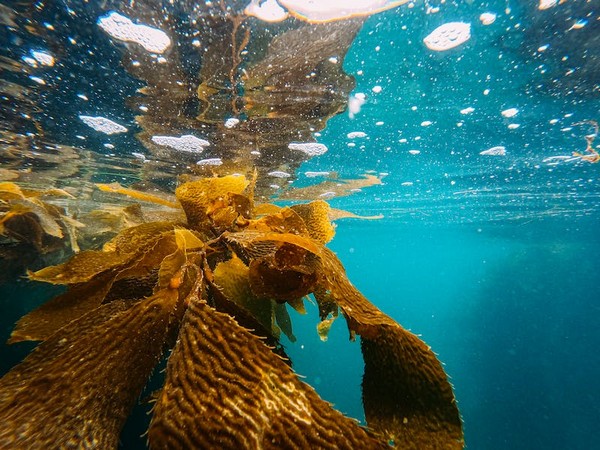
Representative Image

Bristol [UK], March 10 (ANI): The significance of temperature in determining where different fish species are located is demonstrated through an examination spanning from southern Portugal to northern Norway.
As a result of the study's confirmation that temperature is a major factor in the large-scale geographic variation in fish assemblages, it is now possible to utilise climate projections to determine where specific species will be most prevalent by 2050 and 2100. The findings demonstrate that generally speaking, regions with greater warming are projected to have the largest changes at the community level, with the consequences being more evident further north - at higher latitudes.
The study was the first of its kind to use data from fisheries surveys over such a wide area to assess how environmental variation drives species distributions. The study included 198 marine fish species from 23 surveys and 31,502 samples collected by fisheries scientists between 2005 and 2018.
Martin Genner, Professor of Evolutionary Ecology at the University of Bristol's School of Biological Sciences, who guided the research, said, "This unique study brings together fisheries survey data from across this vitally important marine ecosystem. Using this information, we are able to conclusively demonstrate the broad-scale importance of sea temperature in controlling how fish communities assemble."
Louise Rutterford, lead author of the study that was conducted at both Bristol and Exeter Universities said, "The team's analysis showed how temperature proved to be the most critical variable for determining where species are found, with water depth and salinity also being important factors. This enabled us to use predictive models to learn more about how fish will respond to climate warming over the coming decades."
Professor Steve Simpson, who supervised the research, added, "The study adds to a growing body of evidence indicating that future climate-driven warming will lead to widespread changes in fish communities, potentially resulting in changes to the catches of commercial fisheries across the region." (ANI)


Get the App

What to Read Next

Science

New method guides magnetism without magnets

New method guides magnetism without magnets

Researchers at Paul Scherrer Institute PSI have demonstrated an innovative method to control magnetism in materials using an energy-efficient electric field.

Read More
Science

New insights into how cancer evades the immune system: Study

New insights into how cancer evades the immune system: Study

Immunotherapy research primarily focuses on better recognition of cancer cells by the body's own immune system. Researchers at Amsterdam UMC and Moffitt Cancer Center have taken a different approach.

Read More
Science

New device could allow you to taste cake in virtual reality

New device could allow you to taste cake in virtual reality

The 'e-Taste' interface employs sensors and wireless chemical dispensers to enable remote taste perception, often known as gestation. Field testing done by researchers at The Ohio State University confirmed the device's ability to digitally simulate a range of taste intensities, while still offering variety and safety for the user.

Read More
Science

Strand Life Sciences launches portal for rare disease diagnosis

Strand Life Sciences launches portal for rare disease diagnosis

Marking Rare Disease Day, Strand Life Sciences, a subsidiary of Reliance Industries and a leading genomics research company, has launched the StrandOmics Portal, an innovative digital platform designed to assist doctors in diagnosing rare diseases more efficiently.

Read More
Science

Study reveals impact of animals as architects of Earth

Study reveals impact of animals as architects of Earth

A new study led by Professor Gemma Harvey from Queen Mary University of London has revealed how hundreds of species shape the landscapes we depend on, from termite mounds visible from space to beavers creating wetlands and hippos carving drainage systems.

Read More
Home About Us Our Products Advertise Contact Us Terms & Condition Privacy Policy

Copyright © aninews.in | All Rights Reserved.
