

ADD ANI AS A TRUSTED SOURCE
googleads
Menu
Science

Did you know Bats use death metal "growls" to make social calls?

Bats use distinct structures in the larynx to produce high-frequency echolocation calls and lower-frequency social calls, according to a study by Coen Elemans at the University of Southern Denmark and colleagues, published in the open-access journal PLOS Biology. The structures used to make the low-pitched calls are analogous to those used by death metal vocalists in their growls.

ANI Nov 30, 2022 04:35 IST googleads

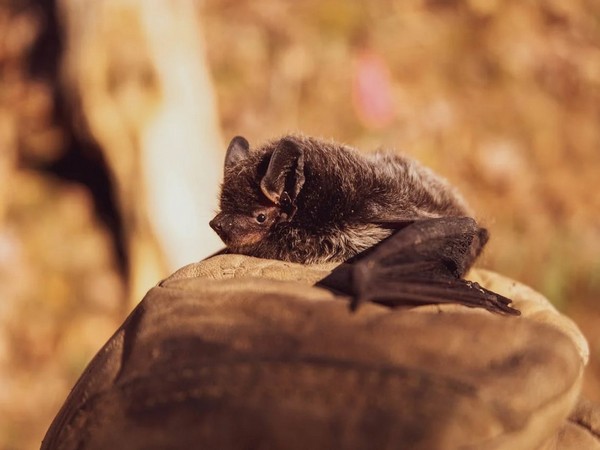
Representative Image

Copenhagen [Denmark], November 30 (ANI): According to a study published in the open-access journal PLOS Biology by Coen Elemans at the University of Southern Denmark and colleagues, bats use unique regions in the larynx to create high-frequency echolocation calls and lower-frequency social cries. The structures employed to produce low-pitched calls are similar to those used by death metal vocalists to produce growls.
Most mammals, including humans, have a vocal range of 3 to 4 octaves, but echolocating bats have a vocal range of 7 octaves. Their echolocating and social sounds have a frequency range of 1 to 120 kilohertz, making them unique among mammals.
Researchers extracted the larynx from five adult Daubenton's bats (Myotis daubentonii), mounted them, and filmed them at 250,000 frames per second while applying a flow of air to mimic natural vocalisation to better understand how different vocal structures allow bats to produce such a diverse range of calls. The researchers then utilised machine learning to reconstruct the movements of vocal membranes concealed by other components.
They discovered that air pressure caused self-sustaining vibrations in the vocal membrane at frequencies ranging from 10 to 70 kilohertz, which was enough to create high-frequency echolocation calls. Thick folds of membrane slightly above the vocal cords, known as "ventricular folds," vibrated at frequencies ranging from 1 to 3 kilohertz and are likely involved in the animals' lower-frequency social cries.
Humans may also produce low-frequency vocalisations using their ventricular folds, such as death metal growls and Tuvan throat singing.
The research is the first to explicitly observe self-sustaining vibrations in bat vocal structures, which can produce echolocation and social cries. According to scientists, natural selection for high-frequency calls for echolocating prey and much lower-frequency calls for social communication has caused unique evolutionary pressures that have extended the vocal range of bats.
The authors added, "We show that bats vibrate extremely thin and light membranes extending from their vocal folds to make their high-frequency ultrasonic calls for echolocation. To extend their limited lower vocal range, bats make aggressive calls with their ventricular folds - as in death metal growls." (ANI)


Get the App

What to Read Next

Science

New method guides magnetism without magnets

New method guides magnetism without magnets

Researchers at Paul Scherrer Institute PSI have demonstrated an innovative method to control magnetism in materials using an energy-efficient electric field.

Read More
Science

New insights into how cancer evades the immune system: Study

New insights into how cancer evades the immune system: Study

Immunotherapy research primarily focuses on better recognition of cancer cells by the body's own immune system. Researchers at Amsterdam UMC and Moffitt Cancer Center have taken a different approach.

Read More
Science

New device could allow you to taste cake in virtual reality

New device could allow you to taste cake in virtual reality

The 'e-Taste' interface employs sensors and wireless chemical dispensers to enable remote taste perception, often known as gestation. Field testing done by researchers at The Ohio State University confirmed the device's ability to digitally simulate a range of taste intensities, while still offering variety and safety for the user.

Read More
Science

Strand Life Sciences launches portal for rare disease diagnosis

Strand Life Sciences launches portal for rare disease diagnosis

Marking Rare Disease Day, Strand Life Sciences, a subsidiary of Reliance Industries and a leading genomics research company, has launched the StrandOmics Portal, an innovative digital platform designed to assist doctors in diagnosing rare diseases more efficiently.

Read More
Science

Study reveals impact of animals as architects of Earth

Study reveals impact of animals as architects of Earth

A new study led by Professor Gemma Harvey from Queen Mary University of London has revealed how hundreds of species shape the landscapes we depend on, from termite mounds visible from space to beavers creating wetlands and hippos carving drainage systems.

Read More
Home About Us Our Products Advertise Contact Us Terms & Condition Privacy Policy

Copyright © aninews.in | All Rights Reserved.


