

ADD ANI AS A TRUSTED SOURCE
googleads
ANI Logo
Menu
Science

Did you know ancient amphibians had their bones cooked?

Scientists have solved a decades-long mystery as to why ancient tetrapods - amphibian-like creatures that lived over 300 million years ago - preserved in one of Ireland's most important fossil sites seemingly had their bones cooked after they died.

ANI Dec 07, 2022 14:31 IST googleads

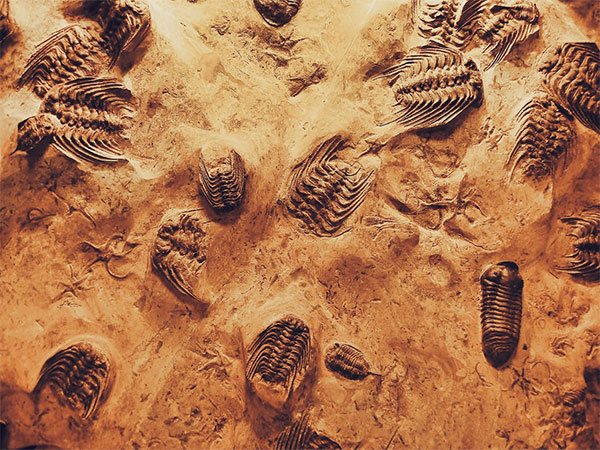
Representative Image

Dublin [Ireland], December 7 (ANI): Researchers now know why ancient tetrapods, which resembled amphibians and lived more than 300 million years ago, appeared to have had their bones burned after passing away in one of Ireland's most significant fossil sites.
One of Ireland's most significant fossil sites, the Jarrow Assemblage contains some of the earliest amphibians to have lived on land. In Co. Kilkenny, these fossils were discovered in a coal seam.
The interior bone morphology of the fossils from this site has been changed from their original state, making it impossible to discern fine details.
Scientists are perplexed as to the reason for this transformation, which is typically attributed to acid dissolving the bones during the first burial of the animals. Up until now, that is.
In order to investigate the causes of this alteration, a team of scientists from Trinity College Dublin, University College Dublin, National University of Ireland, Galway, the University of Birmingham, and the Gemological Institute of America combined computed tomography and laser ablation to produce X-Ray images of the fossil and analyse the chemistry of the bones.
Dr. Aodhan O Gogain, from Trinity's School of Natural Sciences, is the lead author of the study. He said, "Normally in fossil bone, we see that the internal original structure is preserved. But when we looked at the X-Ray images of fossils from Jarrow we see that no internal bone morphology has been preserved and that bones have been partially replaced by the surrounding coal."
The team also found apatite preserved in the bones. Dr Gary O'Sullivan, a co-author in the study said, "The chemistry of the apatite crystals can tell us a lot about how it formed, whether it grew organically in the animal, formed when the animal was being buried or whether some other factors influenced its growth. Apatite is a major constituent of living bone so it is no surprise we find some preserved in these bones. However, when we look at the chemistry of apatite in the bones from Jarrow we find that this apatite was formed by heated fluids within the Earth
Dr Aodhan O Gogain added, "We have also been able to radiometrically date the apatite which shows it formed during a time when all the continents on Earth were coming together and colliding to form the supercontinent Pangaea. As these continents collided, they formed mountain belts with super-heated subterranean fluids flowing off them. It is these super-heated fluids, which flowed throughout Ireland that cooked and melted the bones of these fossils causing the alteration we see today."
Trinity's Dr Patrick Wyse Jackson, another co-author said, "The Jarrow assemblage is of major scientific importance and is a significant element of Ireland's geo-heritage. It is great that finally the question of what altered the fossil bones of these animals has been resolved." (ANI)


Get the App

What to Read Next

Science

New method guides magnetism without magnets

New method guides magnetism without magnets

Researchers at Paul Scherrer Institute PSI have demonstrated an innovative method to control magnetism in materials using an energy-efficient electric field.

Read More
Science

New insights into how cancer evades the immune system: Study

New insights into how cancer evades the immune system: Study

Immunotherapy research primarily focuses on better recognition of cancer cells by the body's own immune system. Researchers at Amsterdam UMC and Moffitt Cancer Center have taken a different approach.

Read More
Science

New device could allow you to taste cake in virtual reality

New device could allow you to taste cake in virtual reality

The 'e-Taste' interface employs sensors and wireless chemical dispensers to enable remote taste perception, often known as gestation. Field testing done by researchers at The Ohio State University confirmed the device's ability to digitally simulate a range of taste intensities, while still offering variety and safety for the user.

Read More
Science

Strand Life Sciences launches portal for rare disease diagnosis

Strand Life Sciences launches portal for rare disease diagnosis

Marking Rare Disease Day, Strand Life Sciences, a subsidiary of Reliance Industries and a leading genomics research company, has launched the StrandOmics Portal, an innovative digital platform designed to assist doctors in diagnosing rare diseases more efficiently.

Read More
Science

Study reveals impact of animals as architects of Earth

Study reveals impact of animals as architects of Earth

A new study led by Professor Gemma Harvey from Queen Mary University of London has revealed how hundreds of species shape the landscapes we depend on, from termite mounds visible from space to beavers creating wetlands and hippos carving drainage systems.

Read More
Science

Opposing arrows of time emerge from certain quantum systems

Opposing arrows of time emerge from certain quantum systems

Researchers at the University of Surrey made a thought-provoking discovery. A new study reveals that opposing arrows of time can theoretically emerge from certain quantum systems.

Read More
Science

COVID-19 severity may be predicted by White Blood Cell Count

COVID-19 severity may be predicted by White Blood Cell Count

A COVID-19 diagnosis is no longer as frightening as it used to be, thanks to developments in treatment choices. However, a new study reveals that leukocyte (white blood cell) count may now be used to identify who is more likely to develop more significant disease symptoms.

Read More
Science

Seals can essentially act as 'smart sensors': Study

Seals can essentially act as 'smart sensors': Study

A new study by marine biologists reports that seals can essentially act as 'smart sensors' for monitoring fish populations in the ocean's eerily dim 'twilight zone.'

Read More
Science

New technology enhances gravitational-wave detection: Study

New technology enhances gravitational-wave detection: Study

A team of physicists led by Jonathan Richardson of the University of California, Riverside, demonstrated how new optical technology can extend the detection range of gravitational-wave observatories such as the Laser Interferometer Gravitational-Wave Observatory, or LIGO, and pave the way for future observatories.

Read More
Science

Discovery of unexpected collagen structure to influence research

Discovery of unexpected collagen structure to influence research

Collagen, the body's most abundant protein, has long been considered a predictable structural component of tissues.

Read More
Home About Us Our Products Advertise Contact Us Terms & Condition Privacy Policy

Copyright © aninews.in | All Rights Reserved.


