

ADD ANI AS A TRUSTED SOURCE
googleads
ANI Logo
Menu
Science

Diabetic drugs can reduce Alzheimer's disease risk

Washington [US], August 15 (ANI): People taking certain drugs to lower blood sugar for type 2 diabetes were found to have less amyloid in the brain, which is a biomarker of Alzheimer's disease.

ANI Aug 15, 2021 23:45 IST googleads

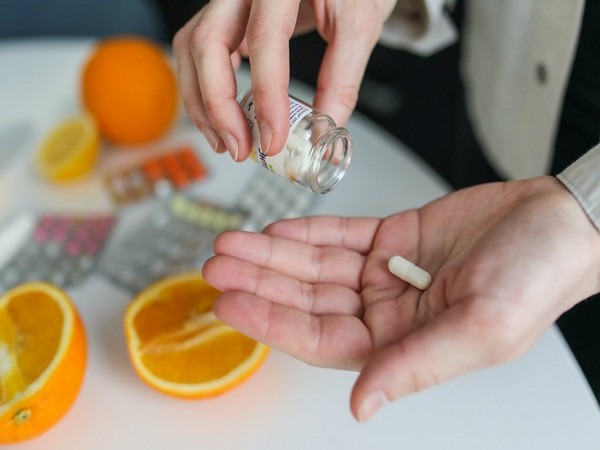
Representative Image

Washington [US], August 15 (ANI): People taking certain drugs to lower blood sugar for type 2 diabetes were found to have less amyloid in the brain, which is a biomarker of Alzheimer's disease.
The findings of the study were published in the journal 'American Academy of Neurology'.
The study also found people taking these drugs, called dipeptidyl peptidase-4 inhibitors, showed slower cognitive decline than people in the other two groups.
In people with type 2 diabetes, the body no longer efficiently uses insulin to control blood sugar.
Dipeptidyl peptidase-4 inhibitors, also known as gliptins, can be prescribed when other diabetes drugs do not work. They help control blood sugar when combined with diet and exercise.
"People with diabetes have been shown to have a higher risk of Alzheimer's disease, possibly due to high blood sugar levels, which have been linked to the buildup of amyloid-beta in the brain," said study author Phil Hyu Lee, MD, PhD, of Yonsei University College of Medicine in Seoul, South Korea.
"Not only did our study show that people taking dipeptidyl peptidase-4 inhibitors to lower blood sugar levels had less amyloid in their brains overall, but it also showed lower levels in areas of the brain involved in Alzheimer's disease," added Lee.
The study involved 282 people with an average age of 76 who were followed up to six years. All had been diagnosed with either pre-clinical, early or probable Alzheimer's disease.
Of the group, 70 people had diabetes and were being treated with dipeptidyl peptidase-4 inhibitors, 71 had diabetes but were not being treated with the drugs and 141 did not have diabetes.
Those without diabetes were matched to those with diabetes for age, sex, and education levels. All had similar scores on cognitive tests at the start of the study.
Participants had brain scans to measure the amount of amyloid in the brain. Researchers found that people with diabetes who took the drugs had lower average amounts of amyloid plaques in the brain compared to people with diabetes who did not take the drugs and compared to people who did not have diabetes.
All participants took common thinking and memory test called the Mini-Mental State Exam (MMSE) on average, every 12 months for 2.5 years.
Questions included asking a person to count backwards from 100 by sevens or copying a picture on a piece of paper. Scores on the test ranged from zero to 30.
Researchers found that people with diabetes who took the drugs had an average annual decline of 0.87 points on their MMSE score, while people with diabetes who did not take the drugs had an average annual decline of 1.65 points. People without diabetes scored an average annual decline of 1.48 points.
When researchers adjusted for other factors that could affect test scores, they found that the scores of the people taking the drug declined by 0.77 points per year more slowly than the people who did not take the drug.
"Our results showing less amyloid in the brains of people taking these medications and less cognitive decline, when compared to people without diabetes raises the possibility that these medications may also be beneficial for people without diabetes who have thinking and memory problems," said Lee.
"More research is needed to demonstrate whether these drugs may have neuroprotective properties in all people," added Lee.
A limitation of the study was that data were not available to show the accumulation of amyloid in participants' brains over time. This study did not show cause and effect. It only showed an association.
The study was supported by the Korean Healthy Industry Development Institute and the Korean Ministry of Health and Welfare. (ANI)


Get the App

What to Read Next

Science

Amphibians bounce-back from Earth’s greatest mass extinction

Amphibians bounce-back from Earth’s greatest mass extinction

Researchers at the University of Bristol discovered that ancient frog ancestors survived the biggest mass extinction of species by eating on freshwater prey that evaded terrestrial predators.

Read More
Science

Scientists use AI to better understand nanoparticles: Study

Scientists use AI to better understand nanoparticles: Study

A group of scientists has created a way to illuminate the dynamic behavior of nanoparticles, which are essential components in the production of pharmaceuticals, electronics, and industrial and energy-conversion materials.

Read More
Science

Strand Life Sciences launches portal for rare disease diagnosis

Strand Life Sciences launches portal for rare disease diagnosis

Marking Rare Disease Day, Strand Life Sciences, a subsidiary of Reliance Industries and a leading genomics research company, has launched the StrandOmics Portal, an innovative digital platform designed to assist doctors in diagnosing rare diseases more efficiently.

Read More
Science

COVID-19 severity may be predicted by White Blood Cell Count

COVID-19 severity may be predicted by White Blood Cell Count

A COVID-19 diagnosis is no longer as frightening as it used to be, thanks to developments in treatment choices. However, a new study reveals that leukocyte (white blood cell) count may now be used to identify who is more likely to develop more significant disease symptoms.

Read More
Science

New technology enhances gravitational-wave detection: Study

New technology enhances gravitational-wave detection: Study

A team of physicists led by Jonathan Richardson of the University of California, Riverside, demonstrated how new optical technology can extend the detection range of gravitational-wave observatories such as the Laser Interferometer Gravitational-Wave Observatory, or LIGO, and pave the way for future observatories.

Read More
Science

Weather change linked to heightened risk of Salmonella outbreaks

Weather change linked to heightened risk of Salmonella outbreaks

According to new research from the University of Surrey, climate change has an impact on Salmonella spread. This study builds on prior work by the researchers, which discovered that weather change is contributing to the spread of deadly diarrhoeal illnesses.

Read More
Science

Astronomers find the smallest main-belt asteroids ever detected:

Astronomers find the smallest main-belt asteroids ever detected:

The majority of known asteroids orbit inside the main asteroid belt, which is positioned between Mars and Jupiter at an average distance of around 250 million km from Earth. Since the discovery of the first asteroid in 1801, about 750.000 asteroids have been identified, primarily in the last decade thanks to several optical surveys that examine the sky on clear nights.

Read More
Science

Study finds connection between quantum theory, information theory

Study finds connection between quantum theory, information theory

"Our results have no clear or direct application right now. It's basic research that lays the foundation for future technologies in quantum information and quantum computers. There's enormous potential for complete discoveries in many different research fields," said Guilherme B Xavier, a researcher in quantum communication at Linkoping University, Sweden.

Read More
Science

When devices can read human emotions without a camera: Study

When devices can read human emotions without a camera: Study

Tokyo Metropolitan University researchers employed long-term skin conductance measurements to distinguish between emotions. Volunteers were given videos representing frightening scenarios, family bonding, and humour, while their skin conductance was measured.

Read More
Science

'Nuroscience study results can be better predicted by AI'

'Nuroscience study results can be better predicted by AI'

Large language models, a type of AI that analyses text, can anticipate the results of proposed neuroscience studies more correctly than human experts, according to a new study led by UCL (University College London) researchers.

Read More
Home About Us Our Products Advertise Contact Us Terms & Condition Privacy Policy

Copyright © aninews.in | All Rights Reserved.
