

ADD ANI AS A TRUSTED SOURCE
googleads
ANI Logo
Menu
Science

Deep ocean currents around Antarctica headed for collapse: Research

Such decline of this ocean circulation will stagnate the bottom of the oceans and generate further impacts affecting climate and marine ecosystems for centuries to come.

ANI Mar 31, 2023 15:00 IST googleads

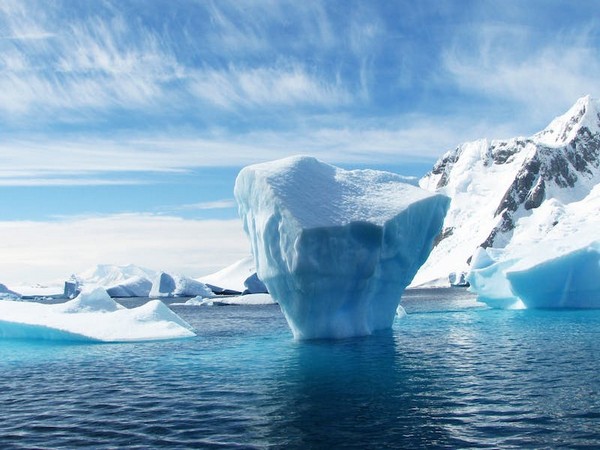
Representative Image.

Washington [US], March 31 (ANI): Scientists apprehend that the deep ocean circulation that forms around Antarctica could be headed for collapse">collapse.
Such decline of this ocean circulation will stagnate the bottom of the oceans and generate further impacts affecting climate and marine ecosystems for centuries to come.
The results are detailed in a new study coordinated by Scientia Professor Matthew England, Deputy Director of the ARC Centre for Excellence in Antarctic Science (ACEAS) at UNSW Sydney. The work, published today in Nature, includes lead author Dr. Qian Li -- formerly from UNSW and now at the Massachusetts Institute of Technology (MIT) -- as well as co-authors from the Australian National University (ANU) and CSIRO.
Cold water that sinks near Antarctica drives the deepest flow of the overturning circulation -- a network of currents that spans the world's oceans. The overturning carries heat, carbon, oxygen and nutrients around the globe. This influences climate, sea level and the productivity of marine ecosystems.
"Our modelling shows that if global carbon emissions continue at the current rate, then the Antarctic overturning will slow by more than 40 per cent in the next 30 years -- and on a trajectory that looks headed towards collapse">collapse," says Prof England.
Modelling the deep ocean
About 250 trillion tonnes of cold, salty, oxygen-rich water sinks near Antarctica each year. This water then spreads northwards and carries oxygen into the deep Indian, Pacific and Atlantic Oceans.
"If the oceans had lungs, this would be one of them," Prof England says.
The international team of scientists modelled the amount of Antarctic deep water produced under the IPCC 'high emissions scenario', until 2050.
The model captures detail of the ocean processes that previous models haven't been able to, including how predictions for meltwater from ice might influence the circulation.
This deep ocean current has remained in a relatively stable state for thousands of years, but with increasing greenhouse gas emissions, Antarctic overturning is predicted to slow down significantly over the next few decades.
Impacts of reduced Antarctic overturning
With a collapse">collapse of this deep ocean current, the oceans below 4000 metres would stagnate.
"This would trap nutrients in the deep ocean, reducing the nutrients available to support marine life near the ocean surface," says Prof England.
Co-author Dr Steve Rintoul of CSIRO and the Australian Antarctic Program Partnership says the model simulations show a slowing of the overturning, which then leads to rapid warming of the deep ocean.
"Direct measurements confirm that warming of the deep ocean is indeed already underway," says Dr Rintoul. The study found melting ice around Antarctica makes the nearby ocean waters less dense, which slows the Antarctic overturning circulation. The melt of the Antarctic and Greenland ice sheets is expected to continue to accelerate as the planet warms.
"Our study shows that the melting of the ice sheets has a dramatic impact on the overturning circulation that regulates Earth's climate," says Dr Adele Morrison, also from ACEAS and the ANU Research School of Earth Sciences.
"We are talking about the possible long-term extinction of an iconic water mass," says Prof England.
"Such profound changes to the ocean's overturning of heat, freshwater, oxygen, carbon and nutrients will have a significant adverse impact on the oceans for centuries to come." (ANI)


Get the App

What to Read Next

Science

Alternate method to study changes during DNA replication process

Alternate method to study changes during DNA replication process

Researchers at Colorado State University discovered an alternative way for studying alterations during the DNA replication process in lab settings using genetically modified yeast. The novel methodology provides a clearer picture than current pharmacological methods for understanding cell cycle arrest, a fundamental mechanism critical to cancer treatment and genetic concerns.

Read More
Science

Researchers give insight into breast cancer tumor growth

Researchers give insight into breast cancer tumor growth

According to a recent study, Malassezia globosa, a common skin fungus, may penetrate deep tissues through the skin or by other methods, which can lead to tumor formation.

Read More
Science

Ice age may help predict oceans’ response to global warming

Ice age may help predict oceans’ response to global warming

A team of scientists led by a Tulane University oceanographer discovered that deposits deep beneath the ocean floor provide a means to estimate ocean oxygen levels and their relationship to carbon dioxide in the Earth's atmosphere during the last ice age, which ended more than 11,000 years ago.

Read More
Science

Use of habitat for agricultural purposes puts primate in danger

Use of habitat for agricultural purposes puts primate in danger

According to a study published in Current Biology, frequent trips to oil palm farms are significantly increasing mortality rates among baby southern pig-tailed macaques (Macaca nemestrina) in the wild.

Read More
Science

Vitamins in rivers offer hope for vitamin-deficient salmon

Vitamins in rivers offer hope for vitamin-deficient salmon

Researchers at Oregon State University identified vitamin B1 generated by bacteria in rivers, which may provide hope to vitamin-deficient salmon populations.

Read More
Science

Training algorithm breaks barriers to deep neural networks

Training algorithm breaks barriers to deep neural networks

EPFL researchers created an algorithm that can train an analog neural network just as accurately as a digital one, allowing for the development of more efficient alternatives to power-hungry deep learning hardware

Read More
Science

Warming, deep-sea mining cause stress in midwater animals

Warming, deep-sea mining cause stress in midwater animals

In the scientific journal Nature Communications, a recent study headed by scientists at the GEOMAR Helmholtz Centre for Ocean Research Kiel offers the first insights into the stress response of a deep pelagic jellyfish to ocean warming and sediment plumes caused by deep-sea mining.

Read More
Science

Researchers investigate hydrogen energy transition

Researchers investigate hydrogen energy transition

The researchers will build a socially just framework to provide ways for local communities in Oklahoma to share their current and future energy needs and to influence the development of energy solutions.

Read More
Science

New study explains precious metals in the Earth's mantle

New study explains precious metals in the Earth's mantle

Scientists discovered that impact-driven mixing of mantle materials scenarios could prevent metals from totally sinking into the Earth's core based on simulations or models.

Read More
Science

Monkeys make a stink in response to human noise

Monkeys make a stink in response to human noise

According to new research, monkeys increase their usage of scent markings in order to compensate for human noise pollution. Pied tamarins (Saguinus bicolor) communicate through both vocal calls and scent markings, and the current study, published in the journal Ethology Ecology & Evolution, is the first to look into how monkeys' communication tactics shift in response to noise pollution.

Read More


