Decrease in air pollution in India during lockdown not as high as thought: Study
Ontario [Canada], January 2 (ANI): According to a study by the York University, blue skies and an absence of visible smog can be deceiving and hide pollutants that could potentially cause health issues.
ANI
Jan 02, 2022 14:30 IST

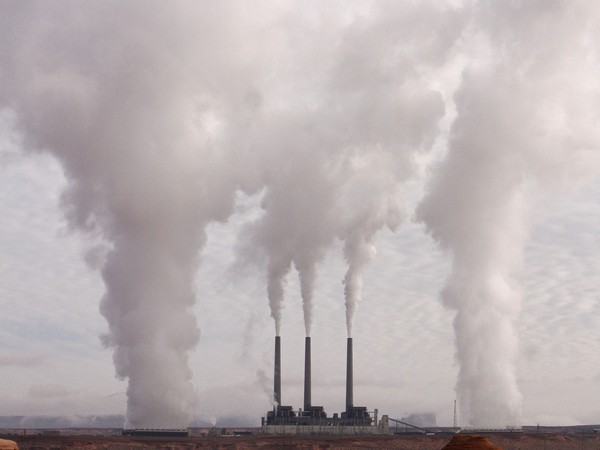
Ontario [Canada], January 2 (ANI): According to a study by the York University, blue skies and an absence of visible smog can be deceiving and hide pollutants that could potentially cause health issues.
The research has been published in the 'Environmental Science: Processes & Impacts Journal'.
Air pollution results from a complex mix of interactions between emissions, meteorology, such as wind direction and rain, as well as chemistry, but looking only at observational data as many recent studies have done without take meteorology into account, skews the numbers.
The researchers found that some air pollutants didn't drop nearly as much as first thought and even more surprising was that ozone levels increased even as other pollutants decreased. The air looked much cleaner, but that allowed more sunshine to get through, creating conditions for ozone (O3) to increase up to 30 per cent.
"To accurately quantify the impact of the COVID-19 lockdown on air pollutant levels, meteorology and atmospheric chemistry needs to be considered in addition to emissions," said York University postdoctoral researcher Leigh Crilley, who led the Faculty of Science research along with York Associate Professor Cora Young and team.
"Our research shows the decline in local emissions had less influence on the decrease in air pollutants than first thought," Crilley added.
As the national lockdown in India reduced major urban sources of air pollution, such as traffic, industry and construction, it gave the researchers an opportunity to study the contribution of local sources of air pollutants during normal meteorological conditions.
To get a clearer picture of potential decreases in air pollution, Crilley and Young focused their study on nitrogen oxides (NOx), fine particulate matter (PM2.5) and O3, as well as what was happening meteorologically at multiple locations within two cities in India -- Delhi and Hyderabad -- during the start of the first lockdown, from March 24 to April 24, 2020.
Air pollution is a known health risk and India has some of the worst air pollution globally resulting in a disproportionally high level of mortality and disease. It is estimated that air pollution exposure, particularly PM2.5, resulted in the death of 1.27 million people in 2017.
Cities in India also have some of the highest O3 levels in the world, which can be formed from a complexity of sources and chemistry, either NOx-limited or volatile organic compounds (VOC)-limited.
The researchers used hourly data from air quality monitoring stations for levels of PM2.5, NOx and O3, and hourly meteorological and visibility data. They compared that data to the same dates from the previous three years to evaluate changes due to the lockdown. A boosted regression tree model was built to account for the influence of meteorology on observed levels.
When only taking observational data into account, NOx and PM2.5 fell by up to 57 per cent and 75 per cent respectively, but when meteorology was factored in, those percentages fell to less than eight per cent for PM2.5 and between five and 30 per cent in both cities, while O3 increased.
They found that local sources of emissions, such as vehicles and the burning of fuels, had less influence on air pollution levels than regional emissions sources, while weather events and atmospheric chemical processes contributed independently to air pollutant levels.
"We demonstrate that regional sources, such as rural and agriculturally based emissions, that may have been less affected by the lockdown, have a significant influence on PM2.5 levels in Delhi and Hyderabad after weather-normalization. This indicates that future PM2.5 mitigation strategies should focus on national-scale, as well as local sources," said Young.
"Overall, this study highlights the impact of emissions, meteorology and chemistry on air pollution and that all three should be considered when assessing the effects of any short-term intervention on air pollutants," Young added.
In addition, the research team found that ozone production in Delhi is likely VOC-limited and, as such, attempts to mitigate it should focus on dominant VOC sources.
The researchers said that this really pointed to the need regulators to understand the complex factors involved in air pollution if they are going to make policies to reduce pollutants and ozone. (ANI)
Get the App