

ADD ANI AS A TRUSTED SOURCE
googleads
ANI Logo
Menu
Science

Current social distancing guidelines not effective in checking coronavirus spread, new study suggests

Washington D.C. [USA], April 5 (ANI): Are the current social distancing guidelines effective enough to check the spread of coronavirus? A new study is sceptical of the 3-feet-apart rule and says that the highly contagious coronavirus can travel upto 27 feet and stay airborne for hours.

ANI Apr 05, 2020 16:26 IST googleads

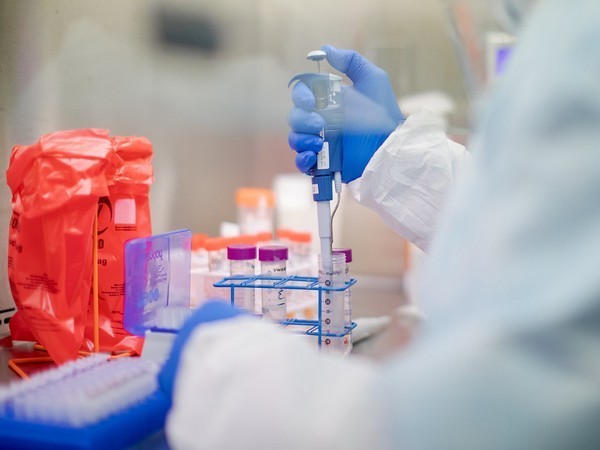
Representative image

Washington D.C. [USA], April 5 (ANI): Are the current social distancing guidelines effective enough to check the spread of coronavirus? A new study is sceptical of the 3-feet-apart rule and says that the highly contagious coronavirus can travel upto 27 feet and stay airborne for hours.
The study was conducted by MIT associate professor Lydia Bourouiba, who has researched the dynamics of coughs and sneezes for years. Bourouiba warned that the current social distancing guidelines to stay six feet from others are based on outdated models from the 1930s, reported the New York Post website.
The professor has said that the "pathogen-bearing droplets of all sizes can travel 23 to 27 feet".
In the newly published research, Bourouiba also warned that "droplets that settle along the trajectory can contaminate surfaces" -- and "residues or droplet nuclei" may "stay suspended in the air for hours."
According to the New York Post, she noted that a 2020 report from China showed that "virus particles could be found in the ventilation systems in hospital rooms of patients with COVID-19".
Bourouiba fears that the current guidelines of social-distancing are "overly simplified" and "may limit the effectiveness of the proposed interventions" against the deadly pandemic.
She also says that the health care workers face an "underappreciated potential exposure range" while treating the sick and dying.
"There's an urgency in revising the guidelines currently being given by the [World Health Organization] and the [Centers for Disease Control and Prevention] on the needs for protective equipment, particularly for the frontline health care workers," Bourouiba told USA Today.
It was published in the Journal of the American Medical Association.
The World Health Organization -- which suggests 3 feet is enough to remain safe -- told USA Today it "welcomed" studies.
"WHO carefully monitors emerging evidence about this critical topic and will update this scientific brief as more information becomes available," WHO said in a statement to the paper.
According to the World Health Organization, COVID-19 has affected over 10 lakh people globally. (ANI)


Get the App

What to Read Next

Science

New method guides magnetism without magnets

New method guides magnetism without magnets

Researchers at Paul Scherrer Institute PSI have demonstrated an innovative method to control magnetism in materials using an energy-efficient electric field.

Read More
Science

Amphibians bounce-back from Earth’s greatest mass extinction

Amphibians bounce-back from Earth’s greatest mass extinction

Researchers at the University of Bristol discovered that ancient frog ancestors survived the biggest mass extinction of species by eating on freshwater prey that evaded terrestrial predators.

Read More
Science

New insights into how cancer evades the immune system: Study

New insights into how cancer evades the immune system: Study

Immunotherapy research primarily focuses on better recognition of cancer cells by the body's own immune system. Researchers at Amsterdam UMC and Moffitt Cancer Center have taken a different approach.

Read More
Science

Scientists use AI to better understand nanoparticles: Study

Scientists use AI to better understand nanoparticles: Study

A group of scientists has created a way to illuminate the dynamic behavior of nanoparticles, which are essential components in the production of pharmaceuticals, electronics, and industrial and energy-conversion materials.

Read More
Science

New device could allow you to taste cake in virtual reality

New device could allow you to taste cake in virtual reality

The 'e-Taste' interface employs sensors and wireless chemical dispensers to enable remote taste perception, often known as gestation. Field testing done by researchers at The Ohio State University confirmed the device's ability to digitally simulate a range of taste intensities, while still offering variety and safety for the user.

Read More
Science

Study reveals impact of animals as architects of Earth

Study reveals impact of animals as architects of Earth

A new study led by Professor Gemma Harvey from Queen Mary University of London has revealed how hundreds of species shape the landscapes we depend on, from termite mounds visible from space to beavers creating wetlands and hippos carving drainage systems.

Read More
Science

Opposing arrows of time emerge from certain quantum systems

Opposing arrows of time emerge from certain quantum systems

Researchers at the University of Surrey made a thought-provoking discovery. A new study reveals that opposing arrows of time can theoretically emerge from certain quantum systems.

Read More
Science

COVID-19 severity may be predicted by White Blood Cell Count

COVID-19 severity may be predicted by White Blood Cell Count

A COVID-19 diagnosis is no longer as frightening as it used to be, thanks to developments in treatment choices. However, a new study reveals that leukocyte (white blood cell) count may now be used to identify who is more likely to develop more significant disease symptoms.

Read More
Science

Seals can essentially act as 'smart sensors': Study

Seals can essentially act as 'smart sensors': Study

A new study by marine biologists reports that seals can essentially act as 'smart sensors' for monitoring fish populations in the ocean's eerily dim 'twilight zone.'

Read More
Science

New technology enhances gravitational-wave detection: Study

New technology enhances gravitational-wave detection: Study

A team of physicists led by Jonathan Richardson of the University of California, Riverside, demonstrated how new optical technology can extend the detection range of gravitational-wave observatories such as the Laser Interferometer Gravitational-Wave Observatory, or LIGO, and pave the way for future observatories.

Read More


