 हिंदी खबर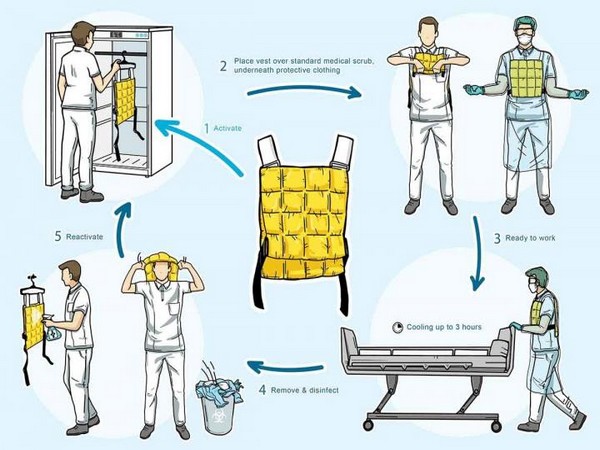

Amsterdam [Netherlands], January 10 (ANI): Wearing cooling vests during a COVID-19 shift ensures that nurses experience less heat during their work, suggests the findings of a novel study.
During their shifts, nurses wear protective clothing for three hours in a row, during which the temperature can rise to as much as 36 degrees. The cooling vests offer such effective cooling that they are now part of the standard work clothing for nurses in the COVID nursing departments at Radboud university medical center. The study was published in the journal Temperature.
Due to the high level of contagiousness present with COVID-19, health care personnel have to work in protective clothing that is not or is barely ventilated. Good protective clothing is essential for their work, but the temperature under these suits can reach up to 36 degrees, leading to reduced comfort. The cooling vests - originally developed for elite athletes competing at the Tokyo Summer Olympic Games - were modified and prepared for use in COVID-related health care.
Cooling vests for top athletes
Thijs Eijsvogels, an exercise physiologist and principal investigator, explains: "The elite-athlete cooling vests were not immediately suitable for this use because they were designed to cool aggressively before or after physical exertion. COVID care involves long-term use in which the vests are worn during health care activities. The cooling power of the modified vest is lower, but it works longer."
Although the cooling vests were already in use, a study of their effects was being carried out at the same time. The Cooling for COVID-19 healthcare workers (COOLVID) study followed 17 nurses working in COVID care for two days: one day with and one day without a cooling vest. They wore the vest over their medical clothing but under their protective clothing. Study measurements included core temperature and heart rate, as well as subjective measurements such as comfort and heat sensation.
Less heat stress during a shift
The results, now published in Temperature, show that the participants' core temperature increased slightly but not enormously, even while the temperature under their protective clothing did. Therefore, the cooling vest had little effect on core temperature.
However, the participants' heart rates were a few beats per minute lower on the days they wore the cooling vests. The biggest difference was in the subjective perceptions of health care providers. Co-research Yannick de Korte: "Without a cooling vest, almost 90% of the nurses experienced discomfort and warmth. With a cooling vest, only 20-30% of the participants experienced this. They, therefore, perceived the conditions under which they have to do their work as more pleasant and comfortable. Virtually everyone said: 'With a cooling vest, I can work like I normally do without protective clothing'." (ANI)




