

ADD ANI AS A TRUSTED SOURCE
googleads
ANI Logo
Menu
Science

Coastal areas produce substantial economic, biodiversity gains: Study

Studies show that a change in the way we view the advantages mangroves have for coastal areas might lead to huge gains in biodiversity and the economy, as well as the protection of millions of people from flooding. According to a study led by the University of Queensland, present conservation efforts often focus on biodiversity protection while reducing confrontation with commercial interests, while failing to account for the enormous advantages supplied by ecosystems.

ANI Oct 07, 2023 18:01 IST googleads

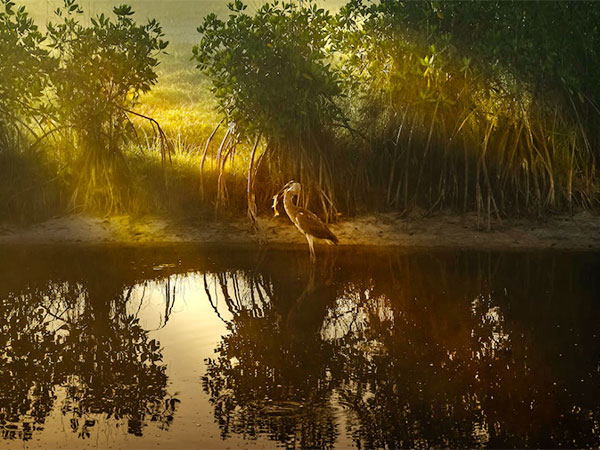
Representative image (Image source: Pexels)

Washington [US], October 7 (ANI): Studies show that a change in the way we view the advantages mangroves have for coastal areas might lead to huge gains in biodiversity and the economy, as well as the protection of millions of people from flooding.
According to a study led by the University of Queensland, present conservation efforts often focus on biodiversity protection while reducing confrontation with commercial interests, while failing to account for the enormous advantages supplied by ecosystems.
Human activities such as deforestation and coastal development, according to Alvise Dabala, now at the University of the Azores and whose master dissertation at UQ formed the basis of this study, have resulted in widespread mangrove destruction around the world.
"They protect infrastructure and communities from storms, sequester carbon, and provide fisheries with nursing grounds, so their rapid destruction is devastating to witness," Dabala said.
"As it stands, current conservation efforts just aren't doing enough to take advantage of these services."
The team is using the United Nations Global Biodiversity Framework, which recommends an increase in protected areas to 30 per cent of the world as the basis of their proposal.
Researchers are recommending an optimised conservation planning perspective that operates within this framework and puts more emphasis on these ecosystem services.
"It's somewhat of a juggling act, where we have to consider the trade-offs between biodiversity protection, economic conflicts, and ecosystem services," Dabala said.
"But if done properly, this target has the potential to safeguard Australian Dollar (AUD) 25.6 billion of coastal property value, globally.
"It would also protect 6.1 million coastal-dwelling people against the impacts of flooding, and safeguard over one billion tonnes of sequestered carbon. In Australia alone, we've identified priority areas in Northern Queensland, Darwin and East Arnhem in the Northern Territory, and between Pilbara and Kimberley in Western Australia."
"Expanding Australian mangrove protection would be particularly beneficial for carbon sequestration and biodiversity conservation as they stand out as some of the most diverse, carbon-rich mangrove forests," Dabala added. UQ's Professor Anthony Richardson said that achieving these outcomes boils down to a shift in perspective.
"In some areas of the world, we recognise that human pressure could be so high that the value of ecosystem services would not compensate for the loss and could result in complications in implementing protection," Professor Richardson said.
"However, for multiple ecosystems, including mangroves, we've quantified the benefits associated with considering the services these ecosystems provide - the figures are undeniable. We know that long-term gains from biodiversity protection are often greater than short-term gains from anthropogenic activities, so this shift in thinking must happen soon."
Professor Richardson said developing biodiversity and ecosystem services data should be a priority to incorporate into applied conservation plans.
"Implementation of these plans should then follow different conservation practices that target local communities' needs specifically," he said.
"Moving forward, decision-makers and other stakeholders need to focus on protected area implementation, management, and monitoring to provide solid conservation outcomes." (ANI)


Get the App

What to Read Next

Science

AI can reveals hidden hazards of chemical mixtures in rivers

AI can reveals hidden hazards of chemical mixtures in rivers

Artificial intelligence can provide important insights into how complex chemical mixes in rivers affect aquatic life, paving the path for more effective environmental protection.

Read More
Science

Study finds genetic cause of rare childhood immune disorders

Study finds genetic cause of rare childhood immune disorders

Researchers have identified specific genetic changes that can result in newborns having little to no immune protection against illness.

Read More
Science

Study finds biodiversity is key to better mental health

Study finds biodiversity is key to better mental health

A study by King's College London found that spaces with a variety of natural features are associated with better mental health than spaces with less natural diversity.

Read More
Science

Climate change disrupts vital ecosystems in Alps: Study

Climate change disrupts vital ecosystems in Alps: Study

Reduced snow cover and altering vegetation patterns in the Alps, both caused by climate change, are having significant combined effects on biodiversity and ecosystem functioning in the high mountains, according to a new study.

Read More
Science

Gardeners can help to identify possibly invasive plants: Research

Gardeners can help to identify possibly invasive plants: Research

Researchers from the University of Reading and the Royal Horticultural Society have discovered that gardeners play a vital role in identifying 'future invaders' - ornamental plants that could become invasive species.

Read More
Science

Rising sea levels may lead to more methane emitted from wetlands

Rising sea levels may lead to more methane emitted from wetlands

Global warming is causing sea levels to rise, which is altering ecosystems. Scientists assumed that the tidal wetlands present in estuaries could create less methane, a strong greenhouse gas because the increased influx of seawater renders these habitats less hospitable to methane-producing microorganisms.

Read More
Science

Climate change may reduce butterflies' spots: Study

Climate change may reduce butterflies' spots: Study

According to new research, female Meadow Brown butterflies have less spots when they grow up in warmer environments, so climate change may reduce their spottiness.

Read More
Science

Butterflies might lose spots as climate warms: Research

Butterflies might lose spots as climate warms: Research

According to new research, female Meadow Brown butterflies have less spots when they grow up in warmer conditions, thus climate change may reduce their spottiness.

Read More
Science

Plants' microbiomes are influenced by domestication: Study

Plants' microbiomes are influenced by domestication: Study

According to new research led by the University of Oxford, human crop domestication can affect plant-associated microorganism ecosystems.

Read More
Science

Use of habitat for agricultural purposes puts primate in danger

Use of habitat for agricultural purposes puts primate in danger

According to a study published in Current Biology, frequent trips to oil palm farms are significantly increasing mortality rates among baby southern pig-tailed macaques (Macaca nemestrina) in the wild.

Read More
Home About Us Our Products Advertise Contact Us Terms & Condition Privacy Policy

Copyright © aninews.in | All Rights Reserved.


