Clues to Capuchin monkey's long life, large brain revealed in its genome
Washington [US], February 15 (ANI): An international team of scientists during recent research have sequenced the genome of a capuchin monkey for the first time. This could lead to uncovering new genetic clues about the evolution of their long lifespan and large brains.
ANI
Feb 15, 2021 17:43 IST

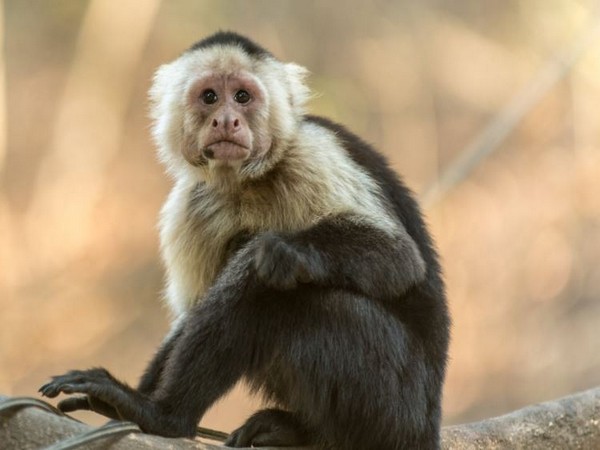
Washington [US], February 15 (ANI): An international team of scientists during recent research have sequenced the genome of a capuchin monkey for the first time. This could lead to uncovering new genetic clues about the evolution of their long lifespan and large brains.
Published in PNAS, the work was led by the University of Calgary in Canada and involved researchers at the University of Liverpool.
"Capuchins have the largest relative brain size of any monkey and can live past the age of 50, despite their small size, but their genetic underpinnings had remained unexplored until now," explained Professor Joao Pedro De Magalhaes, who researches ageing at the University of Liverpool.
The researchers developed and annotated a reference assembly for white-faced capuchin monkeys (Cebus imitator) to explore the evolution of these traits.
Through a comparative genomics approach spanning a wide diversity of mammals, they identified genes under evolutionary selection associated with longevity and brain development.
"We found signatures of positive selection on genes underlying both traits, which helps us to better understand how such traits evolve. In addition, we found evidence of genetic adaptation to drought and seasonal environments by looking at populations of capuchins from a rainforest and a seasonal dry forest," said senior author and Canada Research Chair Amanda Melin who has studied capuchin monkey behaviour and genetics for almost 20 years.
The researchers identified genes associated with DNA damage response, metabolism, cell cycle, and insulin signalling. Damage to the DNA is thought to be a major contributor to ageing and previous studies by Professor de Magalhaes and others have shown that genes involved in DNA damage responses exhibit longevity-specific selection patterns in mammals.
"Of course, because ageing-related genes often play multiple roles it is impossible to be sure whether selection in these genes is related to ageing or to other life-history traits, like growth rates and developmental times, that in turn correlate with longevity," said Professor De Magalhaes.
"Although we should be cautious about the biological significance of our findings, it is tempting to speculate that, like in other species, changes to specific ageing-related genes or pathways, could contribute to the longevity of capuchins," he added.
The team's insights were made possible thanks to the development of a new technique to isolate DNA more efficiently from primate faeces.
FecalFACS utilises an existing technique that has been developed to separate cells types in body fluids - for example, to separate different cell types in blood for cancer research - and applies it to primate faecal samples.
"This is a major breakthrough because the typical way to extract DNA from faeces results in about 95-99 per cent of the DNA coming from gut microbes and food items. A lot of money has been spent sequencing genomes from different organisms than the mammals we're actually trying to study. Because of this, when wildlife biologists have required entire genomes, they have had to rely on more pure sources of DNA, like blood, saliva, or tissue - but as you can imagine, those are very hard to come by when studying endangered animals," explained the study's lead author, Dr Joseph Orkin, who completed work on this project as a postdoctoral scholar at the University of Calgary, and in his present location at Universitat Pompeu Fabra-CSIC in Barcelona.
"FecalFACS finally provides a way to sequence whole genomes from free-ranging mammals using readily available, non-invasive samples, which could really help future conservation efforts," he added. (ANI)
Get the App