

ADD ANI AS A TRUSTED SOURCE
googleads
ANI Logo
Menu
Science

Cloth masks inferior for protection against airborne viral spread, reveals study

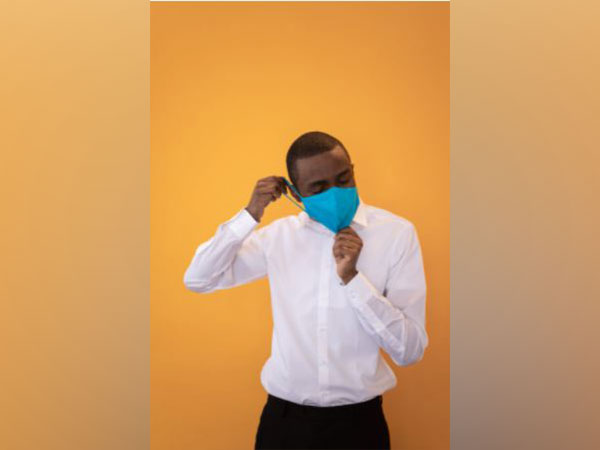
Washington [US], March 2 (ANI): 'Wearing a mask is mandatory' is one announcement that has become ingrained in everyone's mind, ever since the beginning of the COVID-19 pandemic.

ANI Mar 02, 2022 14:37 IST googleads

Representative image

Washington [US], March 2 (ANI): 'Wearing a mask is mandatory' is one announcement that has become ingrained in everyone's mind, ever since the beginning of the COVID-19 pandemic.
Masks have been widely considered an important first-line defense against airborne transmission of the disease, as is supported by a preponderance of the evidence. But is every mask effective against the airborne virus? A recent study opened up about this.
The study was published in 'Physics of Fluids' by AIP Publishing.
Like many other viruses, COVID-19 too is transmitted primarily via particles carried in the air. An infected person breathes out particles containing the virus into the air, which can then be inhaled by another person, who then becomes infected.
Fuelled by the omicron variant, the latest wave of the pandemic prompted public health officials to recommend more protective face coverings because not all masks are created equal.
In the study, researchers from England, Germany, and France focussed their expertise -- and their microscopes -- on examining the efficacy of particle filtration by woven fabric, which, unlike material used in standard air filters and masks, consists of fibers twisted together into yarns. There are, therefore, two length scales: the diameters of the fiber and the yarn.
Using 3D imagery produced by confocal microscopy to see the airflow channels, the scientists simulated the airflow through these channels and calculated filtration efficiency for particles a micrometer and larger in diameter. The study concluded that, for particles in this size range, the filtration efficiency is low.
"Masks are air filters, and woven fabrics, such as cotton, make for good jeans, shirts, and other apparel, but they are lousy air filters," said co-author Richard Sear, from the University of Surrey. "So, use woven fabric for clothing, and N95s or FFP2s or KF94s for masks."
Indeed, the flow simulations suggested that when a person breathed through cloth, most of the air flows through the gaps between the yarns in the woven fabric, bringing with it more than 90 per cent of the particles.
"In other words, these relatively large gaps are responsible for cloth being a bad material to make air filters from," said Sear. "In contrast, the filtering layer of an N95 mask is made from much smaller, 5-micrometer fibers with gaps that are 10 times smaller, making it much better for filtering nasty particles from the air, such as those containing virus."
While earlier research revealed similar findings, this study represented the first one to simulate particles going directly through the gaps in woven fabric.
Sear added that good masks should feature the "two Fs: good filtration and good fit."
"Surgical masks fit badly, so a lot of air goes unfiltered past the edges of the mask by the cheeks and nose," said Sear. (ANI)


Get the App

What to Read Next

Science

Amphibians bounce-back from Earth’s greatest mass extinction

Amphibians bounce-back from Earth’s greatest mass extinction

Researchers at the University of Bristol discovered that ancient frog ancestors survived the biggest mass extinction of species by eating on freshwater prey that evaded terrestrial predators.

Read More
Science

Scientists use AI to better understand nanoparticles: Study

Scientists use AI to better understand nanoparticles: Study

A group of scientists has created a way to illuminate the dynamic behavior of nanoparticles, which are essential components in the production of pharmaceuticals, electronics, and industrial and energy-conversion materials.

Read More
Science

COVID-19 severity may be predicted by White Blood Cell Count

COVID-19 severity may be predicted by White Blood Cell Count

A COVID-19 diagnosis is no longer as frightening as it used to be, thanks to developments in treatment choices. However, a new study reveals that leukocyte (white blood cell) count may now be used to identify who is more likely to develop more significant disease symptoms.

Read More
Science

New technology enhances gravitational-wave detection: Study

New technology enhances gravitational-wave detection: Study

A team of physicists led by Jonathan Richardson of the University of California, Riverside, demonstrated how new optical technology can extend the detection range of gravitational-wave observatories such as the Laser Interferometer Gravitational-Wave Observatory, or LIGO, and pave the way for future observatories.

Read More
Science

Astronomers find the smallest main-belt asteroids ever detected:

Astronomers find the smallest main-belt asteroids ever detected:

The majority of known asteroids orbit inside the main asteroid belt, which is positioned between Mars and Jupiter at an average distance of around 250 million km from Earth. Since the discovery of the first asteroid in 1801, about 750.000 asteroids have been identified, primarily in the last decade thanks to several optical surveys that examine the sky on clear nights.

Read More
Science

Study finds connection between quantum theory, information theory

Study finds connection between quantum theory, information theory

"Our results have no clear or direct application right now. It's basic research that lays the foundation for future technologies in quantum information and quantum computers. There's enormous potential for complete discoveries in many different research fields," said Guilherme B Xavier, a researcher in quantum communication at Linkoping University, Sweden.

Read More
Science

When devices can read human emotions without a camera: Study

When devices can read human emotions without a camera: Study

Tokyo Metropolitan University researchers employed long-term skin conductance measurements to distinguish between emotions. Volunteers were given videos representing frightening scenarios, family bonding, and humour, while their skin conductance was measured.

Read More
Science

'Nuroscience study results can be better predicted by AI'

'Nuroscience study results can be better predicted by AI'

Large language models, a type of AI that analyses text, can anticipate the results of proposed neuroscience studies more correctly than human experts, according to a new study led by UCL (University College London) researchers.

Read More
Science

Thermal imaging may help fruits, veggies stay fresher longer: Study

Thermal imaging may help fruits, veggies stay fresher longer: Study

Before your favourite produce arrives at the grocery store, it must be carefully harvested and stored for extended periods of time. A recent University of Georgia assessment argues that new temperature sensing devices could make that procedure considerably easier, as agricultural issues are exacerbated by changing climates.

Read More
Science

Researchers discover molecular mechanism for bacterial infection

Researchers discover molecular mechanism for bacterial infection

Researchers at Virginia Tech have discovered how bacteria change molecules in order to infect their host.

Read More
Home About Us Our Products Advertise Contact Us Terms & Condition Privacy Policy

Copyright © aninews.in | All Rights Reserved.
