

ADD ANI AS A TRUSTED SOURCE
googleads
ANI Logo
Menu
Science

Climate data can help model spread of Covid-19: Research

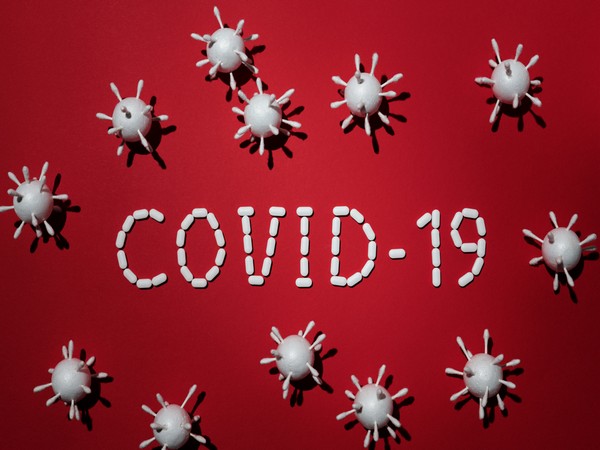
Covid-19 transmission can be more accurately modelled by incorporating meteorological factors, with ultraviolet (UV) radiation as the main driver, according to a new study.

ANI Jan 02, 2023 19:21 IST googleads

Representative Image

San Francisco [US], January 2 (ANI): According to a new study by a group of researchers from the Qatar Environment & Energy Research Institute (QEERI), at Hamad Bin Khalifa University, and Transvalor S.A., France, Covid-19 transmission can be more precisely modelled by including meteorological factors, with ultraviolet (UV) radiation as the main driver.
A rising number of studies indicate that the climate may have an effect on how Covid-19 spreads, however, it is unclear how much it alters risk and transmission. Studies on the effects of climate change have been patchy or poorly controlled; they have only looked at a small number of climatic factors or have ignored socioeconomic factors, for example.
In the new paper, the researchers studied data on reported Covid-19 cases in 196 countries over a 14-month period, using socioeconomic, environmental, and global health factors as control variables. They developed three different analytic approaches -- statistical, machine learning and econometric -- which modelled the potential contributions of climate to confirmed case numbers.
The results suggest that while disease susceptibility, lockdown compliance, and increased testing are the most effective strategies for preventing the spread of Covid-19, UV radiation is the climate factor most strongly correlated with the spread of Covid-19, with greater UV radiation associated with reduced transmission. For other meteorological and air quality factors, including temperature, absolute humidity and solar radiation, discrepancies between results in the three analysis methods emphasized the difficulty in understanding the correlations. For instance, the humidity was positively correlated with Covid-19 spread in the machine learning analysis and negatively correlated in the econometric analysis. The temperature was moderately negatively associated with Covid-19 in the statistical analysis but positively correlated with Covid-19 transmission in both the machine learning and econometric analyses.
The authors conclude that UV radiation emerges as the most impactful meteorological factor in Covid-19 transmission across all methods. This could help refine transmission predictions based on seasonality or weather forecasts, and help inform future pandemic response measures that limit the economic impact of complete lockdowns. They point out that this is supported by overwhelming evidence that UV light can effectively kill SARS-CoV-2 and other coronaviruses.
The authors add: "The impact of climate on Covid-19 transmission rates has been the subject of many studies, but it is still poorly understood. In our study, we demonstrated that meteorological factors play a key role in statistical, machine learning and econometric analyses of Covid-19 risk, with ultraviolet radiation (UV) as the main driver." (ANI)


Get the App

What to Read Next

Science

New method guides magnetism without magnets

New method guides magnetism without magnets

Researchers at Paul Scherrer Institute PSI have demonstrated an innovative method to control magnetism in materials using an energy-efficient electric field.

Read More
Science

New insights into how cancer evades the immune system: Study

New insights into how cancer evades the immune system: Study

Immunotherapy research primarily focuses on better recognition of cancer cells by the body's own immune system. Researchers at Amsterdam UMC and Moffitt Cancer Center have taken a different approach.

Read More
Science

New device could allow you to taste cake in virtual reality

New device could allow you to taste cake in virtual reality

The 'e-Taste' interface employs sensors and wireless chemical dispensers to enable remote taste perception, often known as gestation. Field testing done by researchers at The Ohio State University confirmed the device's ability to digitally simulate a range of taste intensities, while still offering variety and safety for the user.

Read More
Science

Strand Life Sciences launches portal for rare disease diagnosis

Strand Life Sciences launches portal for rare disease diagnosis

Marking Rare Disease Day, Strand Life Sciences, a subsidiary of Reliance Industries and a leading genomics research company, has launched the StrandOmics Portal, an innovative digital platform designed to assist doctors in diagnosing rare diseases more efficiently.

Read More
Science

Study reveals impact of animals as architects of Earth

Study reveals impact of animals as architects of Earth

A new study led by Professor Gemma Harvey from Queen Mary University of London has revealed how hundreds of species shape the landscapes we depend on, from termite mounds visible from space to beavers creating wetlands and hippos carving drainage systems.

Read More
Science

Opposing arrows of time emerge from certain quantum systems

Opposing arrows of time emerge from certain quantum systems

Researchers at the University of Surrey made a thought-provoking discovery. A new study reveals that opposing arrows of time can theoretically emerge from certain quantum systems.

Read More
Science

COVID-19 severity may be predicted by White Blood Cell Count

COVID-19 severity may be predicted by White Blood Cell Count

A COVID-19 diagnosis is no longer as frightening as it used to be, thanks to developments in treatment choices. However, a new study reveals that leukocyte (white blood cell) count may now be used to identify who is more likely to develop more significant disease symptoms.

Read More
Science

Seals can essentially act as 'smart sensors': Study

Seals can essentially act as 'smart sensors': Study

A new study by marine biologists reports that seals can essentially act as 'smart sensors' for monitoring fish populations in the ocean's eerily dim 'twilight zone.'

Read More
Science

'Creation of black holes without singularities through gravity'

'Creation of black holes without singularities through gravity'

Traditional black holes, as predicted by Albert Einstein's theory of General Relativity, contain what are known as singularities, i.e. points where the laws of physics break down. Identifying how singularities are resolved in the context of quantum gravity is one of the fundamental problems in theoretical physics. Now, a team of experts has described the creation of regular black holes from gravitational effects without the need for the existence of exotic matter required by some previous models.

Read More
Science

New technology enhances gravitational-wave detection: Study

New technology enhances gravitational-wave detection: Study

A team of physicists led by Jonathan Richardson of the University of California, Riverside, demonstrated how new optical technology can extend the detection range of gravitational-wave observatories such as the Laser Interferometer Gravitational-Wave Observatory, or LIGO, and pave the way for future observatories.

Read More
Home About Us Our Products Advertise Contact Us Terms & Condition Privacy Policy

Copyright © aninews.in | All Rights Reserved.


