 हिंदी खबर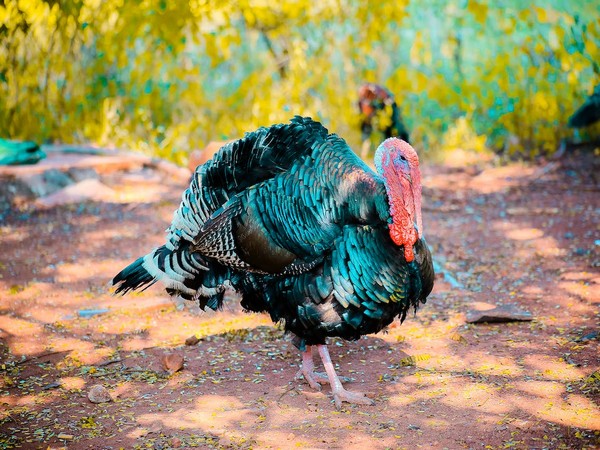

Washington DC [US], July 16 (ANI): A recent study found that even in the case of significant future climate change, eastern wild turkeys in five southern U.S. states are unlikely to shift the timing of when they begin nesting.
The findings suggest eastern wild turkeys (Meleagris gallopavo silvestris) could be vulnerable to shifts in climate, which could threaten the availability of their food sources, the amount of vegetation cover available to protect them from predators, and other factors.
“There are implications here for turkey populations if individuals are inflexible in their ability to shift their reproductive activities, as resources are certainly going to change in the future,” said Chris Moorman, professor in North Carolina State University’s Fisheries, Wildlife and Conservation Biology Program. “This could result in ‘phenological mismatch,’ where the timing of an animal’s natural history doesn’t match up with the food and cover resources that are critical for successful reproduction and survival.”
After overhunting and habitat loss drove wild turkeys almost to extinction, the species is now common throughout North America. However, a recent survey reported wild turkey populations in the southeastern United States have been in decline since 2009. North Carolina has a stable population as estimated by hunting harvests, but some southern states have set hunting restrictions in an attempt to stop or reverse declines. Researchers acknowledge there are outstanding questions about the role of weather and climate change, emerging diseases, and other factors on turkeys.
“Turkeys are a highly adaptable species; this adaptability facilitated their ability to be restored,” said the study’s lead author Wesley Boone, a postdoctoral research scholar at NC State. “We want to know if they’re going to be able to persist in a future with a changing climate, and changing landscapes, too.”
To determine the impact of climate change on turkey nesting, researchers tracked when eastern wild turkeys began nesting in five states in the Southeast across eight years. Working under safety protocols, researchers used nets to capture female turkeys. They attached GPS transmitters to monitor the turkeys’ location remotely to identify patterns in their movements that indicated turkeys had started incubating their nests, which is when they sit on their eggs to keep them warm. They visited nests to confirm their location and to see if one or more eggs had hatched.
The researchers then used weather data gathered between 2014 and 2021 to see if temperature, rainfall, and the timing of “spring green-up” linked with the timing of when turkeys started nest incubation. They also projected whether turkey nest timing would shift by 2041-2060 under two climate-change scenarios.
When they analyzed the timing for 717 total nests and 186 “successful” nests that hatched at least one egg, researchers found that temperature and rainfall were associated with slight changes in when turkeys began nesting. However, the changes were so slight that they could be measured in hours, and not days.
When they looked at the relationship between climate change-related shifts in average precipitation and temperature changes, they found the timing of successful nests would change by less than three hours. The research team did not see any links between turkey nest timing and spring green-up.
“We did find relationships between nest timing, rainfall, and temperature, but when we projected that into the future, there is no biological relevance in the shift in timing,” Boone said. “However, the lack of change in response to a changing climate could be a problem because the critical food and cover resources linked with spring green-up are likely to shift earlier in the future.”
“For many animals, there is variability around the timing of breeding that would allow individuals to adapt to availability of resources,” Moorman said. “We did not project drastic changes in the timing of when wild turkeys nest under climate change. Turkeys seem relatively inflexible as to when they reproduce – nesting is initiated around the same time each year with only slight shifts in the timing, regardless of weather conditions.”
This is the first in a series of studies designed to understand the effects of climate change on reproduction of the eastern wild turkey. Future studies will explore other measures of turkey reproductive success, including whether temperature and precipitation affect the survival of turkey nests and the recently hatch young, which are called poults. The findings have implications for long-term turkey conservation, including the timing of hunting seasons.
“There could be a lot of factors interacting to cause declines, including timing of the hunting season, land-use change that impacts habitat, changes in predator populations, as well as weather, climate and diseases,” Boone said. “We need to begin chipping away at the questions to build a comprehensive understanding of the current and future threats to wild turkey population sustainability.” (ANI)




