

ADD ANI AS A TRUSTED SOURCE
googleads
ANI Logo
Menu
Science

Climate change likely led to violence in early Andean populations: Research

Current climate change has caused challenges for humanity, such as wildfires and shorter growing seasons for staple crops, which have spilled over into economic consequences. Many experts predict and have observed an increase in interpersonal violence and killings as temperatures rise.

ANI Jun 16, 2023 14:08 IST googleads

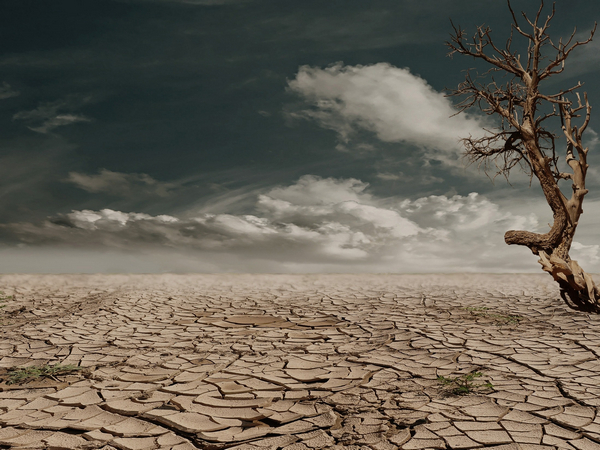
Representative Image

Washington [US], June 16 (ANI): Current climate change has caused challenges for humanity, such as wildfires and shorter growing seasons for staple crops, which have spilled over into economic consequences. Many experts predict and have observed an increase in interpersonal violence and killings as temperatures rise.
Violence during climatic change has evidence in history. University of California, Davis, researchers said they have have found a pattern of increased violence during climatic change in the south central Andes between A.D. 470 and 1500. During that time, which includes the Medieval Climatic Anomaly (ca. A.D. 900-1250), temperatures rose, drought occurred, and the first states of the Andes collapsed.
Climate change and potential competition for limited resources in the south central Andes likely led to violence among people living in the highlands at that time, researchers suggest in a new paper. Their study looked at head injuries of the populations living there at that time, a commonly used proxy among archaeologists for interpersonal violence.
"We found that decreased precipitation predicts increased rates of cranial trauma," said Thomas J. Snyder, a doctoral candidate in the Department of Anthropology's Evolutionary Wing and the primary author of the study.
"This observation suggests that climate change in the form of decreased precipitation exerted a significant effect on rates of interpersonal violence in the region."
The study was published June 5 in Quaternary Research, Cambridge University Press. Co-author of the paper is Randall Haas, formerly of the same lab at UC Davis and currently a professor at Wayne State University.
Violence not found in coastal, mid-elevation regions
The same results were not found in coastal and mid-elevation regions, indicating they chose nonviolent solutions to climate change or were not affected by it, researchers said. There was also more agricultural and economic diversity there, potentially buffering against the onset of climate change. Drought-induced resource scarcity in the highlands, however, seems like a likely explanation for the violence there, researchers said.
Snyder said looking at the history of people's interaction with nature is important when considering possible effects of current climate change challenges and people's interaction with their climate.
"Our findings reinforce the idea that people living in already marginal environments are the most likely to be hit hardest by climate change," he said. "Archaeological research can help us predict how best to handle the challenges faced by people in precarious positions in a rapidly changing climate."
UC Davis researchers recorded violence during early years in the Andes by analyzing existing data of nearly 3,000 skeletal fractures of humans found at 58 archaeological sites -- comparing them to ice accumulation at the time at the Quelccaya glacier -- in what is now Peru, Chile and Bolivia. At the same time, there was widespread abandonment of Wari and Tiwanaku sites in the region, indicating a sociopolitical unraveling after the onset of the centuries-long global climate changes.
The archaeology of the Andes provides an excellent opportunity to study the human response to climate change given the region's extreme climatic variability, incredible archaeological preservation and robust records, researchers said. In this study, researchers found that on average, for every 10-centimeter decrease in annual ice accumulation at the Quelccaya glacier, the likelihood of interpersonal violence more than doubled. (ANI)


Get the App

What to Read Next

Science

Amphibians bounce-back from Earth’s greatest mass extinction

Amphibians bounce-back from Earth’s greatest mass extinction

Researchers at the University of Bristol discovered that ancient frog ancestors survived the biggest mass extinction of species by eating on freshwater prey that evaded terrestrial predators.

Read More
Science

New insights into how cancer evades the immune system: Study

New insights into how cancer evades the immune system: Study

Immunotherapy research primarily focuses on better recognition of cancer cells by the body's own immune system. Researchers at Amsterdam UMC and Moffitt Cancer Center have taken a different approach.

Read More
Science

Strand Life Sciences launches portal for rare disease diagnosis

Strand Life Sciences launches portal for rare disease diagnosis

Marking Rare Disease Day, Strand Life Sciences, a subsidiary of Reliance Industries and a leading genomics research company, has launched the StrandOmics Portal, an innovative digital platform designed to assist doctors in diagnosing rare diseases more efficiently.

Read More
Science

Study reveals impact of animals as architects of Earth

Study reveals impact of animals as architects of Earth

A new study led by Professor Gemma Harvey from Queen Mary University of London has revealed how hundreds of species shape the landscapes we depend on, from termite mounds visible from space to beavers creating wetlands and hippos carving drainage systems.

Read More
Science

'Creation of black holes without singularities through gravity'

'Creation of black holes without singularities through gravity'

Traditional black holes, as predicted by Albert Einstein's theory of General Relativity, contain what are known as singularities, i.e. points where the laws of physics break down. Identifying how singularities are resolved in the context of quantum gravity is one of the fundamental problems in theoretical physics. Now, a team of experts has described the creation of regular black holes from gravitational effects without the need for the existence of exotic matter required by some previous models.

Read More
Science

Discovering the genetics of climate adaptation 

Discovering the genetics of climate adaptation 

As climate change accelerates, plants are under increasing pressure to adapt to changing habitats and environmental conditions.

Read More
Science

Discovery of unexpected collagen structure to influence research

Discovery of unexpected collagen structure to influence research

Collagen, the body's most abundant protein, has long been considered a predictable structural component of tissues.

Read More
Science

Shubhanshu Shukla: IAF officer becomes first Indian astronaut for

Shubhanshu Shukla: IAF officer becomes first Indian astronaut for

Shubhanshu Shukla, Indian Air Force (IAF) officer and one of four astronauts for Indian Space Research Organisation's (ISRO) Gaganyaan mission, has been sele Shubhanshu Shukla, Indian Air Force (IAF) officer and one of four astronauts for Indian Space Research Organisation's (ISRO) Gaganyaan mission, has been selected as the pilot for Axiom Mission 4, scheduled for Spring 2025.cted as the pilot for Axiom Mission 4, scheduled for Spring 2025.

Read More
Science

Microbes help detoxify our atmosphere, says study 

Microbes help detoxify our atmosphere, says study 

Melbourne researchers have uncovered important new information on how microbes absorb huge amounts of carbon monoxide (CO) and assist in reducing levels of this deadly gas.

Read More
Science

Weather change linked to heightened risk of Salmonella outbreaks

Weather change linked to heightened risk of Salmonella outbreaks

According to new research from the University of Surrey, climate change has an impact on Salmonella spread. This study builds on prior work by the researchers, which discovered that weather change is contributing to the spread of deadly diarrhoeal illnesses.

Read More
Home About Us Our Products Advertise Contact Us Terms & Condition Privacy Policy

Copyright © aninews.in | All Rights Reserved.
