

ADD ANI AS A TRUSTED SOURCE
googleads
ANI Logo
Menu
Science

Climate change has potential to greatly expand habitat of invasive stink bugs

Washington [US], September 26 (ANI): With climate change, a foul-smelling, voracious, and widespread pest could become even more common.

ANI Sep 26, 2022 20:18 IST googleads

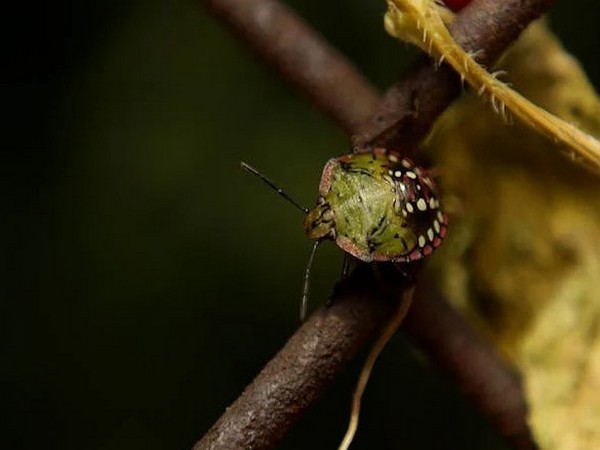
Representative Image

Washington [US], September 26 (ANI): With climate-change">climate change, a foul-smelling, voracious, and widespread pest could become even more common.
According to a recent modelling study, changing weather conditions could increase suitable habitat for the brown marmorated stink bug in the United States by 70%. The research, which was published in Pest Management Science, is based on data from a three-year stink bug monitoring effort in 17 states, as well as several potential climate scenarios. However, whether the insects will thrive in new locations is dependent on the local conditions and potential mitigation measures.
"Every system will change as a result of climate-change">climate change, so just because you can grow garbanzo beans, lentils, or wheat without these pests now doesn't mean you won't have them in a few years," said study lead author Javier Gutierrez Illan, an entomologist at Washington State University. "There are mitigating measures we can take, but it is prudent to plan for change."
According to the study, there is a likely northward shift in stink bug-friendly conditions. The Mid-Atlantic, areas surrounding the Great Lakes, and West Coast valleys such as the Sacramento Valley in California and the Treasure Valley in Idaho may be particularly affected.
The brown marmorated stink bug is a herbivore that eats nearly 170 different plants, including crops and ornamental plants. This type of stink bug, which originated in Asia, first appeared in the United States about 20 years ago and has since spread coast to coast. It has been found in 46 states and is classified as a pest in 15 of them.
Brown marmorated stink bugs are easily identified by homeowners because they prefer to spend the winter indoors. In fact, the study discovered that while proximity to populated areas appeared to help the insects establish themselves in new areas, once established, they did not require proximity to people to proliferate. Other factors, such as water availability, were more important for their abundance.
According to Gutierrez Illan, people are inadvertently transporting stink bugs in vehicles or farm equipment to areas where they would otherwise be difficult to reach by flying alone.
Stink bugs dislike cold winters, but rising temperatures caused by climate-change">climate change are not always beneficial if the land becomes too dry. They require water, so the researchers believe that changing precipitation patterns will influence where the stink bugs thrive.
Officials and researchers in some states, including Washington, are using a parasitoid insect known as the samurai wasp to control stink bugs. Inside stink bug eggs, wasps lay their own eggs. This not only kills the affected eggs, but the wasp larvae eat other developing stink bugs. Measures like these could help prevent or reduce stink bug spread into new areas, according to Gutierrez Illan.
The researcher advised Washington growers to use WSU's DAS, or Decision Aid System, a web-based tool that provides information to help farmers prepare for changes in their agricultural systems, including the possible appearance of these pests.
Gutierrez Illan also advised growers to become acquainted with the brown marmorated stink bug by visiting sites such as stopbsmb.org, even if they have never encountered the pest in their fields.
"Most growers learn from their parents or the previous generation, but the information they had is probably no longer as useful because the climate is changing," Gutierrez Illan explained. (ANI)


Get the App

What to Read Next

Science

New method guides magnetism without magnets

New method guides magnetism without magnets

Researchers at Paul Scherrer Institute PSI have demonstrated an innovative method to control magnetism in materials using an energy-efficient electric field.

Read More
Science

New insights into how cancer evades the immune system: Study

New insights into how cancer evades the immune system: Study

Immunotherapy research primarily focuses on better recognition of cancer cells by the body's own immune system. Researchers at Amsterdam UMC and Moffitt Cancer Center have taken a different approach.

Read More
Science

New device could allow you to taste cake in virtual reality

New device could allow you to taste cake in virtual reality

The 'e-Taste' interface employs sensors and wireless chemical dispensers to enable remote taste perception, often known as gestation. Field testing done by researchers at The Ohio State University confirmed the device's ability to digitally simulate a range of taste intensities, while still offering variety and safety for the user.

Read More
Science

Strand Life Sciences launches portal for rare disease diagnosis

Strand Life Sciences launches portal for rare disease diagnosis

Marking Rare Disease Day, Strand Life Sciences, a subsidiary of Reliance Industries and a leading genomics research company, has launched the StrandOmics Portal, an innovative digital platform designed to assist doctors in diagnosing rare diseases more efficiently.

Read More
Science

Study reveals impact of animals as architects of Earth

Study reveals impact of animals as architects of Earth

A new study led by Professor Gemma Harvey from Queen Mary University of London has revealed how hundreds of species shape the landscapes we depend on, from termite mounds visible from space to beavers creating wetlands and hippos carving drainage systems.

Read More
Science

Opposing arrows of time emerge from certain quantum systems

Opposing arrows of time emerge from certain quantum systems

Researchers at the University of Surrey made a thought-provoking discovery. A new study reveals that opposing arrows of time can theoretically emerge from certain quantum systems.

Read More
Science

COVID-19 severity may be predicted by White Blood Cell Count

COVID-19 severity may be predicted by White Blood Cell Count

A COVID-19 diagnosis is no longer as frightening as it used to be, thanks to developments in treatment choices. However, a new study reveals that leukocyte (white blood cell) count may now be used to identify who is more likely to develop more significant disease symptoms.

Read More
Science

Seals can essentially act as 'smart sensors': Study

Seals can essentially act as 'smart sensors': Study

A new study by marine biologists reports that seals can essentially act as 'smart sensors' for monitoring fish populations in the ocean's eerily dim 'twilight zone.'

Read More
Science

New technology enhances gravitational-wave detection: Study

New technology enhances gravitational-wave detection: Study

A team of physicists led by Jonathan Richardson of the University of California, Riverside, demonstrated how new optical technology can extend the detection range of gravitational-wave observatories such as the Laser Interferometer Gravitational-Wave Observatory, or LIGO, and pave the way for future observatories.

Read More
Science

Discovering the genetics of climate adaptation 

Discovering the genetics of climate adaptation 

As climate change accelerates, plants are under increasing pressure to adapt to changing habitats and environmental conditions.

Read More
Home About Us Our Products Advertise Contact Us Terms & Condition Privacy Policy

Copyright © aninews.in | All Rights Reserved.
