

ADD ANI AS A TRUSTED SOURCE
googleads
ANI Logo
Menu
Science

Cleaning products emit hundreds of hazardous chemicals: Study

A peer-reviewed study conducted by Environmental Working Group experts discovered disturbing details regarding the potential health dangers of common household cleaning products.

ANI Sep 14, 2023 18:03 IST googleads

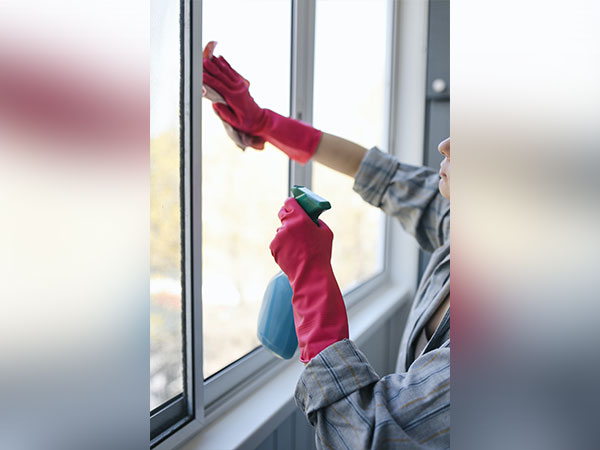
Representative Image

Washington DC [US], September 14 (ANI): A peer-reviewed study conducted by Environmental Working Group experts discovered disturbing details regarding the potential health dangers of common household cleaning products.
The study, published today in Chemosphere, analyzed 30 cleaning products, including multipurpose and glass cleaners, air fresheners and more. The study revealed that these everyday products may release hundreds of hazardous volatile organic compounds, known as VOCs. 
Researchers tested both conventional products and “green” cleaning products and detected a total of 530 unique VOCs in the 30 products. Of these, 193 VOCs were hazardous – identified as having the potential to cause health harms such as respiratory system damage, increased cancer risk and developmental and reproductive impacts.
VOCs in cleaning products affect the quality of air both indoors and outdoors. But they contaminate indoor air two to five times more than outdoor air, with some estimates putting it as high as 10 times more. Some products emit VOCs for days, weeks or even months. 
“This study is a wake-up call for consumers, researchers and regulators to be more aware of the potential risks associated with the numerous chemicals entering our indoor air,” said Alexis Temkin, PhD, a senior toxicologist at EWG. 
“Our findings emphasize a way to reduce exposure to hazardous VOCs – by selecting products that are ‘green,’ especially those that are ‘green’ and ‘fragrance-free,’ ” she said.
The study concluded that products labelled “green” emitted fewer VOCs, compared to conventional products – about half the number, on average. The green products categorized as “fragrance-free” also produced the fewest VOC emissions – nearly eight times fewer than conventional and four times fewer than green products that included fragrance on their label. 
That pattern also held true for the number of VOCs considered hazardous in the products. The green products emitted just four chemicals classified as hazardous, on average, compared to about 15 in green products with fragrance and 22 for conventional products.
This suggests that choosing green, or green and fragrance-free, cleaning products could be prudent for consumers concerned about indoor air quality and potential health risks.
Effect of VOC hazards
VOCs’ health harms are especially concerning because of how many Americans may be exposed to them in the workplace.
Research shows people working in the cleaning industry have a 50 per cent higher risk of developing asthma and a 43 per cent higher risk of chronic obstructive pulmonary disease. Women working in this field also face an increased risk of lung cancer. 
Children’s health may also be at risk. Some studies show that higher use of certain indoor cleaners in utero and in infancy is associated with a greater risk of asthma and wheezing in childhood.
“These cleaning products may hurt our health, but they may also harm the environment,” said Samara Geller, EWG senior director of cleaning science. 
The study’s results carry implications not only for human health but also for environmental health. VOCs emitted by consumer products can contribute to outdoor air pollution, adding to existing environmental concerns. A study from 2018 estimated that half of the VOCs responsible for air pollution stem from consumer products.
“Going green with your cleaning products is an easy way to reduce exposure to harmful chemicals. This may be especially important for women’s and children's health,” said Geller. (ANI)


Get the App

What to Read Next

Science

Discovering the genetics of climate adaptation 

Discovering the genetics of climate adaptation 

As climate change accelerates, plants are under increasing pressure to adapt to changing habitats and environmental conditions.

Read More
Science

AI can reveals hidden hazards of chemical mixtures in rivers

AI can reveals hidden hazards of chemical mixtures in rivers

Artificial intelligence can provide important insights into how complex chemical mixes in rivers affect aquatic life, paving the path for more effective environmental protection.

Read More
Science

When devices can read human emotions without a camera: Study

When devices can read human emotions without a camera: Study

Tokyo Metropolitan University researchers employed long-term skin conductance measurements to distinguish between emotions. Volunteers were given videos representing frightening scenarios, family bonding, and humour, while their skin conductance was measured.

Read More
Science

'Nuroscience study results can be better predicted by AI'

'Nuroscience study results can be better predicted by AI'

Large language models, a type of AI that analyses text, can anticipate the results of proposed neuroscience studies more correctly than human experts, according to a new study led by UCL (University College London) researchers.

Read More
Science

Gut microbes play role in regulating stress responsiveness

Gut microbes play role in regulating stress responsiveness

A groundbreaking study has revealed the critical role of gut bacteria in regulating stress responses through interactions with the body's circadian rhythms.

Read More
Science

Alternate method to study changes during DNA replication process

Alternate method to study changes during DNA replication process

Researchers at Colorado State University discovered an alternative way for studying alterations during the DNA replication process in lab settings using genetically modified yeast. The novel methodology provides a clearer picture than current pharmacological methods for understanding cell cycle arrest, a fundamental mechanism critical to cancer treatment and genetic concerns.

Read More
Science

Alzheimer’s disease can damage brain in two phases

Alzheimer’s disease can damage brain in two phases

Alzheimer's disease may cause brain damage in two stages, according to new research supported by the National Institutes of Health (NIH) that uses sophisticated brain mapping methods.

Read More
Science

Study finds new ways to prevent, treat type 2 diabetes

Study finds new ways to prevent, treat type 2 diabetes

Pancreatic cells, like human cells, have a limit to how much stress they can handle before they start to break down. Through overstimulation of these cells, certain stresses like inflammation and hyperglycemia lead to the onset of type 2 diabetes.

Read More
Science

Study: New potential treatment for cardiac arrhythmias

Study: New potential treatment for cardiac arrhythmias

A recent study by researchers at the University of Arizona College of Medicine - Phoenix and the University of California Davis Health discovered a new target for developing a medication to treat atrial fibrillation, the most prevalent kind of irregular heart rhythm.

Read More
Science

Study: New imaging method accurately detects kidney cancer

Study: New imaging method accurately detects kidney cancer

A recent study conducted by UCLA Health Jonsson Comprehensive Cancer Center researchers found that new, non-invasive imaging technology can detect clear-cell renal cell carcinoma, the most common kind of kidney cancer.

Read More
Home About Us Our Products Advertise Contact Us Terms & Condition Privacy Policy

Copyright © aninews.in | All Rights Reserved.
