 हिंदी खबर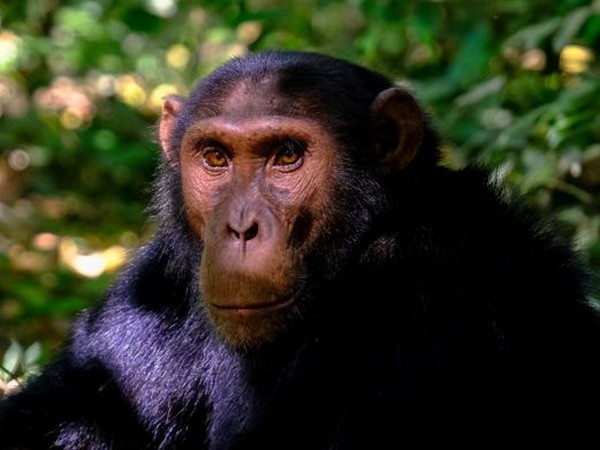

Leipzig (Germany), June 4 (ANI): Ordered vocal sequences in wild chimp communication can give light on the evolution of human language, according to a new study.
The study is published in the journal, 'Communications Biology, 2022'
Compared to the complex use of human language, the way animals communicate with each other appears quite simple. How our language evolved from such a simple system, remains unclear. Researchers from the
Max Planck Institutes for Evolutionary Anthropology (MPI-EVA) and for Cognitive and Brain Sciences (MPI-CBS) in Leipzig, Germany, and the CNRS Institute for Cognitive Sciences in Bron, Lyon, France, recorded thousands of vocalizations from wild chimpanzees in Tai, Ivory Coast.
They found that the animals produced hundreds of different vocal sequences containing up to ten different call types. The order of calls in these sequences followed some rules, and calls were associated with each other in a structured manner. The researchers will now investigate if this structure may constitute a step toward human syntax and if chimpanzees use these sequences to communicate a wider range of meanings in their complex social environment.
Humans are the only species on earth known to use language. We do this by combining sounds to form words and words to form hierarchically structured sentences. The question, of where this extraordinary capacity originates from, still remains to be answered. In order to retrace the evolutionary origins of human language, researchers often use a comparative approach -- they compare the vocal production of other animals, in particular primates, to those of humans. In contrast to humans, non-human primates often use single calls -referred to as call types -- and rarely combine them with each other to form vocal sequences. Consequently, vocal communication in non-human primates seems much less complex than human communication.
However, human language complexity does not arise from the number of sounds we use when we speak, which are typically below 50 different sounds in most languages, but from the way we combine sounds in a structured manner to form words and hierarchically combine these words to form sentences to express an infinite number of meanings. In fact, non-human primates also use up to 38 different calls to communicate, but they rarely combine them with each other. However, since they have so far not been analyzed in great detail, we may not have a full picture of the structure and diversity of vocal sequences produced by non-human primates.
Researchers at MPI-EVA and MPI-CBS in Leipzig and from the Institute of Cognitive Sciences at the CNRS in Bron, Lyon, France, recorded thousands of vocalizations produced by the members of three groups of wild chimpanzees in the Tai National Park on the Ivory Coast. They identified 12 different call types and assessed how chimpanzees combine them to form vocal sequences. "Observing animals in their natural social and ecological environment reveals a previously undiscovered complexity in the ways they communicate," says first author Cedric Girard-Buttoz.
"Syntax is a hallmark of human language and in order to elucidate the origin of this human ability it is crucial to understand how non-human primate vocalizations are structured," adds Emiliano Zaccarella, another lead author of the study.
The study shows that chimpanzees communicate with each other using hundreds of different sequences, combining up to ten call types across the whole repertoire. This is the first documentation of such a diversity of vocal production in non-human primates. Furthermore, the researches show that calls -- in combination with specific other calls -- predictably occurred in certain positions in the sequence, following adjacency rules. These adjacency rules applied also to sequences with three call types.
"Our findings highlight a vocal communication system in chimpanzees that is much more complex and structured than previously thought," says co-author Tatiana Bortolato who recorded the vocalizations in the forest. "This is the first study in a larger project. By studying the rich complexity of the vocal sequences of wild chimpanzees, a socially complex species like humans, we expect to bring fresh insight into understanding where we come from and how our unique language evolved," Catherine Crockford, senior author of the study, pointed out.
The authors will now investigate what these complex and structured vocal sequences mean and whether they allow chimpanzees to increase the range of topics they can communicate about. (ANI)




