

ADD ANI AS A TRUSTED SOURCE
googleads
ANI Logo
Menu
Science

Children are more receptive towards musical training during early years: Study

Washington [US], December 27 (ANI): According to a recent study there might be a particular developmental phase during the early period of children's life when their minds are most receptive towards musical training.

ANI Dec 27, 2020 13:48 IST googleads

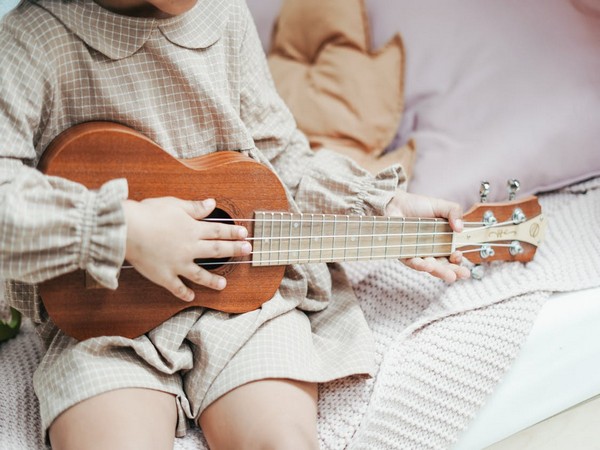
Representative Image

Washington [US], December 27 (ANI): According to a recent study there might be a particular developmental phase during the early period of children's life when their minds are most receptive towards musical training.
Among the many holiday traditions scuttled by pandemic restrictions this year are live concerts featuring skilled musicians. These gifted performers can often play with such ease that it is easy to underestimate the countless hours of practice that went into honing their craft. But could there be more to mastering music? Is there, as some have suggested, a developmental period early in life when the brain is especially receptive to musical training? The answer, according to new research published in the journal Psychological Science, is probably not.
"It is a common observation that successful musicians often start their musical training early," said Laura Wesseldijk, a researcher at the Karolinska Institute in Sweden and the first author on the paper. "One much-discussed explanation is that there may be a period in early childhood during which the brain is particularly susceptible to musical stimulation. We found, however, that the explanation to why an early start matters may be more complicated and interesting than previously believed."
While the new study supports the idea that an early start is associated with higher levels of musical skills and achievement in adulthood, the underlying reasons for this may have more to do with familial influences -- such as genetic factors and an encouraging musical family environment -- along with accumulating more total practice time than those who start later in life.
To untangle these effects, Wesseldijk and her colleagues recruited 310 professional musicians from various Swedish music institutions, such as orchestral and music schools. The researchers also used data from an existing research project, the Study of Twin Adults: Genes and Environment (STAGE). Participants from both studies were tested on musical aptitude and achievement. They also answered a series of questions that gauged how often they practiced and the age of onset of musical training. The STAGE data also provided genetic information on its participants.
By comparing the results from these two independent studies, the researchers were able to show that an earlier start age is associated with musical aptitude, both in amateurs and professional musicians, even after controlling for accumulated practice time. They then evaluated starting age in a manner that accounted for the genetic data from the STAGE study.
The results indicate that genetic factors -- possibly related to musical interest and talent -- have a substantial influence on the age individuals start music practice and their future musical aptitude. When controlling for familial factors, namely shared genetic and environmental influences, such as a home environment that is steeped in music, there was no additional association between an earlier start age and musicality.
A possible explanation for these results could be that children who display more talent in a particular field, such as music, are encouraged to start practicing earlier. Another possibility is that a musically active, interested, and talented family provides a musical environment for the child, while also passing on their genetic predispositions to engage in music.
"I think we have really investigated effects of the age you start musical training to the fullest," said Wesseldijk. "Personally, as someone who practices music, it is always great to shed light on some of the factors, within the gene environmental interplay, that influences music skills." (ANI)


Get the App

What to Read Next

Science

More insight into cardiovascular health in early pregnancy

More insight into cardiovascular health in early pregnancy

According to research, maintaining good cardiovascular health during the first trimester of pregnancy may mitigate the genetic risk of developing preeclampsia and/or gestational hypertension.

Read More
Science

Insight into how brain overgrowth dictates autism severity

Insight into how brain overgrowth dictates autism severity

Some children with autism face severe, long-term challenges such as developmental delays, social issues, and even the inability to communicate. Others report milder symptoms that improve with time.

Read More
Science

Association of ASD, disrupted developmental dopamine

 Association of ASD, disrupted developmental dopamine

According to recent research, dopamine is essential for the growth of neurons. Researchers have shown that autism spectrum disorder (ASD) and disrupted impaired developmental dopamine signalling are related.

Read More
Science

Study gives insight into significance of genetic sequencing

Study gives insight into significance of genetic sequencing

Brazilian researchers described the case of a nine-year-old boy admitted to the hospital with multiple symptoms and overlapping conditions that made diagnosis difficult, including short stature, thin tooth enamel (dental enamel hypoplasia), moderate mental deficiency, speech delay, asthma, mildly altered blood sugar, and a history of recurring infections in infancy.

Read More
Science

Study: Childhood trauma raises chronic pain risk in adulthood

Study: Childhood trauma raises chronic pain risk in adulthood

According to new research, physical, sexual, or emotional abuse or neglect, either alone or in combination with other types of childhood trauma, increases the likelihood of chronic pain and accompanying disability in adulthood.

Read More
Science

Training algorithm breaks barriers to deep neural networks

Training algorithm breaks barriers to deep neural networks

EPFL researchers created an algorithm that can train an analog neural network just as accurately as a digital one, allowing for the development of more efficient alternatives to power-hungry deep learning hardware

Read More
Space

Wearable devices can prevent astronauts from being lost in space

Wearable devices can prevent astronauts from being lost in space

Wearable gadgets that vibrate to provide orientation cues, however, have been identified by scientists to significantly improve the efficacy of this training, making spaceflight marginally safer.

Read More
Science

Wearable devices may help astronauts avoid being 'lost' in space

Wearable devices may help astronauts avoid being 'lost' in space

The sky is no longer the limit - but flying is risky. We lose many of the clues we need to orient ourselves when we leave the Earth's surface, and this spatial disorientation can be fatal. Astronauts typically require extensive training to protect themselves against it. However, scientists have discovered that wearable devices that vibrate to provide orientation cues may considerably improve the efficacy of this training, making spaceflight slightly safer.

Read More
Science

People who show expertise more likely to be considered valuable

People who show expertise more likely to be considered valuable

A new study sheds light on the critical role of communication and knowledge within businesses, emphasising how they influence collective performance. The researchers looked into how people get involved in communication networks, as well as the effect of selection procedures on group performance. According to the study, people who communicated more throughout training were more likely to be chosen as core members of the network.

Read More
Science

Training programme helps breast cancer survivors

Training programme helps breast cancer survivors

According to University of Reading scientists, a sort of computerised attention and memory training can restore impaired attention and memory deficiencies in breast cancer patients.

Read More
Home About Us Our Products Advertise Contact Us Terms & Condition Privacy Policy

Copyright © aninews.in | All Rights Reserved.


