

ADD ANI AS A TRUSTED SOURCE
googleads
ANI Logo
Menu
Science

Cancer cells become more aggressive when migrating through small spaces: Research

Washington [US], March 9 (ANI): The findings of new research suggest that squeezing through tight spaces makes cancer cells more aggressive and helps them evade cell death.

ANI Mar 09, 2022 05:26 IST googleads

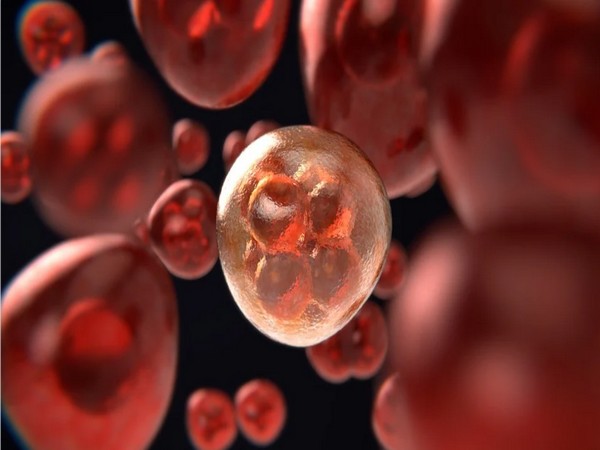
Representative image

Washington [US], March 9 (ANI): The findings of new research suggest that squeezing through tight spaces makes cancer cells more aggressive and helps them evade cell death.
The findings, published in 'eLife', reveal how mechanical stress makes cancer cells more likely to spread, or metastasise. While metastasis is the cause of most cancer deaths, there are currently no available cures. However, the new results may help scientists develop novel approaches to treat or prevent metastasis.
It can be a tight squeeze for cancer cells to escape their tumour or enter tiny blood vessels, called capillaries, to spread through the body. The cells must collapse and change their shape to do this, in a process called confined migration. As they spread, the cells must also avoid detection and destruction by the immune system.
"Mechanical stress can cause cancer cell mutations, as well as an uncontrolled increase in cell numbers and greater tissue invasion," explains first author Deborah Fanfone, Postdoctoral Fellow at the Cancer Research Center of Lyon, France. "We wanted to know if the mechanical stress of confined migration makes cancer cells more likely to metastasise, and how this happens."
To answer these questions, Fanfone and colleagues forced human breast cancer cells through a membrane with tiny, three-micrometer-sized holes to simulate a confined migration environment. After just one passage through the membrane, they found that the cells became more mobile and resistant to anoikis - a form of programmed cell death that occurs when cells become detached from the surrounding network of proteins and other molecules that support them (the extracellular matrix). The cells were also able to escape destruction by immune natural killer cells.
Further experiments showed that increased expression of inhibitory-of-apoptosis proteins (IAPs) increased the resistance of cancer cells to anoikis. Treating the cancer cells with a new type of cancer drug called a SMAC mimetic, which degrades IAPs, removed this protection.
The team then studied how breast cancer cells that had undergone confined migration behave when administered to immune-suppressed mice. They found these mice developed more lung metastases than mice that were administered with breast cancer cells that had not been exposed to confined migration.
"By mimicking confined migration, we've been able to explore its multifaceted effects on cancer aggressiveness," says senior author Gabriel Ichim, who leads the Cancer Cell Death team at the Cancer Research Center of Lyon. "We've shown how the process boosts survival in cancer cells and makes them more prone to forming deadly metastases."
The authors add that these results may lead to additional studies of potential metastasis treatments, such as therapies that soften tumours to reduce mechanical stress on cancer cells, or that block IAPs. These include SMAC mimetics, which are currently being tested in clinical trials as a possible new treatment approach. (ANI)


Get the App

What to Read Next

Science

Amphibians bounce-back from Earth’s greatest mass extinction

Amphibians bounce-back from Earth’s greatest mass extinction

Researchers at the University of Bristol discovered that ancient frog ancestors survived the biggest mass extinction of species by eating on freshwater prey that evaded terrestrial predators.

Read More
Science

New insights into how cancer evades the immune system: Study

New insights into how cancer evades the immune system: Study

Immunotherapy research primarily focuses on better recognition of cancer cells by the body's own immune system. Researchers at Amsterdam UMC and Moffitt Cancer Center have taken a different approach.

Read More
Science

Scientists use AI to better understand nanoparticles: Study

Scientists use AI to better understand nanoparticles: Study

A group of scientists has created a way to illuminate the dynamic behavior of nanoparticles, which are essential components in the production of pharmaceuticals, electronics, and industrial and energy-conversion materials.

Read More
Science

Study reveals impact of animals as architects of Earth

Study reveals impact of animals as architects of Earth

A new study led by Professor Gemma Harvey from Queen Mary University of London has revealed how hundreds of species shape the landscapes we depend on, from termite mounds visible from space to beavers creating wetlands and hippos carving drainage systems.

Read More
Science

New technology enhances gravitational-wave detection: Study

New technology enhances gravitational-wave detection: Study

A team of physicists led by Jonathan Richardson of the University of California, Riverside, demonstrated how new optical technology can extend the detection range of gravitational-wave observatories such as the Laser Interferometer Gravitational-Wave Observatory, or LIGO, and pave the way for future observatories.

Read More
Science

Shubhanshu Shukla: IAF officer becomes first Indian astronaut for

Shubhanshu Shukla: IAF officer becomes first Indian astronaut for

Shubhanshu Shukla, Indian Air Force (IAF) officer and one of four astronauts for Indian Space Research Organisation's (ISRO) Gaganyaan mission, has been sele Shubhanshu Shukla, Indian Air Force (IAF) officer and one of four astronauts for Indian Space Research Organisation's (ISRO) Gaganyaan mission, has been selected as the pilot for Axiom Mission 4, scheduled for Spring 2025.cted as the pilot for Axiom Mission 4, scheduled for Spring 2025.

Read More
Science

Large, small galaxies may grow in ways more similar

 Large, small galaxies may grow in ways more similar

A team of astronomers led by University of Arizona researcher Catherine Fielder captured the most precise photographs of a small galaxy and its surroundings, revealing features typically found in much larger galaxies.

Read More
Science

Astronomers find the smallest main-belt asteroids ever detected:

Astronomers find the smallest main-belt asteroids ever detected:

The majority of known asteroids orbit inside the main asteroid belt, which is positioned between Mars and Jupiter at an average distance of around 250 million km from Earth. Since the discovery of the first asteroid in 1801, about 750.000 asteroids have been identified, primarily in the last decade thanks to several optical surveys that examine the sky on clear nights.

Read More
Science

Study finds connection between quantum theory, information theory

Study finds connection between quantum theory, information theory

"Our results have no clear or direct application right now. It's basic research that lays the foundation for future technologies in quantum information and quantum computers. There's enormous potential for complete discoveries in many different research fields," said Guilherme B Xavier, a researcher in quantum communication at Linkoping University, Sweden.

Read More
Science

Tool for detecting problems during protein synthesis

Tool for detecting problems during protein synthesis

Protein synthesis in eukaryotic cells--found in plants, animals, and fungi--involves more than just the straightforward ribosome assembly of amino acids.

Read More
Home About Us Our Products Advertise Contact Us Terms & Condition Privacy Policy

Copyright © aninews.in | All Rights Reserved.


