

ADD ANI AS A TRUSTED SOURCE
googleads
ANI Logo
Menu
Science

Bright city lights in big cities causing smaller eyes in some birds: Study

While other studies have looked at how urban light affects the timing of birds’ “dawn song” and circadian rhythms, this is the first known study to show a connection to eye size.

ANI Sep 20, 2023 21:10 IST googleads

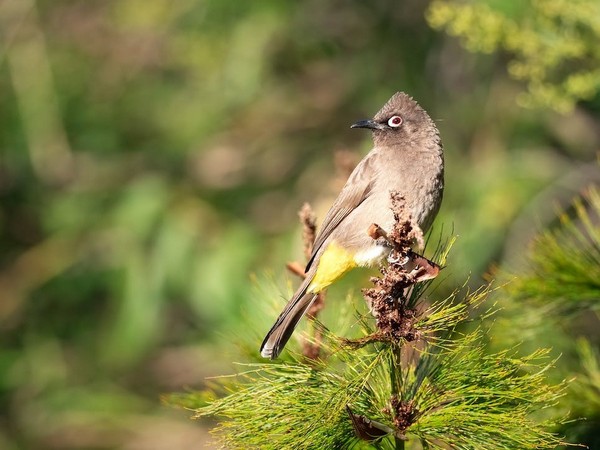
Representative Image

Washington [US], September 20 (ANI): According to a new study, the bright lights of big cities may be causing an evolutionary adaption for smaller eyes in some birds.
The findings, published in Global Change Biology, have implications for conservation efforts amid the rapid decline of bird populations across the U.S.  
The Northern Cardinal and Carolina Wren, two common songbirds that reside year-round in the urban centre of San Antonio, Texas, had eyes that were around 5 per cent smaller than individuals of the same species from the less bright outskirts.
Researchers discovered no variation in eye size between two migratory bird species, the Painted Bunting and the White-eyed Vireo, regardless of where they remained for most of the year.
The findings were published in Global Change Biology.
"This study shows that residential birds may adapt over time to urban areas, but migratory birds are not adapting, probably because where they spend the winter--they are less likely to have the same human-caused light and noise pressures. It may make it more difficult for them to adjust to city life during the breeding season,” said Jennifer Phillips, a Washington State University wildlife ecologist and senior author.
The US and Canada have lost 29 per cent of their bird populations or 3 billion birds since 1970, according to previous research. Scientists believe that habitat fragmentation is the primary driver of the decline in birds, but the current study suggests that sensory pollutants like human-caused light may also play a role in the birds’ ability to cope with city life.  
For this study, Phillips worked with post-doctoral fellow Todd Jones and graduate student Alfredo Llamas of Texas A&M University, San Antonio, to study more than 500 birds from central and edge areas of San Antonio. They compared the body and eye sizes of the birds and analyzed noise and light measurements during the day and night in each area.
There was no difference among the body sizes of birds in different areas, except for one species: the Painted Bunting. Upon further analysis, the researchers found that this size difference was mostly due to age. Younger, smaller male buntings, who cannot compete as well for mates as their more colourful elders, were more often found in the brighter, noisier central locations, which are likely less desirable. 
While other studies have looked at how urban light affects the timing of birds’ “dawn song” and circadian rhythms, this is the first known study to show a connection to eye size.
The smaller eye size may enable birds to deal with the brighter and more constant light in city environments, said Jones, the study’s first author who is now a post-doctoral fellow at the Smithsonian’s Migratory Bird Center. Birds with bigger eyes can be somewhat blinded by the glare of city lights or be unable to sleep well, putting them at a disadvantage in urban areas.
“Humans may have some unintended consequences on birds that we don’t realize,” said Jones. “We don’t know if these adaptations could have good or bad consequences for the birds down the road, considering that urban environments aren’t going away anytime soon. It is also important to understand how to manage such environments for the birds that maybe aren't urban adapted.”
Phillips is leading a team to investigate the effect of both light and noise pollution across multiple bird species with support from a recent $2.1 million grant from the National Science Foundation. The team will set up controlled experiments to help determine how light and noise affect the birdsstress levels, sleep hormones, song structure and aggression levels as well as whether these traits correlate to overall fitness.
“We want to know whether patterns at molecular and behavioural scales affect fitness or not. Essentially, we're trying to understand what are the benefits and costs to these animals living in a sensory-polluted world,” she said. (ANI)


Get the App

What to Read Next

Science

Discovery of unexpected collagen structure to influence research

Discovery of unexpected collagen structure to influence research

Collagen, the body's most abundant protein, has long been considered a predictable structural component of tissues.

Read More
Science

Microbes help detoxify our atmosphere, says study 

Microbes help detoxify our atmosphere, says study 

Melbourne researchers have uncovered important new information on how microbes absorb huge amounts of carbon monoxide (CO) and assist in reducing levels of this deadly gas.

Read More
Science

Gut microbes play role in regulating stress responsiveness

Gut microbes play role in regulating stress responsiveness

A groundbreaking study has revealed the critical role of gut bacteria in regulating stress responses through interactions with the body's circadian rhythms.

Read More
Science

Biomarker may predict response to immunotherapy in liver cancer

Biomarker may predict response to immunotherapy in liver cancer

According to a preclinical study conducted by Weill Cornell Medicine researchers, it may soon be feasible to detect whether individuals with hepatocellular carcinoma, a kind of liver cancer, may benefit from immunotherapy.

Read More
Science

Study finds novel approach to treat neurological diseases

Study finds novel approach to treat neurological diseases

The matter of what causes complicated neurological disorders like Alzheimer's or multiple sclerosis continues to perplex scientists and doctors, with unknowns impeding early diagnosis and successful treatment.

Read More
Science

Study finds new ways to prevent, treat type 2 diabetes

Study finds new ways to prevent, treat type 2 diabetes

Pancreatic cells, like human cells, have a limit to how much stress they can handle before they start to break down. Through overstimulation of these cells, certain stresses like inflammation and hyperglycemia lead to the onset of type 2 diabetes.

Read More
Science

Medication increases radiation therapy's efficacy for lung cancer

Medication increases radiation therapy's efficacy for lung cancer

A group of researchers from the University of Cincinnati has discovered a possible novel approach to enhance the efficacy of radiation therapy and enhance the prognosis of patients with lung cancer metastasizing to the brain.

Read More
Science

Study: Role of tRNA modifying enzyme in brain function

Study: Role of tRNA modifying enzyme in brain function

A pioneering study undertaken by a Kumamoto University research team shed light on the crucial role of TRMT10A, a tRNA methylation enzyme, in sustaining brain function. The findings show how TRMT10A deficiency reduces specific transfer RNA (tRNA) levels in the brain, altering protein synthesis and affecting synapse structure and function.

Read More
Science

Sleep apnea may increase abdominal aortic aneurysms risk

Sleep apnea may increase abdominal aortic aneurysms risk

Obstructive sleep apnea may increase the chance of developing abdominal aortic aneurysms, according to experts from the University of Missouri School of Medicine and NextGen Precision Health.

Read More
Science

Surrogacy linked with higher risk of severe pregnancy results

Surrogacy linked with higher risk of severe pregnancy results

According to new research, individuals who are gestational carriers (also known as "surrogates") may be more susceptible to severe complications during pregnancy and the early postpartum period, hypertension during pregnancy, and postpartum hemorrhage than those who conceive naturally or through IVF.

Read More
Home About Us Our Products Advertise Contact Us Terms & Condition Privacy Policy

Copyright © aninews.in | All Rights Reserved.


