

ADD ANI AS A TRUSTED SOURCE
googleads
ANI Logo
Menu
Science

Brain damage in infants can be prevented by stabilizing blood sugar level: Study

Washington [US], April 3 (ANI): The treatment of low blood sugar in infancy can ward off long-term brain damage in infants, according to a recent clinical study.

ANI Apr 03, 2022 15:42 IST googleads

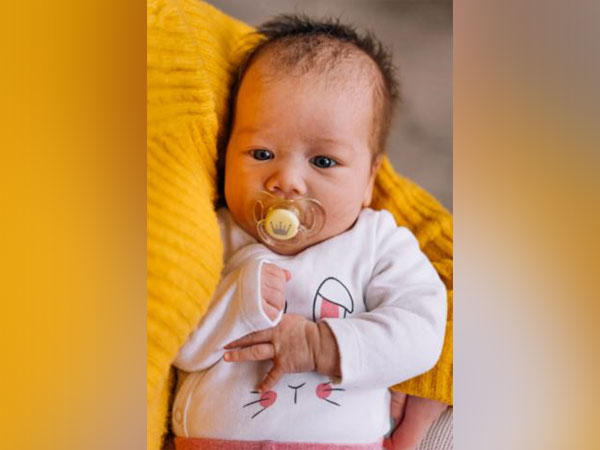
Representative image

Washington [US], April 3 (ANI): The treatment of low blood sugar in infancy can ward off long-term brain damage in infants, according to a recent clinical study.
The findings of the study were published in the journal 'JAMA'.
The study from the University of Waterloo and the University of Auckland is the first research of its kind to declare that stabilizing blood sugar levels in newborns with hypoglycemia prevents brain damage.
Low blood sugar, also known as hypoglycemia, occurs when the level of glucose in the blood is too low. Low blood sugar is very common, affecting more than one in six babies. As glucose is the main source of fuel for the brain and the body, untreated low blood sugar can cause adverse effects on a child's neurodevelopment up to the age of 4.5 years old.
While it's known that exposure to hypoglycemia alters the shape of the early developmental course, there has been a significant gap in our understanding of how hypoglycemia can alter a child's development after early childhood.
The team's new study examined the long-term consequences of a child's brain development in mid-childhood -- nine to 10 years old -- and found that there was no significant difference in academic outcomes for children exposed to hypoglycemia as newborns, as compared to their peers.
"Rich pre-school and school experiences may help a child's brain to re-organize and improve their academic abilities up to the developmental milestones of their peers," said Ben Thompson, a professor from the School of Optometry & Vision Science at Waterloo, CEO of the Centre for Eye and Vision Research in Hong Kong, and part of the team working on the groundbreaking research.
Following 480 children born at risk of neonatal hypoglycemia, researchers assessed each child aged nine to 10 in five key areas: academic achievement, executive function, visual-motor function, psychosocial adaptation, and general health. All child participants were involved in previous studies, providing researchers with information on their neuro-development outcomes at two and 4.5 years old.
The research team said that this catch-up in neuro-cognitive function could be because of brain-plasticity -- the brain's ability to adapt, change and mature as a result of experience.
"It's a big relief to know that babies who are born with and treated for a condition as common as hypoglycemia are not likely to suffer long-term brain damage," Thompson said.
Over the past decade, the research team has continued studying the efficacy of dextrose gel to treat low blood sugar in the first 48-hours of a newborn's life, avoiding the need for babies to go to newborn intensive care units immediately after delivery. Dextrose is a sugar that comes from corn or wheat that is chemically identical to blood sugar.
In an additional study published in the 'Journal for the American Medical Association', the team assesses the later risks of dextrose gel as a treatment for hypoglycemia in infancy and found it caused no significant difference in the risk of neuro-sensory impairment at age two.
This treatment continues to be widely used outside of New Zealand in a growing number of countries, including Canada, Australia, the United Kingdom and the United States. (ANI)


Get the App

What to Read Next

Science

New device could allow you to taste cake in virtual reality

New device could allow you to taste cake in virtual reality

The 'e-Taste' interface employs sensors and wireless chemical dispensers to enable remote taste perception, often known as gestation. Field testing done by researchers at The Ohio State University confirmed the device's ability to digitally simulate a range of taste intensities, while still offering variety and safety for the user.

Read More
Science

Strand Life Sciences launches portal for rare disease diagnosis

Strand Life Sciences launches portal for rare disease diagnosis

Marking Rare Disease Day, Strand Life Sciences, a subsidiary of Reliance Industries and a leading genomics research company, has launched the StrandOmics Portal, an innovative digital platform designed to assist doctors in diagnosing rare diseases more efficiently.

Read More
Science

COVID-19 severity may be predicted by White Blood Cell Count

COVID-19 severity may be predicted by White Blood Cell Count

A COVID-19 diagnosis is no longer as frightening as it used to be, thanks to developments in treatment choices. However, a new study reveals that leukocyte (white blood cell) count may now be used to identify who is more likely to develop more significant disease symptoms.

Read More
Science

Seals can essentially act as 'smart sensors': Study

Seals can essentially act as 'smart sensors': Study

A new study by marine biologists reports that seals can essentially act as 'smart sensors' for monitoring fish populations in the ocean's eerily dim 'twilight zone.'

Read More
Science

'Creation of black holes without singularities through gravity'

'Creation of black holes without singularities through gravity'

Traditional black holes, as predicted by Albert Einstein's theory of General Relativity, contain what are known as singularities, i.e. points where the laws of physics break down. Identifying how singularities are resolved in the context of quantum gravity is one of the fundamental problems in theoretical physics. Now, a team of experts has described the creation of regular black holes from gravitational effects without the need for the existence of exotic matter required by some previous models.

Read More
Science

New technology enhances gravitational-wave detection: Study

New technology enhances gravitational-wave detection: Study

A team of physicists led by Jonathan Richardson of the University of California, Riverside, demonstrated how new optical technology can extend the detection range of gravitational-wave observatories such as the Laser Interferometer Gravitational-Wave Observatory, or LIGO, and pave the way for future observatories.

Read More
Science

Discovering the genetics of climate adaptation 

Discovering the genetics of climate adaptation 

As climate change accelerates, plants are under increasing pressure to adapt to changing habitats and environmental conditions.

Read More
Science

Shubhanshu Shukla: IAF officer becomes first Indian astronaut for

Shubhanshu Shukla: IAF officer becomes first Indian astronaut for

Shubhanshu Shukla, Indian Air Force (IAF) officer and one of four astronauts for Indian Space Research Organisation's (ISRO) Gaganyaan mission, has been sele Shubhanshu Shukla, Indian Air Force (IAF) officer and one of four astronauts for Indian Space Research Organisation's (ISRO) Gaganyaan mission, has been selected as the pilot for Axiom Mission 4, scheduled for Spring 2025.cted as the pilot for Axiom Mission 4, scheduled for Spring 2025.

Read More
Science

AI can reveals hidden hazards of chemical mixtures in rivers

AI can reveals hidden hazards of chemical mixtures in rivers

Artificial intelligence can provide important insights into how complex chemical mixes in rivers affect aquatic life, paving the path for more effective environmental protection.

Read More
Science

Study finds connection between quantum theory, information theory

Study finds connection between quantum theory, information theory

"Our results have no clear or direct application right now. It's basic research that lays the foundation for future technologies in quantum information and quantum computers. There's enormous potential for complete discoveries in many different research fields," said Guilherme B Xavier, a researcher in quantum communication at Linkoping University, Sweden.

Read More
Home About Us Our Products Advertise Contact Us Terms & Condition Privacy Policy

Copyright © aninews.in | All Rights Reserved.


