

ADD ANI AS A TRUSTED SOURCE
googleads
ANI Logo
Menu
Science

Blood iron levels could be key to slowing ageing: Study

Edinburgh [Scotland], July 16 (ANI): A group of scientists has now identified the genes which are linked to ageing. Studying the genes could help explain why some people age at different rates to others.

ANI Jul 16, 2020 23:32 IST googleads

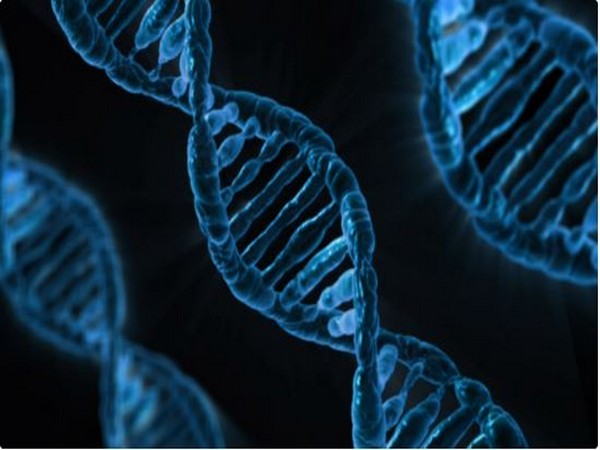
Representative Image

Edinburgh [Scotland], July 16 (ANI): A group of scientists has now identified the genes which are linked to ageing. Studying the genes could help explain why some people age at different rates to others.
The international study using genetic data from more than a million people suggests that maintaining healthy levels of iron in the blood could be a key to ageing better and living longer.
The findings could accelerate the development of drugs to reduce age-related diseases, extend healthy years of life, and increase the chances of living to old age free of disease, the researchers say.
Scientists from the University of Edinburgh and the Max Planck Institute for Biology of Ageing in Germany focused on three measures linked to biological ageing - lifespan, years of life lived free of disease (healthspan), and being extremely long-lived (longevity).
Biological ageing - the rate at which our bodies decline over time - varies between people and drives the world's most fatal diseases, including heart disease, dementia and cancers.
The researchers pooled information from three public datasets to enable analysis in unprecedented detail. The combined dataset was equivalent to studying 1.75 million lifespans or more than 60,000 extremely long-lived people.
The team pinpointed ten regions of the genome linked to long lifespan, healthspan, and longevity. They also found that gene sets linked to iron were overrepresented in their analysis of all three measures of ageing.
The researchers confirmed this using a statistical method - known as Mendelian randomisation - that suggested that genes involved in metabolising iron in the blood are partly responsible for a healthy long life.
Blood iron is affected by diet and abnormally high or low levels are linked to age-related conditions such as Parkinson's disease, liver disease and a decline in the body's ability to fight infection in older age.
The researchers say that designing a drug that could mimic the influence of genetic variation on iron metabolism could be a future step to overcome some of the effects of ageing, but caution that more work is required.
The study was funded by the Medical Research Council and is published in the journal Nature Communications.
Anonymised datasets linking genetic variation to healthspan, lifespan, and longevity were downloaded from the publically available Zenodo, Edinburgh DataShare, and Longevity Genomics servers.
Dr Paul Timmers from the Usher Institute at the University of Edinburgh, said: "We are very excited by these findings as they strongly suggest that high levels of iron in the blood reduce our healthy years of life, and keeping these levels in check could prevent age-related damage.
"We speculate that our findings on iron metabolism might also start to explain why very high levels of iron-rich red meat in the diet have been linked to age-related conditions such as heart disease," Timmers added.
While, Dr Joris Deelen from the Max Planck Institute for Biology of Ageing in Germany, said: "Our ultimate aim is to discover how ageing is regulated and find ways to increase health during ageing. The ten regions of the genome we have discovered that are linked to lifespan, healthspan and longevity are all exciting candidates for further studies." (ANI)


Get the App

What to Read Next

Science

Amphibians bounce-back from Earth’s greatest mass extinction

Amphibians bounce-back from Earth’s greatest mass extinction

Researchers at the University of Bristol discovered that ancient frog ancestors survived the biggest mass extinction of species by eating on freshwater prey that evaded terrestrial predators.

Read More
Science

New insights into how cancer evades the immune system: Study

New insights into how cancer evades the immune system: Study

Immunotherapy research primarily focuses on better recognition of cancer cells by the body's own immune system. Researchers at Amsterdam UMC and Moffitt Cancer Center have taken a different approach.

Read More
Science

Scientists use AI to better understand nanoparticles: Study

Scientists use AI to better understand nanoparticles: Study

A group of scientists has created a way to illuminate the dynamic behavior of nanoparticles, which are essential components in the production of pharmaceuticals, electronics, and industrial and energy-conversion materials.

Read More
Science

New device could allow you to taste cake in virtual reality

New device could allow you to taste cake in virtual reality

The 'e-Taste' interface employs sensors and wireless chemical dispensers to enable remote taste perception, often known as gestation. Field testing done by researchers at The Ohio State University confirmed the device's ability to digitally simulate a range of taste intensities, while still offering variety and safety for the user.

Read More
Science

Strand Life Sciences launches portal for rare disease diagnosis

Strand Life Sciences launches portal for rare disease diagnosis

Marking Rare Disease Day, Strand Life Sciences, a subsidiary of Reliance Industries and a leading genomics research company, has launched the StrandOmics Portal, an innovative digital platform designed to assist doctors in diagnosing rare diseases more efficiently.

Read More
Science

Study reveals impact of animals as architects of Earth

Study reveals impact of animals as architects of Earth

A new study led by Professor Gemma Harvey from Queen Mary University of London has revealed how hundreds of species shape the landscapes we depend on, from termite mounds visible from space to beavers creating wetlands and hippos carving drainage systems.

Read More
Science

Opposing arrows of time emerge from certain quantum systems

Opposing arrows of time emerge from certain quantum systems

Researchers at the University of Surrey made a thought-provoking discovery. A new study reveals that opposing arrows of time can theoretically emerge from certain quantum systems.

Read More
Science

COVID-19 severity may be predicted by White Blood Cell Count

COVID-19 severity may be predicted by White Blood Cell Count

A COVID-19 diagnosis is no longer as frightening as it used to be, thanks to developments in treatment choices. However, a new study reveals that leukocyte (white blood cell) count may now be used to identify who is more likely to develop more significant disease symptoms.

Read More
Science

'Creation of black holes without singularities through gravity'

'Creation of black holes without singularities through gravity'

Traditional black holes, as predicted by Albert Einstein's theory of General Relativity, contain what are known as singularities, i.e. points where the laws of physics break down. Identifying how singularities are resolved in the context of quantum gravity is one of the fundamental problems in theoretical physics. Now, a team of experts has described the creation of regular black holes from gravitational effects without the need for the existence of exotic matter required by some previous models.

Read More
Science

New technology enhances gravitational-wave detection: Study

New technology enhances gravitational-wave detection: Study

A team of physicists led by Jonathan Richardson of the University of California, Riverside, demonstrated how new optical technology can extend the detection range of gravitational-wave observatories such as the Laser Interferometer Gravitational-Wave Observatory, or LIGO, and pave the way for future observatories.

Read More
Home About Us Our Products Advertise Contact Us Terms & Condition Privacy Policy

Copyright © aninews.in | All Rights Reserved.


