

ADD ANI AS A TRUSTED SOURCE
googleads
ANI Logo
Menu
Science

Blocking fat storage might offer new way to treat most lethal form of brain cancer

Ohio [USA], July 20 (ANI): Glioblastoma is a lethal form of brain cancer that accumulates fats in lipid droplets and uses them as energy for rapid cell division. Blocking an enzyme that GBM cells use to form the lipid droplets might offer a new way to treat this deadly disease, according to a new study.

ANI Jul 20, 2020 23:48 IST googleads

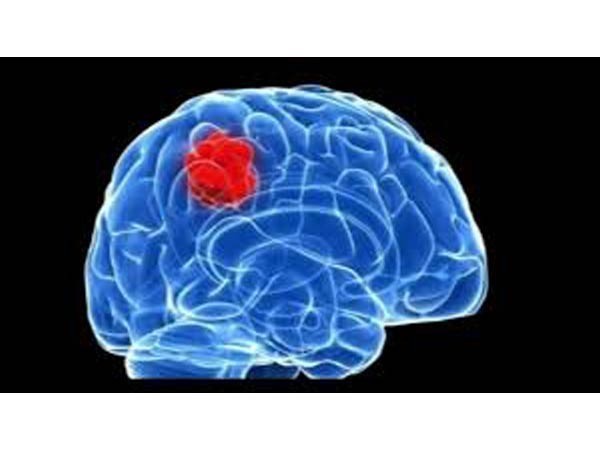
Representative image

Ohio [USA], July 20 (ANI): Glioblastoma is a lethal form of brain cancer that accumulates fats in lipid droplets and uses them as energy for rapid cell division. Blocking an enzyme that GBM cells use to form the lipid droplets might offer a new way to treat this deadly disease, according to a new study.
The study led by researchers at The Ohio State University Comprehensive Cancer Center - Arthur G. James Cancer Hospital and Richard J. Solove Research Institute was published in the journal Cell Metabolism.
GBM has an average survival of 12-15 months after diagnosis, a period that has remained unchanged for two decades. New, more effective treatments are desperately needed.
In earlier work, this same research team learned that GBM cells accumulate unusually high levels of fatty acids and use them as a source of energy needed for rapid cell growth. Normally, excessive levels of fatty acids are deadly to cells.
In this study, the researchers looked at an enzyme called DGAT1 (diacylglycerol-acyltransferase 1). GBM cells use the enzyme to package fatty acids into lipid droplets. The enzyme converts fatty acids into molecules called triglycerides, which can be safely stored as lipid droplets in the cancer cells' cytoplasm.
Blocking DGAT1 diverted the excessive fatty-acid molecules to mitochondria, the cells' energy-producing organelles, rather than to storage. This overwhelmed the organelles, causing them to produce high levels of destructive molecules called oxygen radicals (also called reactive oxygen species). This, in turn, damaged the mitochondria and triggered the cells to self-destruct through a process called apoptosis.
"These findings suggest that inhibiting DGAT1 might offer a new therapeutic approach for the treatment of glioblastoma," says principal investigator Deliang Guo, PhD, professor of Radiation Oncology and director of Center for Cancer Metabolism at Ohio State.
"This same approach might also apply to cancers such as prostate, colon, renal and others, which also show lipid-droplet formation," says Guo, who is a member of the OSUCCC - James Translational Therapeutics Program.
For this study, Guo and his colleagues analysed patient tumour tissue, multiple GBM cell lines and an animal model to examine fatty acid metabolism and lipid droplet formation in GBM. Key findings of the study include:
Two enzymes, DGAT1 and DGAT2, are involved in the storage of triglycerides and the formation of lipid droplets, but DGAT1 is the dominant enzyme.
Inhibiting DGAT1 suppressed triglyceride and lipid droplet formation, leading to high levels of fatty acid oxidation in mitochondria, severe oxidative stress and GBM cell death.
In xenograft models, inhibiting DGAT1 suppressed GBM growth without noticeable toxic side effects.
"Overall, our findings may lead to the identification of lipid-metabolism pathways that are unique to glioblastoma and other malignancies, and to new therapies for these cancers," Guo says. (ANI)


Get the App

What to Read Next

Science

New method guides magnetism without magnets

New method guides magnetism without magnets

Researchers at Paul Scherrer Institute PSI have demonstrated an innovative method to control magnetism in materials using an energy-efficient electric field.

Read More
Science

Amphibians bounce-back from Earth’s greatest mass extinction

Amphibians bounce-back from Earth’s greatest mass extinction

Researchers at the University of Bristol discovered that ancient frog ancestors survived the biggest mass extinction of species by eating on freshwater prey that evaded terrestrial predators.

Read More
Science

New insights into how cancer evades the immune system: Study

New insights into how cancer evades the immune system: Study

Immunotherapy research primarily focuses on better recognition of cancer cells by the body's own immune system. Researchers at Amsterdam UMC and Moffitt Cancer Center have taken a different approach.

Read More
Science

Scientists use AI to better understand nanoparticles: Study

Scientists use AI to better understand nanoparticles: Study

A group of scientists has created a way to illuminate the dynamic behavior of nanoparticles, which are essential components in the production of pharmaceuticals, electronics, and industrial and energy-conversion materials.

Read More
Science

New device could allow you to taste cake in virtual reality

New device could allow you to taste cake in virtual reality

The 'e-Taste' interface employs sensors and wireless chemical dispensers to enable remote taste perception, often known as gestation. Field testing done by researchers at The Ohio State University confirmed the device's ability to digitally simulate a range of taste intensities, while still offering variety and safety for the user.

Read More
Science

Study reveals impact of animals as architects of Earth

Study reveals impact of animals as architects of Earth

A new study led by Professor Gemma Harvey from Queen Mary University of London has revealed how hundreds of species shape the landscapes we depend on, from termite mounds visible from space to beavers creating wetlands and hippos carving drainage systems.

Read More
Science

Opposing arrows of time emerge from certain quantum systems

Opposing arrows of time emerge from certain quantum systems

Researchers at the University of Surrey made a thought-provoking discovery. A new study reveals that opposing arrows of time can theoretically emerge from certain quantum systems.

Read More
Science

COVID-19 severity may be predicted by White Blood Cell Count

COVID-19 severity may be predicted by White Blood Cell Count

A COVID-19 diagnosis is no longer as frightening as it used to be, thanks to developments in treatment choices. However, a new study reveals that leukocyte (white blood cell) count may now be used to identify who is more likely to develop more significant disease symptoms.

Read More
Science

Seals can essentially act as 'smart sensors': Study

Seals can essentially act as 'smart sensors': Study

A new study by marine biologists reports that seals can essentially act as 'smart sensors' for monitoring fish populations in the ocean's eerily dim 'twilight zone.'

Read More
Science

New technology enhances gravitational-wave detection: Study

New technology enhances gravitational-wave detection: Study

A team of physicists led by Jonathan Richardson of the University of California, Riverside, demonstrated how new optical technology can extend the detection range of gravitational-wave observatories such as the Laser Interferometer Gravitational-Wave Observatory, or LIGO, and pave the way for future observatories.

Read More
Home About Us Our Products Advertise Contact Us Terms & Condition Privacy Policy

Copyright © aninews.in | All Rights Reserved.
