

ADD ANI AS A TRUSTED SOURCE
googleads
ANI Logo
Menu
Science

Blind adults do recognise animal appearances

Washington D.C. [USA], May 27 (ANI): Contrary to the idea that blind people learn about animal appearance from sighted people's descriptions, a recent study claims that with the help of logical inference blind adults gets a rich insight into what hippos and sharks look like.

ANI May 27, 2019 14:26 IST googleads

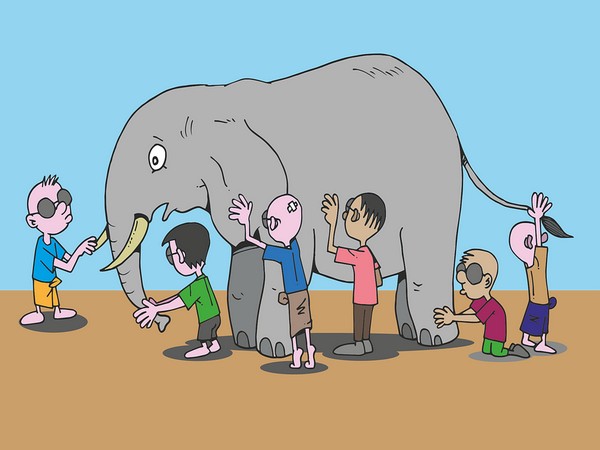
Representative image

Washington D.C. [USA], May 27 (ANI): Contrary to the idea that blind people learn about animal appearance from sighted people's descriptions, a recent study claims that with the help of logical inference blind adults can get a rich insight into what hippos and sharks look like.
"First person experience isn't the only way to develop a rich understanding of the world around us," said Judy Kim, the corresponding author of the study published in the Journal of Proceedings of the National Academy of Sciences.
While some previous research has shown that blind people do have knowledge of things like light and colour, researchers still have little understanding of what blind people know about appearance and how such information is learned. Some studies suggest that people born blind remember verbal facts, like 'flamingos are pink,' so the research team wanted to investigate further.
The researchers presented 20 blind and 20 sighted adults with animal names and asked participants to order animals by size (smallest to largest) and height (shortest to tallest); sort animals into groups based on shape, skin texture and colour pick which animal out of a group is unlike the others in shape, and choose from various texture options ("Does a hippo have feathers, fur, skin or scales?").
Overall, blind and sighted participants organized animals in similar ways and agreed on which physical features were most likely to be observed within animal groups.
For example, blind and sighted participants judged that dolphins are similar in shape to sharks and sloths are similar in texture to grizzlies. 15 out of 20 blind and 19 out of 20 sighted participants judged elephants to be bigger than rhinos. But the groups also showed some differences.
Blind and sighted participants disagreed most about the dimension that was easiest for sighted people to describe in words - animal colour.
Sighted participants created groups for white, pink, black, black and white, brown and grey animals, and they easily labelled these groups according to their primary colours.
By contrast, sighted people had a hard time verbally describing their shape groupings; they used many words and did not agree with each other. Nevertheless, blind people created similar shape groups to the sight but did not make consistent colour groups.
Researchers found that to deduce what animals looked like, blind people relied on similar biological classifications that scientists use to group species.
This strategy works very well for shape and texture: birds, for example, have feathers and a characteristic winged shape. Such inference works less well for colour because many very different animals are white (e.g., swans, polar bears and sheep).
The main conclusion is that blind people develop rich and accurate ideas about appearance based on inference.
"It's sometimes assumed that the senses and direct experience are the best way to learn about the world. What the findings show is that linguistic communication can give us rich and accurate knowledge, even knowing that at first glance seems 'visual.'" said, one of the researchers, Marina Bedny. (ANI)

Get the App

What to Read Next

Science

Study reveals how reminders can eliminate age-related memory loss

Study reveals how reminders can eliminate age-related memory loss

A recent study from UT Arlington showed that setting reminders can reverse some age-related memory deficits. The findings represent a significant breakthrough in tackling the cognitive issues that older persons confront, particularly in the context of prospective memory, which is the ability to remember to complete an intended activity at the appropriate time, such as taking medication or attending appointments.

Read More
Science

Study finds how skin cancer occurrence in young adults declines

Study finds how skin cancer occurrence in young adults declines

A recent study suggested that the risk of malignant melanoma, or skin cancer, may be declining in Sweden, at least for people under the age of 50.

Read More
Science

Fossil study finds how sea level changes shaped early life

Fossil study finds how sea level changes shaped early life

A newly developed timeline of early animal fossils suggests a relationship between sea level fluctuations, variations in marine oxygen, and the appearance of the earliest ancestors of present-day animals.

Read More
Science

Blood cancer medication more effective on brain tumours

Blood cancer medication more effective on brain tumours

According to a recent study, medications intended to treat blood and other malignancies may also increase the effectiveness of radiation therapy for low-grade brain tumours in adults.

Read More
Science

Ultra-processed foods associated with increased risk of death

Ultra-processed foods associated with increased risk of death

According to a recent study, older persons who reported consuming more ultra-processed foods were nearly 10 per cent more likely to die after a median follow-up of 23 years than older adults who reported consuming less processed food.

Read More
Science

Link between children sleep problems, psychosis in young adults

Link between children sleep problems, psychosis in young adults

According to recent study, children who suffer from chronic sleep deprivation from an early age may be more likely to have psychosis in their early adult years.

Read More
Science

Study finds how birdwatching helps students reduce distress

Study finds how birdwatching helps students reduce distress

Birdwatching could be an option for college students looking to enhance their mental health.

Read More
Science

Study finds how obesity affects fecal incontinence

Study finds how obesity affects fecal incontinence

For millions of adults in the United States, involuntary loss of bowel control, or fecal incontinence (FI), has a major negative influence on their quality of life and mental health. Although it is believed that obesity has an impact on bowel function, it is still unknown how body mass index (BMI), the usual measure of obesity, and FI are related.

Read More
Science

Childhood maltreatment continues to impact physical health

Childhood maltreatment continues to impact physical health

Childhood maltreatment can have a long-term impact on an individual's likelihood of poor physical health and traumatic events, according to a new study.

Read More
Science

Study shows older adults want to express themselves with emojis

Study shows older adults want to express themselves with emojis

A new study from the University of Ottawa sheds light on how different generations interpret the use of emojis in their communications, with older persons unclear how to use them as frequently as younger adults, despite recognizing their meaning.

Read More
Home About Us Our Products Advertise Contact Us Terms & Condition Privacy Policy

Copyright © aninews.in | All Rights Reserved.




