 हिंदी खबर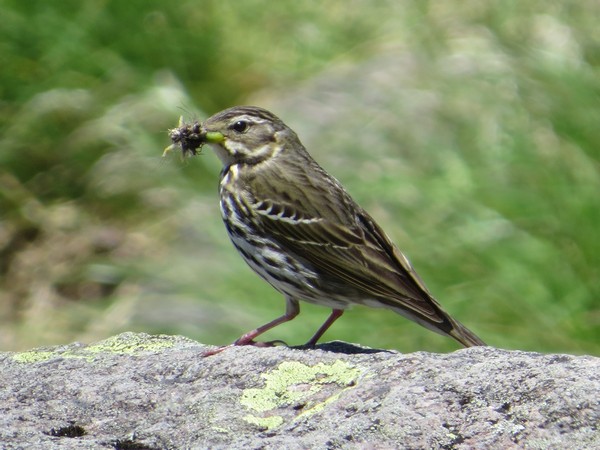

Washington D.C. [USA], Sept 2 (ANI): Birds around the world eat 400 to 500 million metric tonnes of beetles, flies, ants, moths, aphids, grasshoppers, crickets and other arthropod per year, claims a study.
The research highlights the important role birds play in keeping plant-eating insect populations under control, according to the study published in the journal -- 'The Science of Nature'.
Nyffeler and his colleagues based their figures on 103 studies that highlighted the volume of prey that insect-eating birds consume in seven of the world's major ecological communities known as biomes.
According to their estimations, this amounts to between 400 and 500 million tonnes of insects per year but is most likely to be on the lower end of the range.
Their calculations are supported by a large number of experimental studies conducted by many different research teams in a variety of habitats in different parts of the world.
"The global population of insectivorous birds annually consumes as much energy as a megacity the size of New York. They get this energy by capturing billions of potentially harmful herbivorous insects and other arthropods," said Nyffeler.
Forest-dwelling birds consume around 75 per cent of the insects eaten in total by birds which make up about 300 million tonnes of insects per year. About 100 million tonnes are eaten by birds in savanna areas, grasslands and croplands, and those living in the deserts and Arctic tundra.
Birds actively hunt insects especially during the breeding season, when they need protein-rich prey to feed to their nestlings.
Further, the researchers estimated that insectivorous birds together only have biomasses of about three million tonnes. Nyffeler said the comparatively low value for the global biomass of wild birds can be partially explained through their very low production efficiency.
This means that respiration takes a lot of energy and only leaves about one to two per cent to be converted into biomass.
"The estimates presented in this paper emphasise the ecological and economic importance of insectivorous birds in suppressing potentially harmful insect pests on a global scale, especially in forested areas," explained Nyffeler, who said that this is especially so for tropical, temperate and boreal forest ecosystems.
"Only a few other predator groups such as spiders and entomophagous insects (including in particular predaceous ants) can keep up with the insectivorous birds in their capacity to suppress plant-eating insect populations on a global scale," he added.
A study from 2017 which Nyffeler also led showed that spiders consume between 400 and 800 million tonnes of insects each year. Other predator groups like bats, primates, shrews, hedgehogs, frogs, salamanders, and lizards seem to be valuable yet less effective natural enemies of plant-eating insects.
He said their influence seems to be more biome-specific rather than on a worldwide scale. For instance, lizards help to suppress insects on tropical islands, but less so on a broader scale. (ANI)
Birds eat 400 to 500 million tonnes of insects annually: Study
ANI | Updated: Sep 02, 2019 16:49 IST


