

ADD ANI AS A TRUSTED SOURCE
googleads
ANI Logo
Menu
Science

Biggest CO2 drop: Real-time data show Covid-19's massive impact on global emissions

Washington [US], October 14 (ANI): While the ongoing Corona pandemic continues to threaten millions of lives around the world, the first half of 2020 saw an unprecedented decline in CO2 emissions - larger than during the financial crisis of 2008, the oil crisis of 1979, or even World War II.

ANI Oct 14, 2020 15:57 IST googleads

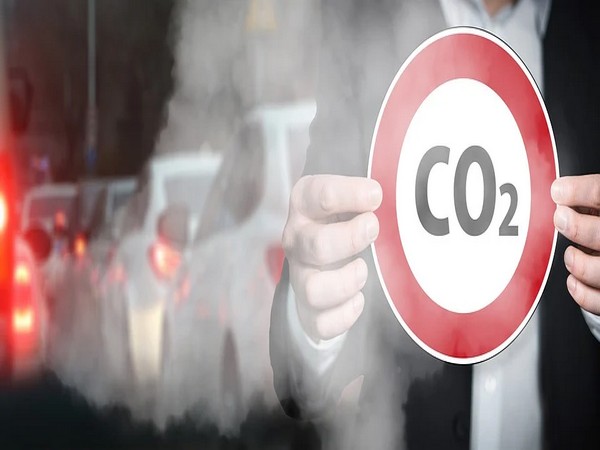
Representative Image

Washington [US], October 14 (ANI): While the ongoing Corona pandemic continues to threaten millions of lives around the world, the first half of 2020 saw an unprecedented decline in CO2 emissions - larger than during the financial crisis of 2008, the oil crisis of 1979, or even World War II.
An international team of researchers has found that in the first six months of 2020, 8.8 per cent less carbon dioxide was emitted than in the same period in 2019 - a total decrease of 1,551 million tonnes. The groundbreaking study not only offers a much more precise look at COVID-19's impact on global energy consumption than previous analyses. It also suggests what fundamental steps could be taken to stabilise the global climate in the aftermath of the pandemic.
"What makes our study unique is the analysis of meticulously collected near-real-time data," explains lead author Zhu Liu from the Department of Earth System Science at Tsinghua University in Beijing. "By looking at the daily figures compiled by the Carbon Monitor research initiative we were able to get a much faster and more accurate overview, including timelines that show how emissions decreases have corresponded to lockdown measures in each country. In April, at the height of the first wave of Corona infections, when most major countries shut down their public life and parts of their economy, emissions even declined by 16.9 per cent. Overall, the various outbreaks resulted in emission drops that we normally see only on a short-term basis on holidays such as Christmas or the Chinese Spring Festival."
The study, published in the latest issue of Nature Communications, shows which parts of the global economy were most impacted. "The greatest reduction of emissions was observed in the ground transportation sector," explains Daniel Kammen, professor and chair of the Energy and Resources Group and also a professor in the Goldman School of Public Policy, University of California, Berkeley. "Largely because of working from home restrictions, transport CO2 emissions decreased by 40 per cent worldwide. In contrast, the power and industry sectors contributed less to the decline, with -22 per cent and -17 per cent, respectively, as did the aviation and shipping sectors. Surprisingly, even the residential sector saw a small emissions drop of 3 per cent: largely because of an abnormally warm winter in the northern hemisphere, heating energy consumption decreased with most people staying at home all day during lockdown periods."
To paint this comprehensive and multidimensional picture, the researchers based their estimates on a wide array of data: precise, hourly datasets of electric power production in 31 countries, daily vehicle traffic in more than 400 cities worldwide, daily global passenger flights, monthly production data for industry in 62 countries as well as fuel consumption data for building emissions in more than 200 countries.
The researchers also found strong rebound effects. With the exception of a continuing decrease of emissions stemming from the transportation sector, by July 2020, as soon as lockdown measures were lifted, most economies resumed their usual levels of emitting CO2. But even if they remained at their historically low levels, this would have a rather minuscule effect on the long-term CO2 concentration in the atmosphere.
Thus, the authors stress that the only valid strategy to stabilise the climate is a complete overhaul of the industry and commerce sector. "While the CO2 drop is unprecedented, decreases of human activities cannot be the answer," says Co-Author Hans Joachim Schellnhuber, founding director of the Potsdam Institute for Climate Impact Research. "Instead we need structural and transformational changes in our energy production and consumption systems. Individual behavior is certainly important, but what we really need to focus on is reducing the carbon intensity of our global economy." (ANI)


Get the App

What to Read Next

Science

New method guides magnetism without magnets

New method guides magnetism without magnets

Researchers at Paul Scherrer Institute PSI have demonstrated an innovative method to control magnetism in materials using an energy-efficient electric field.

Read More
Science

Amphibians bounce-back from Earth’s greatest mass extinction

Amphibians bounce-back from Earth’s greatest mass extinction

Researchers at the University of Bristol discovered that ancient frog ancestors survived the biggest mass extinction of species by eating on freshwater prey that evaded terrestrial predators.

Read More
Science

New insights into how cancer evades the immune system: Study

New insights into how cancer evades the immune system: Study

Immunotherapy research primarily focuses on better recognition of cancer cells by the body's own immune system. Researchers at Amsterdam UMC and Moffitt Cancer Center have taken a different approach.

Read More
Science

Scientists use AI to better understand nanoparticles: Study

Scientists use AI to better understand nanoparticles: Study

A group of scientists has created a way to illuminate the dynamic behavior of nanoparticles, which are essential components in the production of pharmaceuticals, electronics, and industrial and energy-conversion materials.

Read More
Science

New device could allow you to taste cake in virtual reality

New device could allow you to taste cake in virtual reality

The 'e-Taste' interface employs sensors and wireless chemical dispensers to enable remote taste perception, often known as gestation. Field testing done by researchers at The Ohio State University confirmed the device's ability to digitally simulate a range of taste intensities, while still offering variety and safety for the user.

Read More
Science

Study reveals impact of animals as architects of Earth

Study reveals impact of animals as architects of Earth

A new study led by Professor Gemma Harvey from Queen Mary University of London has revealed how hundreds of species shape the landscapes we depend on, from termite mounds visible from space to beavers creating wetlands and hippos carving drainage systems.

Read More
Science

Opposing arrows of time emerge from certain quantum systems

Opposing arrows of time emerge from certain quantum systems

Researchers at the University of Surrey made a thought-provoking discovery. A new study reveals that opposing arrows of time can theoretically emerge from certain quantum systems.

Read More
Science

COVID-19 severity may be predicted by White Blood Cell Count

COVID-19 severity may be predicted by White Blood Cell Count

A COVID-19 diagnosis is no longer as frightening as it used to be, thanks to developments in treatment choices. However, a new study reveals that leukocyte (white blood cell) count may now be used to identify who is more likely to develop more significant disease symptoms.

Read More
Science

Seals can essentially act as 'smart sensors': Study

Seals can essentially act as 'smart sensors': Study

A new study by marine biologists reports that seals can essentially act as 'smart sensors' for monitoring fish populations in the ocean's eerily dim 'twilight zone.'

Read More
Science

New technology enhances gravitational-wave detection: Study

New technology enhances gravitational-wave detection: Study

A team of physicists led by Jonathan Richardson of the University of California, Riverside, demonstrated how new optical technology can extend the detection range of gravitational-wave observatories such as the Laser Interferometer Gravitational-Wave Observatory, or LIGO, and pave the way for future observatories.

Read More
Home About Us Our Products Advertise Contact Us Terms & Condition Privacy Policy

Copyright © aninews.in | All Rights Reserved.


