

ADD ANI AS A TRUSTED SOURCE
googleads
ANI Logo
Menu
Science

Bark of Neem tree can protect against COVID variants, suggests study

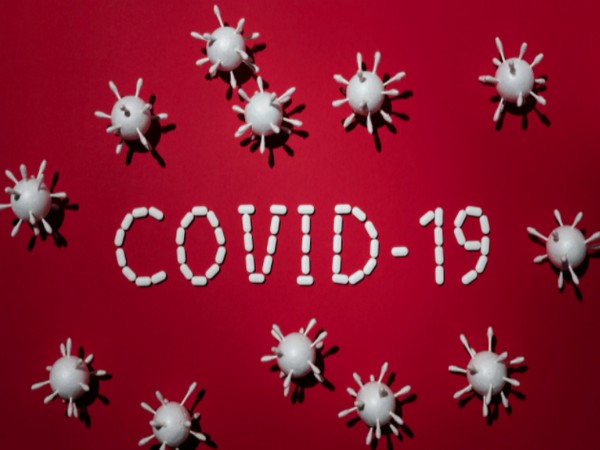
Kolkata (West Bengal) [India], March 1 (ANI): We may have often heard the elders in our family boast about the properties of Neem and its use in treating many physical ailments and diseases. But what about the infamous coronavirus? Does our trusty old Neem tree have any chances of protecting against it? A recent study has suggested that this may be actually possible!

ANI Mar 01, 2022 11:55 IST googleads

Representative image

Kolkata (West Bengal) [India], March 1 (ANI): We may have often heard the elders in our family boast about the properties of Neem and its use in treating many physical ailments and diseases. But what about the infamous coronavirus? Does our trusty old Neem tree have any chances of protecting against it? A recent study has suggested that this may be actually possible!
According to a new study led by scientists at the University of Colorado Anschutz Medical Campus and the Indian Institute of Science Education and Research Kolkata, extract from the bark of the Neem tree may help treat and reduce the spread of coronavirus.
The study was published in the journal, 'Virology'.
The study reported showed that components of Neem bark may target a wide range of viral proteins, suggesting its potential as an antiviral agent against emerging variants of coronaviruses (including SARS-CoV-2).
The Neem tree, indigenous to India, has been used for thousands of years for its anti-parasitic, anti-bacterial and antiviral properties. The bark extract has helped treat malaria, stomach and intestinal ulcers, skin diseases and many other diseases.
"The goal of this research is to develop a Neem-based medication that can reduce the risk of serious illness when someone is infected with coronaviruses," said study co-author Maria Nagel, MD, research professor in the department of neurology and ophthalmology at the University Of Colorado School Of Medicine on the CU Anschutz Medical Campus.
"We hope that scientists won't have to continuously develop new therapies every time a new SARS-CoV-2 variant emerges," she said. "Just like how we take penicillin for strep throat, we envision taking the Neem-based drug for COVID, allowing us to resume our normal lives without fear of hospitalization and death."
The scientists investigated the impact of the bark extract against coronaviruses in their laboratories. In India, researchers tested it in animal models and showed that it had antiviral properties against coronavirus. Using computer modeling, the researchers predicted that Neem bark extract will bind to the SARS-CoV-2 spike protein at various locations, preventing virus entry to host cells.
At CU Anschutz, Nagel's lab tested the Neem bark extract in SARS-CoV-2 human lung cells. It proved as effective as a preventive drug for infection and also decreased virus replication and spread after infection.
"The next step in our research is to identify the specific components in Neem bark extract that are antiviral. Because these components bind to various regions of SARS-CoV-2, we believe that it will be effective on emerging variants with spike mutations," said Nagel. "We will then determine the formulation of dosage for an antiviral drug to treat coronavirus infections."
The scientists said this research could guide new antiviral therapeutic efforts to combat the ongoing pandemic while holding out the promise for treating new coronavirus strains. (ANI)


Get the App

What to Read Next

Science

Amphibians bounce-back from Earth’s greatest mass extinction

Amphibians bounce-back from Earth’s greatest mass extinction

Researchers at the University of Bristol discovered that ancient frog ancestors survived the biggest mass extinction of species by eating on freshwater prey that evaded terrestrial predators.

Read More
Science

New insights into how cancer evades the immune system: Study

New insights into how cancer evades the immune system: Study

Immunotherapy research primarily focuses on better recognition of cancer cells by the body's own immune system. Researchers at Amsterdam UMC and Moffitt Cancer Center have taken a different approach.

Read More
Science

Scientists use AI to better understand nanoparticles: Study

Scientists use AI to better understand nanoparticles: Study

A group of scientists has created a way to illuminate the dynamic behavior of nanoparticles, which are essential components in the production of pharmaceuticals, electronics, and industrial and energy-conversion materials.

Read More
Science

New device could allow you to taste cake in virtual reality

New device could allow you to taste cake in virtual reality

The 'e-Taste' interface employs sensors and wireless chemical dispensers to enable remote taste perception, often known as gestation. Field testing done by researchers at The Ohio State University confirmed the device's ability to digitally simulate a range of taste intensities, while still offering variety and safety for the user.

Read More
Science

Strand Life Sciences launches portal for rare disease diagnosis

Strand Life Sciences launches portal for rare disease diagnosis

Marking Rare Disease Day, Strand Life Sciences, a subsidiary of Reliance Industries and a leading genomics research company, has launched the StrandOmics Portal, an innovative digital platform designed to assist doctors in diagnosing rare diseases more efficiently.

Read More
Science

Study reveals impact of animals as architects of Earth

Study reveals impact of animals as architects of Earth

A new study led by Professor Gemma Harvey from Queen Mary University of London has revealed how hundreds of species shape the landscapes we depend on, from termite mounds visible from space to beavers creating wetlands and hippos carving drainage systems.

Read More
Science

Opposing arrows of time emerge from certain quantum systems

Opposing arrows of time emerge from certain quantum systems

Researchers at the University of Surrey made a thought-provoking discovery. A new study reveals that opposing arrows of time can theoretically emerge from certain quantum systems.

Read More
Science

COVID-19 severity may be predicted by White Blood Cell Count

COVID-19 severity may be predicted by White Blood Cell Count

A COVID-19 diagnosis is no longer as frightening as it used to be, thanks to developments in treatment choices. However, a new study reveals that leukocyte (white blood cell) count may now be used to identify who is more likely to develop more significant disease symptoms.

Read More
Science

Seals can essentially act as 'smart sensors': Study

Seals can essentially act as 'smart sensors': Study

A new study by marine biologists reports that seals can essentially act as 'smart sensors' for monitoring fish populations in the ocean's eerily dim 'twilight zone.'

Read More
Science

'Creation of black holes without singularities through gravity'

'Creation of black holes without singularities through gravity'

Traditional black holes, as predicted by Albert Einstein's theory of General Relativity, contain what are known as singularities, i.e. points where the laws of physics break down. Identifying how singularities are resolved in the context of quantum gravity is one of the fundamental problems in theoretical physics. Now, a team of experts has described the creation of regular black holes from gravitational effects without the need for the existence of exotic matter required by some previous models.

Read More
Home About Us Our Products Advertise Contact Us Terms & Condition Privacy Policy

Copyright © aninews.in | All Rights Reserved.


