

ADD ANI AS A TRUSTED SOURCE
googleads
ANI Logo
Menu
Science

Avocado may offer better leukemia treatment, study affirms

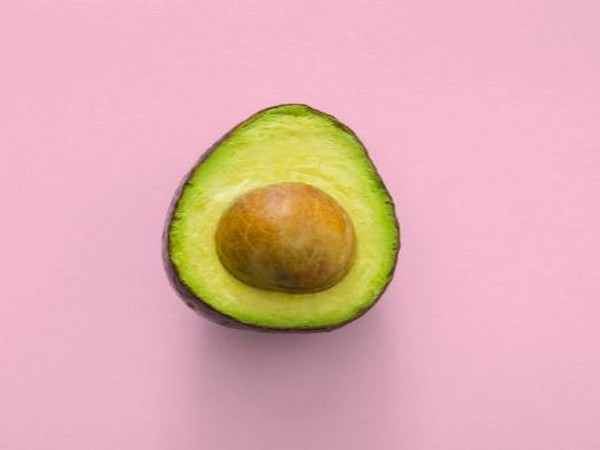
Ottawa [Canada], April 29 (ANI): A compound in avocados may ultimately offer a route to better leukaemia treatment, according to a new study led by researchers at the University of Guelph.

ANI Apr 29, 2021 22:33 IST googleads

Representative Image

Ottawa [Canada], April 29 (ANI): A compound in avocados may ultimately offer a route to better leukaemia treatment, according to a new study led by researchers at the University of Guelph.
The compound targets an enzyme that scientists have identified for the first time as being critical to cancer cell growth, said Dr Paul Spagnuolo, Department of Food Science.
Published recently in the journal Blood, the study focused on acute myeloid leukaemia (AML), which is the most devastating form of leukaemia. Most cases occur in people over age 65, and fewer than 10 per cent of patients survive five years after diagnosis.
Leukaemia cells have higher amounts of an enzyme called VLCAD involved in their metabolism, said Spagnuolo.
"The cell relies on that pathway to survive," he said, explaining that the compound is a likely candidate for drug therapy. "This is the first time VLCAD has been identified as a target in any cancer."
His team screened nutraceutical compounds among numerous compounds, looking for any substance that might inhibit the enzyme. "Lo and behold, the best one was derived from avocado," said Spagnuolo.
Earlier, his lab looked at avocation B, a fat molecule found only in avocados, for potential use in preventing diabetes and managing obesity. Now he's eager to see it used in leukaemia patients.
"VLCAD can be a good marker to identify patients suitable for this type of therapy. It can also be a marker to measure the activity of the drug," said Spagnuolo. "That sets the stage for the eventual use of this molecule in human clinical trials."
Currently, about half of patients over 65 diagnosed with AML enter palliative care. Others undergo chemotherapy, but drug treatments are toxic and can end up killing patients.
"There's been a drive to find less toxic drugs that can be used."
Referring to earlier work using avocation B for diabetes, Spagnuolo said, "We completed a human study with this as an oral supplement and have been able to show that appreciable amounts are fairly well tolerated." (ANI)


Get the App

What to Read Next

Science

Amphibians bounce-back from Earth’s greatest mass extinction

Amphibians bounce-back from Earth’s greatest mass extinction

Researchers at the University of Bristol discovered that ancient frog ancestors survived the biggest mass extinction of species by eating on freshwater prey that evaded terrestrial predators.

Read More
Science

Scientists use AI to better understand nanoparticles: Study

Scientists use AI to better understand nanoparticles: Study

A group of scientists has created a way to illuminate the dynamic behavior of nanoparticles, which are essential components in the production of pharmaceuticals, electronics, and industrial and energy-conversion materials.

Read More
Science

COVID-19 severity may be predicted by White Blood Cell Count

COVID-19 severity may be predicted by White Blood Cell Count

A COVID-19 diagnosis is no longer as frightening as it used to be, thanks to developments in treatment choices. However, a new study reveals that leukocyte (white blood cell) count may now be used to identify who is more likely to develop more significant disease symptoms.

Read More
Science

New technology enhances gravitational-wave detection: Study

New technology enhances gravitational-wave detection: Study

A team of physicists led by Jonathan Richardson of the University of California, Riverside, demonstrated how new optical technology can extend the detection range of gravitational-wave observatories such as the Laser Interferometer Gravitational-Wave Observatory, or LIGO, and pave the way for future observatories.

Read More
Science

Astronomers find the smallest main-belt asteroids ever detected:

Astronomers find the smallest main-belt asteroids ever detected:

The majority of known asteroids orbit inside the main asteroid belt, which is positioned between Mars and Jupiter at an average distance of around 250 million km from Earth. Since the discovery of the first asteroid in 1801, about 750.000 asteroids have been identified, primarily in the last decade thanks to several optical surveys that examine the sky on clear nights.

Read More
Science

Study finds connection between quantum theory, information theory

Study finds connection between quantum theory, information theory

"Our results have no clear or direct application right now. It's basic research that lays the foundation for future technologies in quantum information and quantum computers. There's enormous potential for complete discoveries in many different research fields," said Guilherme B Xavier, a researcher in quantum communication at Linkoping University, Sweden.

Read More
Science

When devices can read human emotions without a camera: Study

When devices can read human emotions without a camera: Study

Tokyo Metropolitan University researchers employed long-term skin conductance measurements to distinguish between emotions. Volunteers were given videos representing frightening scenarios, family bonding, and humour, while their skin conductance was measured.

Read More
Science

'Nuroscience study results can be better predicted by AI'

'Nuroscience study results can be better predicted by AI'

Large language models, a type of AI that analyses text, can anticipate the results of proposed neuroscience studies more correctly than human experts, according to a new study led by UCL (University College London) researchers.

Read More
Science

Gut microbes play role in regulating stress responsiveness

Gut microbes play role in regulating stress responsiveness

A groundbreaking study has revealed the critical role of gut bacteria in regulating stress responses through interactions with the body's circadian rhythms.

Read More
Science

Thermal imaging may help fruits, veggies stay fresher longer: Study

Thermal imaging may help fruits, veggies stay fresher longer: Study

Before your favourite produce arrives at the grocery store, it must be carefully harvested and stored for extended periods of time. A recent University of Georgia assessment argues that new temperature sensing devices could make that procedure considerably easier, as agricultural issues are exacerbated by changing climates.

Read More
Home About Us Our Products Advertise Contact Us Terms & Condition Privacy Policy

Copyright © aninews.in | All Rights Reserved.


