

ADD ANI AS A TRUSTED SOURCE
googleads
ANI Logo
Menu
Science

Astrologers finally find general neutron star structure

So far, little is known about the interior of neutron stars, those extremely compact objects that can form after the death of a star: the mass of our sun or even more is compressed into a sphere with the diameter of a large city.

ANI Nov 15, 2022 21:17 IST googleads

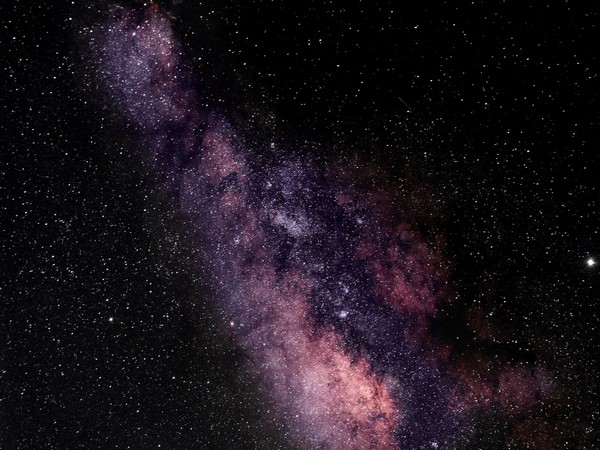
Representative Image

Frankfurt [Germany], November 15 (ANI): The mass of our sun or even more is compressed into a sphere with the diameter of a large city in stars">neutron stars, which can form following the death of a star. However, nothing is now known about the core of these highly compact objects. Scientists have been attempting to understand their structure ever since they were discovered more than 60 years ago.
Since they can barely be duplicated on Earth in a laboratory, the biggest obstacle is simulating the severe circumstances inside stars">neutron stars. As a result, there are numerous models in which different attributes, such as temperature and density, are defined using so-called equations of state. From the stellar surface to the inner core, these equations make an attempt to characterise the structure of stars">neutron stars.
Now, physicists from Goethe University Frankfurt have been successful in completing the jigsaw by adding more significant pieces. More than a million different equations of state were created by the working group at the Institute of Theoretical Physics under the direction of Prof. Luciano Rezzolla that satisfy the constraints imposed by data from theoretical nuclear physics on the one hand and astronomical observations on the other.
The working group unexpectedly found that "heavy" stars">neutron stars (with masses greater than 1.7 solar masses) have a stiff mantle and a soft core, in contrast to "light" stars">neutron stars (with masses smaller than 1.7 solar masses), which appear to have a soft mantle and a stiff core.
"This result is very interesting because it gives us a direct measure of how compressible the centre of stars">neutron stars can be," says Prof Luciano Rezzolla, "Neutron stars apparently behave a bit like chocolate pralines: light stars resemble those chocolates that have a hazelnut in their centre surrounded by soft chocolate, whereas heavy stars can be considered more like those chocolates where a hard layer contains a soft filling."
The speed of sound, which Sinan Altiparmak, a bachelor's student, focused on studying, was essential to this realisation. This quantitative metric, which relies on how stiff or flexible the matter is, describes the speed at which sound waves move about inside an item. On Earth, oil deposits are found and the planet's interior is explored using the speed of sound.
By modelling the equations of state, the physicists were also able to uncover other previously unexplained properties of stars">neutron stars. For example, regardless of their mass, they very probably have a radius of only 12 km. Thus, they are just as large in diameter as Goethe University's hometown Frankfurt.
Author Dr Christian Ecker explained: "Our extensive numerical study not only allows us to make predictions for the radii and maximum masses of stars">neutron stars but also to set new limits on their deformability in binary systems, that is, how strongly they distort each other through their gravitational fields. These insights will become particularly important to pinpoint the unknown equation of state with future astronomical observations and detections of gravitational waves from merging stars." (ANI)

Get the App

What to Read Next

Science

New method guides magnetism without magnets

New method guides magnetism without magnets

Researchers at Paul Scherrer Institute PSI have demonstrated an innovative method to control magnetism in materials using an energy-efficient electric field.

Read More
Science

New insights into how cancer evades the immune system: Study

New insights into how cancer evades the immune system: Study

Immunotherapy research primarily focuses on better recognition of cancer cells by the body's own immune system. Researchers at Amsterdam UMC and Moffitt Cancer Center have taken a different approach.

Read More
Science

Scientists use AI to better understand nanoparticles: Study

Scientists use AI to better understand nanoparticles: Study

A group of scientists has created a way to illuminate the dynamic behavior of nanoparticles, which are essential components in the production of pharmaceuticals, electronics, and industrial and energy-conversion materials.

Read More
Science

New device could allow you to taste cake in virtual reality

New device could allow you to taste cake in virtual reality

The 'e-Taste' interface employs sensors and wireless chemical dispensers to enable remote taste perception, often known as gestation. Field testing done by researchers at The Ohio State University confirmed the device's ability to digitally simulate a range of taste intensities, while still offering variety and safety for the user.

Read More
Science

Strand Life Sciences launches portal for rare disease diagnosis

Strand Life Sciences launches portal for rare disease diagnosis

Marking Rare Disease Day, Strand Life Sciences, a subsidiary of Reliance Industries and a leading genomics research company, has launched the StrandOmics Portal, an innovative digital platform designed to assist doctors in diagnosing rare diseases more efficiently.

Read More
Science

Study reveals impact of animals as architects of Earth

Study reveals impact of animals as architects of Earth

A new study led by Professor Gemma Harvey from Queen Mary University of London has revealed how hundreds of species shape the landscapes we depend on, from termite mounds visible from space to beavers creating wetlands and hippos carving drainage systems.

Read More
Science

Opposing arrows of time emerge from certain quantum systems

Opposing arrows of time emerge from certain quantum systems

Researchers at the University of Surrey made a thought-provoking discovery. A new study reveals that opposing arrows of time can theoretically emerge from certain quantum systems.

Read More
Science

COVID-19 severity may be predicted by White Blood Cell Count

COVID-19 severity may be predicted by White Blood Cell Count

A COVID-19 diagnosis is no longer as frightening as it used to be, thanks to developments in treatment choices. However, a new study reveals that leukocyte (white blood cell) count may now be used to identify who is more likely to develop more significant disease symptoms.

Read More
Science

Seals can essentially act as 'smart sensors': Study

Seals can essentially act as 'smart sensors': Study

A new study by marine biologists reports that seals can essentially act as 'smart sensors' for monitoring fish populations in the ocean's eerily dim 'twilight zone.'

Read More
Science

New technology enhances gravitational-wave detection: Study

New technology enhances gravitational-wave detection: Study

A team of physicists led by Jonathan Richardson of the University of California, Riverside, demonstrated how new optical technology can extend the detection range of gravitational-wave observatories such as the Laser Interferometer Gravitational-Wave Observatory, or LIGO, and pave the way for future observatories.

Read More
Home About Us Our Products Advertise Contact Us Terms & Condition Privacy Policy

Copyright © aninews.in | All Rights Reserved.




