

ADD ANI AS A TRUSTED SOURCE
googleads
ANI Logo
Menu
Science

Artificial night-time light confuses colour-changing coastal woodlouse: Study

Researchers found A color-changing coastal woodlouse can get confused by artificial nightlight. The study was published in Journal, 'Proceedings of the Royal Society B Biological Sciences.'

ANI Jun 14, 2023 18:06 IST googleads

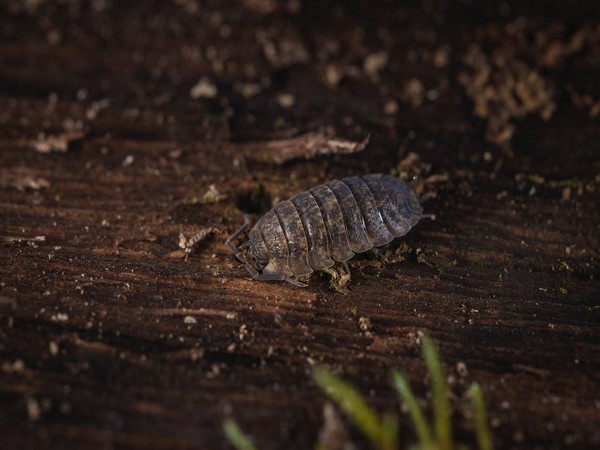
Representative image

Washington [US], June 14 (ANI): Researchers found a colour-changing coastal woodlouse can get confused by artificial nightlight.
The study was published in Journal, 'Proceedings of the Royal Society B Biological Sciences.'
The sea slater is an inch-long woodlouse found in the UK and Europe that lives near the high-tide line.
Sea slaters hunt at night and can change colour to blend in and hide from predators.
The University of Exeter investigated the effects of a single-point light source which casts clear shadows and diffuse light similar to 'skyglow' found near towns and cities.
While a single light did not disrupt the sea slaters' camouflage, diffuse light caused them to appear paler while hiding against a dark background, making them more visible.
"With night skies getting brighter worldwide, it's important to understand how this will affect the natural world," said Kathryn Bullough, who led the study as part of her masters at the Centre for Ecology and Conservation on Exeter's Penryn Campus in Cornwall.
"We know artificial light causes all sorts of negative effects for animals and plants, but our results show that shadow-casting light can have very different impacts to diffuse skyglow, even when both have the same overall brightness.
"Under point-source light, the sea slaters turned darker and sought out refuge on dark stones and shadows when available.
"But diffuse light caused them to become lighter, even though this would make them easier for predators to spot."
In the study, sea slaters were placed in a circular chamber with white pebbles covering half of the floor and black pebbles on the other half.
They were then exposed either to point-source or diffuse light.
Under both kinds of light, sea slaters spent more time on the black pebbles, which more closely matched their starting colour and therefore provided better camouflage.
Under point-source light, they also turned darker - better matching the black pebbles.
But under diffuse light, they became on average 27% lighter.
"We can't say exactly what causes this, but diffuse light clearly interferes with the sea slaters' colour-matching mechanism," said Dr Jolyon Troscianko, also from the Centre for Ecology and Conservation.
"One possibility is that they respond to this light as if dawn was approaching.
"We know that nocturnal animals have a very sensitive light vision, so skyglow will appear very bright to them."
With human populations clustered in coastal areas, shorelines are disproportionately affected by light pollution.
While sea slaters are not a threatened species, they are commonly eaten by shorebirds such as oystercatchers and gulls.
"Many shorebird species are in severe decline, so it is critical that we understand how human activity affects their prey as part of a complex ecosystem," Dr Troscianko said. (ANI)


Get the App

What to Read Next

Science

New method guides magnetism without magnets

New method guides magnetism without magnets

Researchers at Paul Scherrer Institute PSI have demonstrated an innovative method to control magnetism in materials using an energy-efficient electric field.

Read More
Science

Amphibians bounce-back from Earth’s greatest mass extinction

Amphibians bounce-back from Earth’s greatest mass extinction

Researchers at the University of Bristol discovered that ancient frog ancestors survived the biggest mass extinction of species by eating on freshwater prey that evaded terrestrial predators.

Read More
Science

New insights into how cancer evades the immune system: Study

New insights into how cancer evades the immune system: Study

Immunotherapy research primarily focuses on better recognition of cancer cells by the body's own immune system. Researchers at Amsterdam UMC and Moffitt Cancer Center have taken a different approach.

Read More
Science

Scientists use AI to better understand nanoparticles: Study

Scientists use AI to better understand nanoparticles: Study

A group of scientists has created a way to illuminate the dynamic behavior of nanoparticles, which are essential components in the production of pharmaceuticals, electronics, and industrial and energy-conversion materials.

Read More
Science

New device could allow you to taste cake in virtual reality

New device could allow you to taste cake in virtual reality

The 'e-Taste' interface employs sensors and wireless chemical dispensers to enable remote taste perception, often known as gestation. Field testing done by researchers at The Ohio State University confirmed the device's ability to digitally simulate a range of taste intensities, while still offering variety and safety for the user.

Read More
Science

Strand Life Sciences launches portal for rare disease diagnosis

Strand Life Sciences launches portal for rare disease diagnosis

Marking Rare Disease Day, Strand Life Sciences, a subsidiary of Reliance Industries and a leading genomics research company, has launched the StrandOmics Portal, an innovative digital platform designed to assist doctors in diagnosing rare diseases more efficiently.

Read More
Science

Study reveals impact of animals as architects of Earth

Study reveals impact of animals as architects of Earth

A new study led by Professor Gemma Harvey from Queen Mary University of London has revealed how hundreds of species shape the landscapes we depend on, from termite mounds visible from space to beavers creating wetlands and hippos carving drainage systems.

Read More
Science

Opposing arrows of time emerge from certain quantum systems

Opposing arrows of time emerge from certain quantum systems

Researchers at the University of Surrey made a thought-provoking discovery. A new study reveals that opposing arrows of time can theoretically emerge from certain quantum systems.

Read More
Science

COVID-19 severity may be predicted by White Blood Cell Count

COVID-19 severity may be predicted by White Blood Cell Count

A COVID-19 diagnosis is no longer as frightening as it used to be, thanks to developments in treatment choices. However, a new study reveals that leukocyte (white blood cell) count may now be used to identify who is more likely to develop more significant disease symptoms.

Read More
Science

Seals can essentially act as 'smart sensors': Study

Seals can essentially act as 'smart sensors': Study

A new study by marine biologists reports that seals can essentially act as 'smart sensors' for monitoring fish populations in the ocean's eerily dim 'twilight zone.'

Read More
Home About Us Our Products Advertise Contact Us Terms & Condition Privacy Policy

Copyright © aninews.in | All Rights Reserved.


