

ADD ANI AS A TRUSTED SOURCE
googleads
ANI Logo
Menu
Science

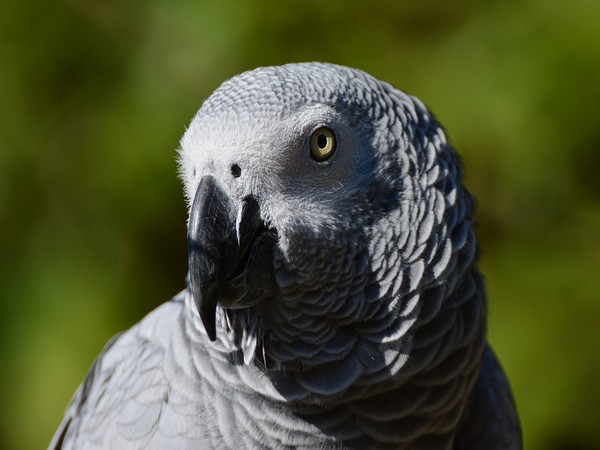
African grey parrots go out of their way to help others

Washington D.C [USA], Jan 10 (ANI): Research has found that apart from humans, some birds--especially African grey parrots--have similar tendencies.

ANI Jan 10, 2020 16:54 IST googleads

Representational Image

Washington D.C [USA], Jan 10 (ANI): Research has found that apart from humans, some birds--especially parrots">African grey parrots--have similar tendencies.
The study, published in Current Biology on Thursday, states, humans and other great apes have the willingness to help others going out of their way even if the help seeker is a stranger. Birds from specific family spread their wing of help in a similar manner.
"We found that parrots">African grey parrots voluntarily and spontaneously help familiar parrots to achieve a goal, without obvious immediate benefit to them," says study co-author Desiree Brucks of the Max Planck Institute for Ornithology, Germany.
To ensure the fact, the researchers listed out a number of parrots">African grey parrots and blue-headed macaws. Both the species from the parrot family were willing to exchange tokens for nut treats. However, only the grey parrots wanted to give away their tokens to a neighbouring parrot, allowing them to taste the nut treats as well.
Parrots and crows have large brains in proportion to their body size and problem-solving skills to match. For that reason, they are at times considered as "feathered apes," explain Brucks and study co-author Auguste von Bayern.
However, earlier studies have explained that in spite of their impressive social intelligence, crows have not been seen to help other crows. In the newest study, Brucks and von Bayern solve the puzzles about parrots.
"Remarkably, parrots">African grey parrots were intrinsically motivated to help others, even if the other individual was not their friend, so they behaved very 'pro-socially,'" Bayern says.
She added, "Surprisingly 7 out of 8 parrots">African grey parrots, provided their partner have with tokens, spontaneously and without having experienced the social setting of this task before and without knowing that they would be tested in the other role later on. Therefore, the parrots provided help without gaining any immediate benefits and seemingly without expecting reciprocation in return."
An important note according to the study is that these grey parrots appeared to understand when their help was needed. When they could see the other parrot had an opportunity for exchange, they'd pass a token over. Otherwise, they wouldn't.
The researchers suggest that African greys and blue-headed macaws have differences in their behaviour which may relate to their separate social organization in the wild.
Despite those species differences, the findings show that helping behaviour is not limited to humans and great apes but evolved independently also in birds.
It remains to be seen how widespread helping is across the 393 different parrot species and what factors may have led to its evolution.
The researchers say that further studies are required to investigate the underlying mechanisms of the parrots' helping behaviour. For instance, how do parrots tell when one of their peers needs help? And, what motivates them to respond? (ANI)

Get the App

What to Read Next

Science

Insight into how brain overgrowth dictates autism severity

Insight into how brain overgrowth dictates autism severity

Some children with autism face severe, long-term challenges such as developmental delays, social issues, and even the inability to communicate. Others report milder symptoms that improve with time.

Read More
Science

Study shows how protein folding drives multicellular evolution

Study shows how protein folding drives multicellular evolution

Researchers discovered a mechanism that drives the creation of multicellular life. They found that altered protein folding causes multicellular evolution.

Read More
Science

Study shows older adults want to express themselves with emojis

Study shows older adults want to express themselves with emojis

A new study from the University of Ottawa sheds light on how different generations interpret the use of emojis in their communications, with older persons unclear how to use them as frequently as younger adults, despite recognizing their meaning.

Read More
Science

Consuming refined carbs may be linked with perceive facial beauty

Consuming refined carbs may be linked with perceive facial beauty

In a new study, individuals' levels of refined carbohydrate consumption were statistically connected to their facial attractiveness as evaluated by heterosexual volunteers of the opposite sex.

Read More
Science

Common anesthetic can improve social symptoms of depression

Common anesthetic can improve social symptoms of depression

Researchers used a mouse model of depression to show that one type of ketamine (a common anaesthetic) in low doses can improve social impairments by restoring function in a specific brain region known as the anterior insular cortex.

Read More
Science

Great apes tease each other just like humans do: Study

Great apes tease each other just like humans do: Study

Scientists reported evidence of playful teasing in the four great ape species orangutans, chimpanzees, bonobos and gorillas.

Read More
Science

Researchers find four species of apes playfully tease each other

Researchers find four species of apes playfully tease each other

Cognitive biologists and primatologists have documented playful teasing in four species of great apes

Read More
Science

Study unveils new tool that reveals gene behaviour in bacteria

Study unveils new tool that reveals gene behaviour in bacteria

Bacterial infections are responsible for millions of deaths each year, with the global threat made severe by the increasing resistance of microbes to antibiotic treatments

Read More
Science

'Watching people dislike veggies can impact onlookers too' 

'Watching people dislike veggies can impact onlookers too' 

In a new study, researchers in the UK investigated whether observing others' facial expressions while eating raw broccoli influenced young women's liking and desire to eat raw broccoli

Read More
Science

Research shows logging, climate change threaten montane birds

Research shows logging, climate change threaten montane birds

The Indian Institute of Science (IISc) analysed data from over ten years to investigate the effects of forest logging and climate change on bird populations in tropical mountains.

Read More
Home About Us Our Products Advertise Contact Us Terms & Condition Privacy Policy

Copyright © aninews.in | All Rights Reserved.




