

ADD ANI AS A TRUSTED SOURCE
googleads
ANI Logo
Menu
Science

Activity level of bats reduced at solar farm sites: Study

Researchers have noticed a significant decline in the activity levels of six bat species near solar farm locations.

ANI Aug 08, 2023 10:53 IST googleads

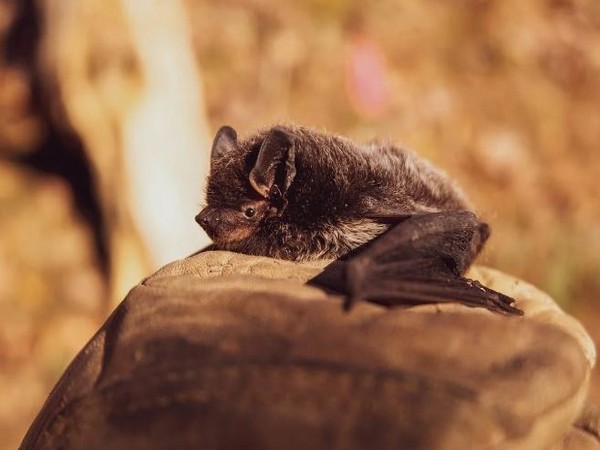
Representative image

Los Angeles [US], August 8 (ANI): Researchers have noticed a significant decline in the activity levels of six bat species near solar farm locations.
Their research, which was published in the Journal of Applied Ecology, has the potential to influence and inform planning legislation and policy, allowing for the use of solar energy without harming wildlife.
Sustainable energy demand satiation depends on renewable technology. Given the crucial roles that fossil fuels play in the production of carbon dioxide, a major factor in climate change, this is of utmost importance.
Lead author Lizy Tinsley from the University of Bristol’s School of Biological Sciences explained, “Renewable energies can have negative impacts on biodiversity and mitigation is essential to provide win-win solutions for energy suppliers and for wildlife.” 
The team installed bat static monitoring equipment in a solar farm field and a corresponding field without solar panels (control site) to conduct their experiment.
 
A bat detector was placed in the middle and edge of each field, totalling four recording locations, and was repeated across 19 different sites.
The fields were matched for size, land use, and boundary features (such as a hedge, fence, and stream). The choice of field boundaries was made because bats rely heavily on them for navigation. 
 
The identification of the bat species and the quantity of bat passes were done after analysing the data from the various echolocation calls at the recording sites.
They discovered that activity levels of the Common Pipistrelle, Noctule, Myotis species, Serotine, Soprano pipistrelle, and Long-eared species were significantly lower at solar farm sites when compared to the paired control sites.
Lizy said, “Due to the significant negative impact identified, solar farm developments should be screened in an Environmental Impact Assessment for ecological impacts so that appropriate mitigation be designed against the impacts, and monitoring is undertaken. 
“This has already been done with wind farms – where mortality of bats has been reduced by changing the wind speeds at which turbines become operational and by using acoustic deterrents, at a minimal cost. 
“Further research is required to assess bat behaviour at solar farms, and why it is causing the significant decrease of certain species at the site. Is it the loss of suitable habitat that reduces activity? Are they fewer insect prey available, and are bats at risk of collisions with panels?
“It will be important to identify mitigation strategies that can benefit bats at solar farms, such as planting insect-friendly plants, providing corridors to insect-rich habitats, or providing suitable alternative foraging habitats such as trees.
Mitigation strategies can potentially mean that renewable energy can be provided while simultaneously having no detriment to wildlife. Such mitigation will be critical in reaping the undoubted benefits for climate change that can be provided by renewable energy.” 
Co-author Professor Gareth Jones added, “This is novel research, as the impacts of solar farms on wildlife are currently little understood, with no evidence regarding their effects on bats, which can provide valuable ecosystem services such as the suppression of pest insect populations.  
“The situation is potential of concern as solar farms are occupying increasing areas of suitable foraging areas for bats, and we already know that bats can collide with vertical flat surfaces, can mistake flat surfaces for water, and attempt to drink from them. Very little is known on the impacts of solar farms on bats, particularly in the UK.” (ANI)


Get the App

What to Read Next

Science

Amphibians bounce-back from Earth’s greatest mass extinction

Amphibians bounce-back from Earth’s greatest mass extinction

Researchers at the University of Bristol discovered that ancient frog ancestors survived the biggest mass extinction of species by eating on freshwater prey that evaded terrestrial predators.

Read More
Science

Study reveals impact of animals as architects of Earth

Study reveals impact of animals as architects of Earth

A new study led by Professor Gemma Harvey from Queen Mary University of London has revealed how hundreds of species shape the landscapes we depend on, from termite mounds visible from space to beavers creating wetlands and hippos carving drainage systems.

Read More
Science

Discovering the genetics of climate adaptation 

Discovering the genetics of climate adaptation 

As climate change accelerates, plants are under increasing pressure to adapt to changing habitats and environmental conditions.

Read More
Science

Study reveals how reminders can eliminate age-related memory loss

Study reveals how reminders can eliminate age-related memory loss

A recent study from UT Arlington showed that setting reminders can reverse some age-related memory deficits. The findings represent a significant breakthrough in tackling the cognitive issues that older persons confront, particularly in the context of prospective memory, which is the ability to remember to complete an intended activity at the appropriate time, such as taking medication or attending appointments.

Read More
Science

Fever promotes increased activity, mitochondrial damage

Fever promotes increased activity, mitochondrial damage

Researchers at Vanderbilt University Medical Centre showed that fever temperatures increase immune cell metabolism, proliferation, and activity, but they also promote mitochondrial stress, DNA damage, and cell death in a specific subgroup of T cells.

Read More
Science

Rare diseases highlight connections between metabolism, immunity

Rare diseases highlight connections between metabolism, immunity

A new study suggested that inherited immune and metabolism disorders are more similar than previously believed. The results provide fresh information that may help patients with these illnesses receive better care by highlighting a novel collection of metabolic genes that are critical for immune system T cell activity.

Read More
Science

Plastic pollution, seawater flooding effect on coastal plants

Plastic pollution, seawater flooding effect on coastal plants

Two of the planet's most urgent environmental stressors have the potential to affect the development and reproductive production of plants found along the world's coasts, according to new research.

Read More
Science

Study finds rheumatoid arthritis linked to cognitive impairments

Study finds rheumatoid arthritis linked to cognitive impairments

A team of researchers found a connection between particular cognitive deficits and the inflammatory activity in the body caused by rheumatoid arthritis. These include a decline in working memory, inhibition, and focus as well as memory, abstract thought, and visuospatial skills.

Read More
Science

Plastic waste can be converted to electronic devices

Plastic waste can be converted to electronic devices

The University of Delaware and the Argonne National Laboratory have developed a chemical process that converts Styrofoam into the high-value conducting polymer PEDOT:PSS. The researchers show how improved plastic trash may be successfully integrated into functional electronic devices such as silicon-based hybrid solar cells and organic electrochemical transistors.

Read More
Science

Total solar eclipse seen across Mexico, Canada, US

Total solar eclipse seen across Mexico, Canada, US

It was North America's first total eclipse since 2017 and it won't appear across this part of the world again until 2046. For the first time in nearly a century, the western and northern regions of New York State saw a total eclipse.

Read More
Home About Us Our Products Advertise Contact Us Terms & Condition Privacy Policy

Copyright © aninews.in | All Rights Reserved.


