 हिंदी खबर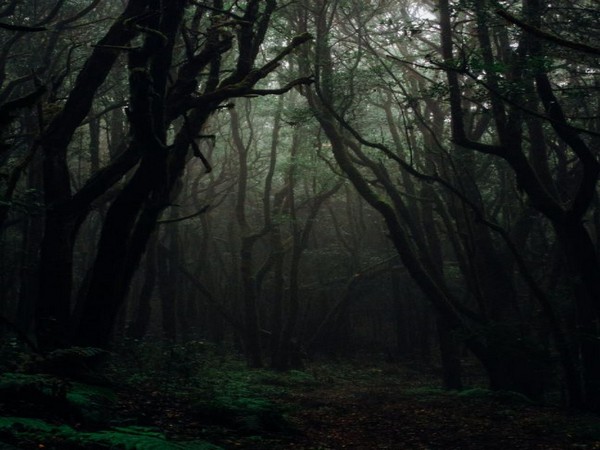

Washington [US], July 18 (ANI): In a Massachusetts forest mercury measurements indicate that the toxic element is deposited in forests across the globe in much greater quantities than previously understood.
The findings of the study led by a University of Massachusetts Lowell environmental science professor were published in the journal Proceedings of the National Academy of Sciences.
The team's results underscore a concern for the health and well-being of people, wildlife and waterways, according to Prof. Daniel Obrist, as mercury accumulating in forests ultimately runs off into streams and rivers, ending up in lakes and oceans.
Mercury is a highly toxic pollutant that threatens fish, birds, mammals and humans. Hundreds of tons of it are released into the atmosphere each year by coal-burning power plants, as well as through gold mining and other industrial processes, and the pollutant is distributed by winds and currents across the globe.
Long-term exposure to mercury, or consuming food containing high levels of the pollutant, can lead to reproductive, immune, neurological and cardiovascular problems, according to Obrist, chair of UMass Lowell's Department of Environmental, Earth and Atmospheric Sciences.
Forests constitute the world's most abundant, productive and widespread ecosystems on land, according to Obrist, who said the study is the first that examines a full picture of how mercury in the atmosphere is deposited at any rural forest in the world, including the deposition of mercury in its gaseous form, which most previous studies do not address.
"Trees take up gaseous mercury from the atmosphere through their leaves and as plants shed their leaves or die off, they basically transfer that atmospheric mercury to the ecosystems," he said.
UMass Lowell student Eric Roy, a double-major in meteorology and mathematics from Lowell, is also among the study's co-authors.
For the past 16 months, the team has measured how mercury in the atmosphere gets deposited at Harvard Forest in Petersham, a nearly 4,000-acre site that includes hardwood deciduous broadleaf trees such as red oak and red maple that shed their leaves every year. A set of measurement systems placed at various heights on the forest's 100-foot-tall research tower assessed the site's gaseous mercury deposition from the tree canopy to the forest floor.
"Seventy-six per cent of the mercury deposition at this forest comes from gaseous atmospheric mercury. It's five times greater than mercury deposited by rain and snow and three times greater than mercury that gets deposited through litterfall, which is mercury transferred by leaves falling to the ground and which has previously been used by other researchers as a proxy for estimating gaseous mercury deposition in forests," Obrist said.
"Our study suggests that mercury loading in forests has been underestimated by a factor of about two and that forests worldwide may be a much larger global absorber and collector of gaseous mercury than currently assumed. This larger-than-anticipated accumulation may explain surprisingly high mercury levels observed in soils across rural forests," he said.
Plants seem to dominate as a source of mercury on land, accounting for 54 to 94 per cent of the deposits in soils across North America. The total global amount of mercury deposited to land currently is estimated at about 1,500 to 1,800 metric tons per year, but it may be more than double if other forests show similar levels of deposition, according to Obrist.
The researchers are continuing their work at the second forest in Howland in northern Maine. Howland Forest, a nearly 600-acre research site full of evergreens that retain their leaves year-round, offers a distinctly different habitat than the deciduous forest in Petersham. Assessing both forests will allow researchers to examine differences in mercury accumulation between different forest types, Obrist said.
The work is providing a hands-on research experience for Roy, a UMass Lowell Honors College student who was invited to become a member of the university's Immersive Scholar program in 2019. The initiative enables first-year students with outstanding academic credentials to participate in lab work and research right from the start of their academic studies.
"It's really exciting to be a co-author," Roy said. "This study allowed us to quantify how much mercury is being accumulated in this type of forest. Modellers can use these results to improve their understanding of how mercury cycles through the environment on a global scale and how that might change in the future."
Roy helped analyze the data collected in the field.
"Eric's contributions to the study are tremendous. It's not very common for an undergrad to play such an important role in a major, federally funded research project," Obrist said. "His work is really impressive and he has become more and more active in data analysis and doing complex flux calculations and data processing. (ANI)




