Achieving high COVID-19 vaccine coverage levels by summer can prevent millions of cases: US study
New York [US], May 6 (ANI): A new study finds if the United States vaccinates half its population by the summer vs fall, 6.8 million cases could be prevented and USD 9.8 billion in societal costs could be saved.
ANI
May 06, 2021 19:58 IST

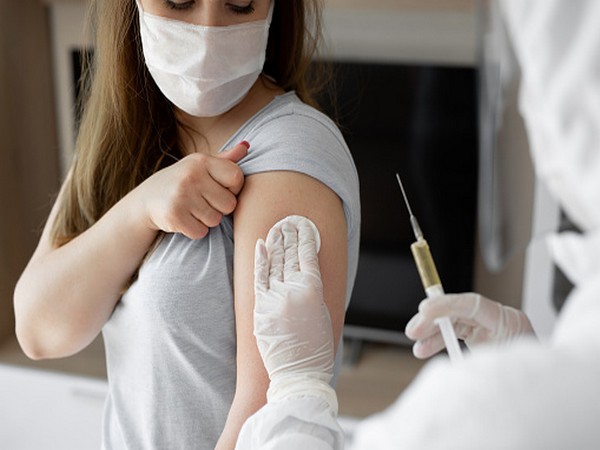
New York [US], May 6 (ANI): A new study finds if the United States vaccinates half its population by the summer vs fall, 6.8 million cases could be prevented and USD 9.8 billion in societal costs could be saved.
The study published in the Journal of Infectious Diseases shows the lives, hospitalisations, and costs that can be saved by even relatively small increases in vaccination coverage and reaching higher vaccination coverage levels sooner (e.g., by the end of the summer versus fall/winter).
The study was led by researchers from PHICOR (Public Health Informatics, Computational, and Operations Research) at CUNY Graduate School of Public Health & Health Policy, the National School of Tropical Medicine at Baylor College of Medicine, and Johns Hopkins Center for Health Security.
The team developed a computer simulation model of the entire U.S. and the spread of the COVID-19 coronavirus throughout the country. Using the model, the team could simulate vaccinating different proportions of the population at different rates with different types of COVID-19 vaccines. Like real people, each of these virtual people could become infected with the virus and develop different symptoms over time and, depending upon the severity of those symptoms, visit clinics, emergency departments, or hospitals. These in turn would have associated costs, allowing the tracking of various medical costs and productivity losses.
The study showed that going from a 30 per cent vaccination coverage to a 40 per cent coverage could save 24.3 million cases and $33.1 billion in direct medical costs and productivity losses. Going from 50 per cent to 70 per cent coverage could save 9.5 million cases and 10.8 billion in direct medical costs and productivity losses.
In fact, even relatively small increases in vaccine coverage can prevent thousands of cases and lives and hundreds of millions in costs. For example, results from the model showed each 1 per cent increase between 40 and 50 per cent of the U.S. population being vaccinated by the fall can prevent 1.6 million cases, 60,190 hospitalizations, and 7,100 deaths and save USD 674.2 million in direct medical costs and USD 1.5 billion in productivity losses.
Each 1 per cent increase between 50 and 70 per cent can prevent 473,900 cases, 17,600 hospitalizations, 2,000 deaths, and 537 million in direct medical costs and productivity losses.
The study also emphasised the importance of reaching higher coverage levels as soon as possible. For example, speeding up vaccinations to reach a 50 per cent coverage by July 2021 instead of October 2021 could save an additional 5.8 million cases, 215,790 hospitalizations, 26,370 deaths, USD 3.5 billion in direct medical costs, and USD 4.3 billion in productivity losses.
Results suggested that getting as many people fully vaccinated as possible before the early winter would be particularly important. The model incorporated changes in the transmission of the virus that occurred with the changing seasons in 2020, when surges occurred during the winter months, and projected what may happen in 2021. For example, when 50 per cent of the U.S. population is vaccinated by October 2021 instead of the end of December 2021, 6.6 million cases, 252,260 hospitalizations, 29,380 deaths, USD 4.0 billion direct medical costs, and USD 8.0 billion productivity losses were saved.
"The results of this study can give policymakers, community leaders, and other decision-makers a sense of how much can be invested into vaccinating those who may be harder to get vaccinated," explained Sarah Bartsch, MPH, the study's lead author and project director for PHICOR.
"Such investments may end up paying for themselves. For example, the potential cost savings exceed the USD 1.5 billion Biden Administration community outreach and media campaign. Our results show that increasing total vaccination coverage by just one per cent could cover the costs of this effort."
"The longer it takes to reach higher vaccination coverage levels and herd immunity thresholds, the more the virus can spread," said Bruce Y Lee, senior author of the study, executive director of PHICOR, and CUNY SPH professor.
"It may be particularly important to reach higher coverage levels before the late fall to prevent another winter surge."
Additionally, the study showed how increasing vaccination coverage levels were more valuable than using vaccines with higher effectiveness. For example, we found that achieving a 70 per cent coverage with a 70 per cent effective vaccine can save 2.1 million cases and 5.5 billion in medical costs and productivity losses compared to achieving a 50 per cent coverage with a 90 per cent effective vaccine over the same period.
This shows the value of using all Covid-19 vaccines that are available to get more people vaccinated as soon as possible, rather than focusing only on those with the highest effectiveness. Moreover, as more contagious variants circulate, potentially decreasing the effectiveness of the existing Covid-19 vaccines, this can help address concerns about continuing with the existing vaccines or waiting for an updated version. (ANI)
Tags:
Get the App