

ADD ANI AS A TRUSTED SOURCE
googleads
ANI Logo
Menu
Science

A targeted therapy to treat inflammatory bowel disease

California [US], December 19 (ANI): The biomedical scientists of the University of California, Riverside have found a way for drugs to be more effective against inflammatory bowel disease, or IBD.

ANI Dec 19, 2021 12:51 IST googleads

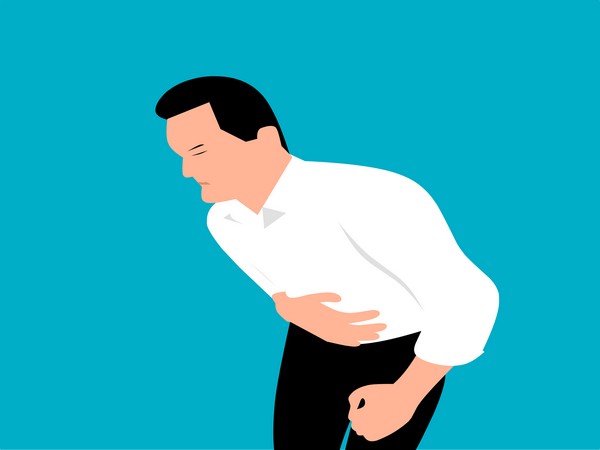
Representative image

California [US], December 19 (ANI): The biomedical scientists of the University of California, Riverside have found a way for drugs to be more effective against inflammatory bowel disease, or IBD.
The study has been published in the 'Journal of Crohn s and Colitis'.
IBD, a chronic inflammatory disease of the intestine, includes Crohn's disease and ulcerative colitis. It is commonly treated with one of several available biological drugs that block an inflammatory molecule called Tumour Necrosis Factor Alpha, or TNF-alpha, from binding to two receptors, TNFR1 and TNFR2. Only about 50 per cent of patients are helped long term by this treatment.
"TNF-alpha does drive much of the inflammation and tissue destruction in IBD," said Dr. David D. Lo, a distinguished professor of biomedical sciences in the School of Medicine, who led the study.
"It's why it is targeted by drugs. Our interest in this study was to look for a more targeted therapy that might have better impact than the existing approach, which is to block all TNF-alpha," he added.
Lo explained that people have two different receptors, TNFR1 and TNFR2, in each of their cells that bind TNF-alpha. Currently, TNF-alpha-targeted drugs block both TNFR1 and TNFR2. Lo's experiments were done in mice, which have the same two receptors. The pattern of inflammation in mice is similar to that seen in humans.
TNF-alpha, produced by the body's cells, also induced specialized immune and other cells, which both promote inflammation and suppressed it. Thus, TNF-alpha played a role in the destruction and the healing of tissues -- a double-edged sword. Lo said evidence existed that TNFR1 may be driving most of the destructive effects of IBD, whereas TNFR2 may drive the healing and restorative effects.
"If you block both the receptors, you block the destructive effects and the recovery," he said.
"To circumvent this, in our work we opted to do selective targeting of TNFR1," he explained.
Lo's group was encouraged by two pieces of evidence suggesting that targeting TNFR1 may be a more beneficial strategy. The researchers used a reagent from INmune Bio, a biotechnology company that was selective for blocking TNFR1. Mice treated with this reagent were found to benefit from it. The researchers also did genetic targeting of TNFR1 to reduce its signalling. The impact, they found, was dramatic.
"When we reduced TNFR1 signalling, the mice showed a significant benefit relative to mice who had the full level of TNFR1 signalling," Lo said.
"This approach may offer more opportunity to TNFR2 to contribute to the healing," he added.
According to Lo, mice that have a genetic deficiency in TNFR2 got much more severe disease, suggesting that TNFR2 does indeed have beneficial effects.
"Without TNFR2, IBD is a lot worse," he said.
Several diseases, such as rheumatoid arthritis, multiple sclerosis, and psoriasis, are related to the action of TNF-alpha. Indeed, different tissues in the body are differently sensitive to the effects of TNF-alpha. The role of the receptors TNFR1 and TNFR2 varied in the different tissues.
"TNF-alpha is a very common way in which your body reacts to inflammatory triggers, such as infection," Lo said.
"This protein can mediate several processes in the body to promote inflammation. The inflammation arises to clear an infection or kill a tumour. But in autoimmune diseases, the same inflammation and tissue damage that TNF-alpha provokes are what drive the disease. In other words, you want TNF-alpha at the right time to knock off a certain infection but once that is accomplished, you don't want this protein to be around any longer. Many diseases are linked to TNF-alpha lingering in tissues," he added.
Lo said the current research was a combination of testing approved drugs that are used in the clinic as well as examining more detailed questions related to the mechanisms of disease and protection.
"It's about continuously finding better cutting-edge drugs and better targets to treat diseases," he said.
Lo was joined in the study by Rajrupa Chakraborty, Mia R. Maltz, Diana Del Castillo, Purvi N. Tandel, Nathalie Messih, and Martha Anguiano.
The study was supported by Pfizer, Inc. (ANI)


Get the App

What to Read Next

Science

Amphibians bounce-back from Earth’s greatest mass extinction

Amphibians bounce-back from Earth’s greatest mass extinction

Researchers at the University of Bristol discovered that ancient frog ancestors survived the biggest mass extinction of species by eating on freshwater prey that evaded terrestrial predators.

Read More
Science

New insights into how cancer evades the immune system: Study

New insights into how cancer evades the immune system: Study

Immunotherapy research primarily focuses on better recognition of cancer cells by the body's own immune system. Researchers at Amsterdam UMC and Moffitt Cancer Center have taken a different approach.

Read More
Science

Scientists use AI to better understand nanoparticles: Study

Scientists use AI to better understand nanoparticles: Study

A group of scientists has created a way to illuminate the dynamic behavior of nanoparticles, which are essential components in the production of pharmaceuticals, electronics, and industrial and energy-conversion materials.

Read More
Science

Strand Life Sciences launches portal for rare disease diagnosis

Strand Life Sciences launches portal for rare disease diagnosis

Marking Rare Disease Day, Strand Life Sciences, a subsidiary of Reliance Industries and a leading genomics research company, has launched the StrandOmics Portal, an innovative digital platform designed to assist doctors in diagnosing rare diseases more efficiently.

Read More
Science

COVID-19 severity may be predicted by White Blood Cell Count

COVID-19 severity may be predicted by White Blood Cell Count

A COVID-19 diagnosis is no longer as frightening as it used to be, thanks to developments in treatment choices. However, a new study reveals that leukocyte (white blood cell) count may now be used to identify who is more likely to develop more significant disease symptoms.

Read More
Science

New technology enhances gravitational-wave detection: Study

New technology enhances gravitational-wave detection: Study

A team of physicists led by Jonathan Richardson of the University of California, Riverside, demonstrated how new optical technology can extend the detection range of gravitational-wave observatories such as the Laser Interferometer Gravitational-Wave Observatory, or LIGO, and pave the way for future observatories.

Read More
Science

Astronomers find the smallest main-belt asteroids ever detected:

Astronomers find the smallest main-belt asteroids ever detected:

The majority of known asteroids orbit inside the main asteroid belt, which is positioned between Mars and Jupiter at an average distance of around 250 million km from Earth. Since the discovery of the first asteroid in 1801, about 750.000 asteroids have been identified, primarily in the last decade thanks to several optical surveys that examine the sky on clear nights.

Read More
Science

Study finds connection between quantum theory, information theory

Study finds connection between quantum theory, information theory

"Our results have no clear or direct application right now. It's basic research that lays the foundation for future technologies in quantum information and quantum computers. There's enormous potential for complete discoveries in many different research fields," said Guilherme B Xavier, a researcher in quantum communication at Linkoping University, Sweden.

Read More
Science

Tool for detecting problems during protein synthesis

Tool for detecting problems during protein synthesis

Protein synthesis in eukaryotic cells--found in plants, animals, and fungi--involves more than just the straightforward ribosome assembly of amino acids.

Read More
Science

When devices can read human emotions without a camera: Study

When devices can read human emotions without a camera: Study

Tokyo Metropolitan University researchers employed long-term skin conductance measurements to distinguish between emotions. Volunteers were given videos representing frightening scenarios, family bonding, and humour, while their skin conductance was measured.

Read More
Home About Us Our Products Advertise Contact Us Terms & Condition Privacy Policy

Copyright © aninews.in | All Rights Reserved.


