

ADD ANI AS A TRUSTED SOURCE
googleads
ANI Logo
Menu
Science

80-year-old static electricity mystery finally resolved

Seoul [South Korea], October 10 (ANI): The two contacting/sliding materials were long believed to be evenly and diametrically charged. However, it was discovered that following CE, each of the split surfaces is carrying both (+) and (-) charges.

ANI Oct 10, 2022 19:08 IST googleads

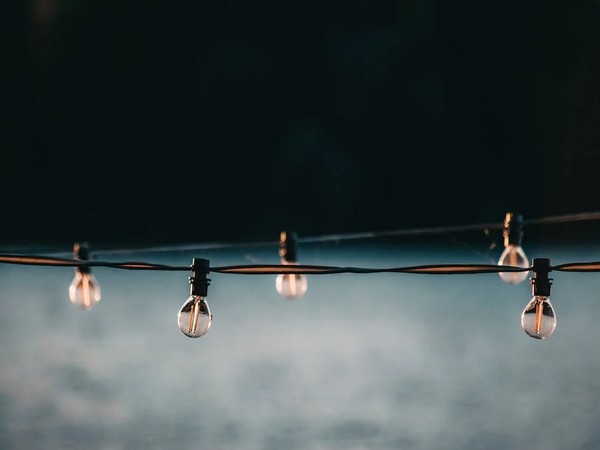
Representative Image

Seoul [South Korea], October 10 (ANI): The two contacting/sliding materials were long believed to be evenly and diametrically charged. However, it was discovered that following CE, each of the split surfaces is carrying both (+) and (-) charges.
The inability to replicate the experiments, the innate inhomogeneities of the contacting materials, or the general "stochastic nature" of CE were all suggested as causes of the so-called charge mosaics.
For more than ten years, a research team at UNIST's Institute for Basic Science (IBS), under the direction of Professor Bartosz A. Grzybowski (Department of Chemistry), has looked for potential sources of charge mosaics. This study, which was published online and will appear in the October 2022 issue of Nature Physics, should assist in reducing the risk of electrostatic discharges.
"We demonstrated sub-micrometre-scale charge non-uniformity of unknown origin in our 2011 Science study [Science 333, 2011, 308-312]. At the time, our theory was that these (+/-) mosaics resulted from minute material patches moving between surfaces that were being separated. It gradually became unclear to us (and numerous other colleagues with whom we discussed this) how these microscopic patches can explain even millimetre-scale regions of opposite polarity coexisting on the same surface over the course of many years of work on the problem that this and related models were simply not holding up. However, neither the community nor we had a better explanation for why the (+/-) mosaics are observed over such a wide range of length scales "Professor Grzybowski explains.
"We demonstrated unidentified charge non-uniformity at sub-micrometre scales in our 2011 Science work [Science 333, 2011, 308-312]. Our theory at the time was that the transfer of minute patches of materials between the surfaces being separated was what caused these (+/-) mosaics. Over the course of several years of study into the issue, it gradually became apparent to us (and many other colleagues with whom we discussed) how these microscopic patches may account for even millimetre-scale regions of opposite polarity coexisting on the same surface. The (+/-) mosaics are observed over a wide range of length scales, but we and the community were at a loss for a better explanation "According to Professor Grzybowski.
The put-forward idea clarifies why charge mosaics were observed on a variety of materials, such as paper sheets, rubbing balloons, steel balls moving on Teflon surfaces, or polymers disengaged from the same or other polymers. It also suggests that the cracking sound you hear when you peel off a sticky tape is the result of plasma discharges that are pulling on the tape like a guitar string. The research team stated that the findings should aid in reducing electrostatic discharges that could be dangerous and advance our knowledge of the nature of contact electrification. (ANI)


Get the App

What to Read Next

Science

New method guides magnetism without magnets

New method guides magnetism without magnets

Researchers at Paul Scherrer Institute PSI have demonstrated an innovative method to control magnetism in materials using an energy-efficient electric field.

Read More
Science

New insights into how cancer evades the immune system: Study

New insights into how cancer evades the immune system: Study

Immunotherapy research primarily focuses on better recognition of cancer cells by the body's own immune system. Researchers at Amsterdam UMC and Moffitt Cancer Center have taken a different approach.

Read More
Science

Scientists use AI to better understand nanoparticles: Study

Scientists use AI to better understand nanoparticles: Study

A group of scientists has created a way to illuminate the dynamic behavior of nanoparticles, which are essential components in the production of pharmaceuticals, electronics, and industrial and energy-conversion materials.

Read More
Science

New device could allow you to taste cake in virtual reality

New device could allow you to taste cake in virtual reality

The 'e-Taste' interface employs sensors and wireless chemical dispensers to enable remote taste perception, often known as gestation. Field testing done by researchers at The Ohio State University confirmed the device's ability to digitally simulate a range of taste intensities, while still offering variety and safety for the user.

Read More
Science

Strand Life Sciences launches portal for rare disease diagnosis

Strand Life Sciences launches portal for rare disease diagnosis

Marking Rare Disease Day, Strand Life Sciences, a subsidiary of Reliance Industries and a leading genomics research company, has launched the StrandOmics Portal, an innovative digital platform designed to assist doctors in diagnosing rare diseases more efficiently.

Read More
Science

Study reveals impact of animals as architects of Earth

Study reveals impact of animals as architects of Earth

A new study led by Professor Gemma Harvey from Queen Mary University of London has revealed how hundreds of species shape the landscapes we depend on, from termite mounds visible from space to beavers creating wetlands and hippos carving drainage systems.

Read More
Science

Opposing arrows of time emerge from certain quantum systems

Opposing arrows of time emerge from certain quantum systems

Researchers at the University of Surrey made a thought-provoking discovery. A new study reveals that opposing arrows of time can theoretically emerge from certain quantum systems.

Read More
Science

COVID-19 severity may be predicted by White Blood Cell Count

COVID-19 severity may be predicted by White Blood Cell Count

A COVID-19 diagnosis is no longer as frightening as it used to be, thanks to developments in treatment choices. However, a new study reveals that leukocyte (white blood cell) count may now be used to identify who is more likely to develop more significant disease symptoms.

Read More
Science

Seals can essentially act as 'smart sensors': Study

Seals can essentially act as 'smart sensors': Study

A new study by marine biologists reports that seals can essentially act as 'smart sensors' for monitoring fish populations in the ocean's eerily dim 'twilight zone.'

Read More
Science

New technology enhances gravitational-wave detection: Study

New technology enhances gravitational-wave detection: Study

A team of physicists led by Jonathan Richardson of the University of California, Riverside, demonstrated how new optical technology can extend the detection range of gravitational-wave observatories such as the Laser Interferometer Gravitational-Wave Observatory, or LIGO, and pave the way for future observatories.

Read More
Home About Us Our Products Advertise Contact Us Terms & Condition Privacy Policy

Copyright © aninews.in | All Rights Reserved.


