"Days of hegemony are over, how dare US presume to tell India what we should or shouldn't do?": Former Ambassador Talmiz Ahmad
Speaking with ANI, the former Indian envoy highlighted India's growing assertiveness and resistance to perceived US interference in its internal affairs. Ahmad stated that the US has lost credibility due to its failures in Afghanistan, Iraq, and Libya.
ANI
Dec 07, 2025 17:44 IST

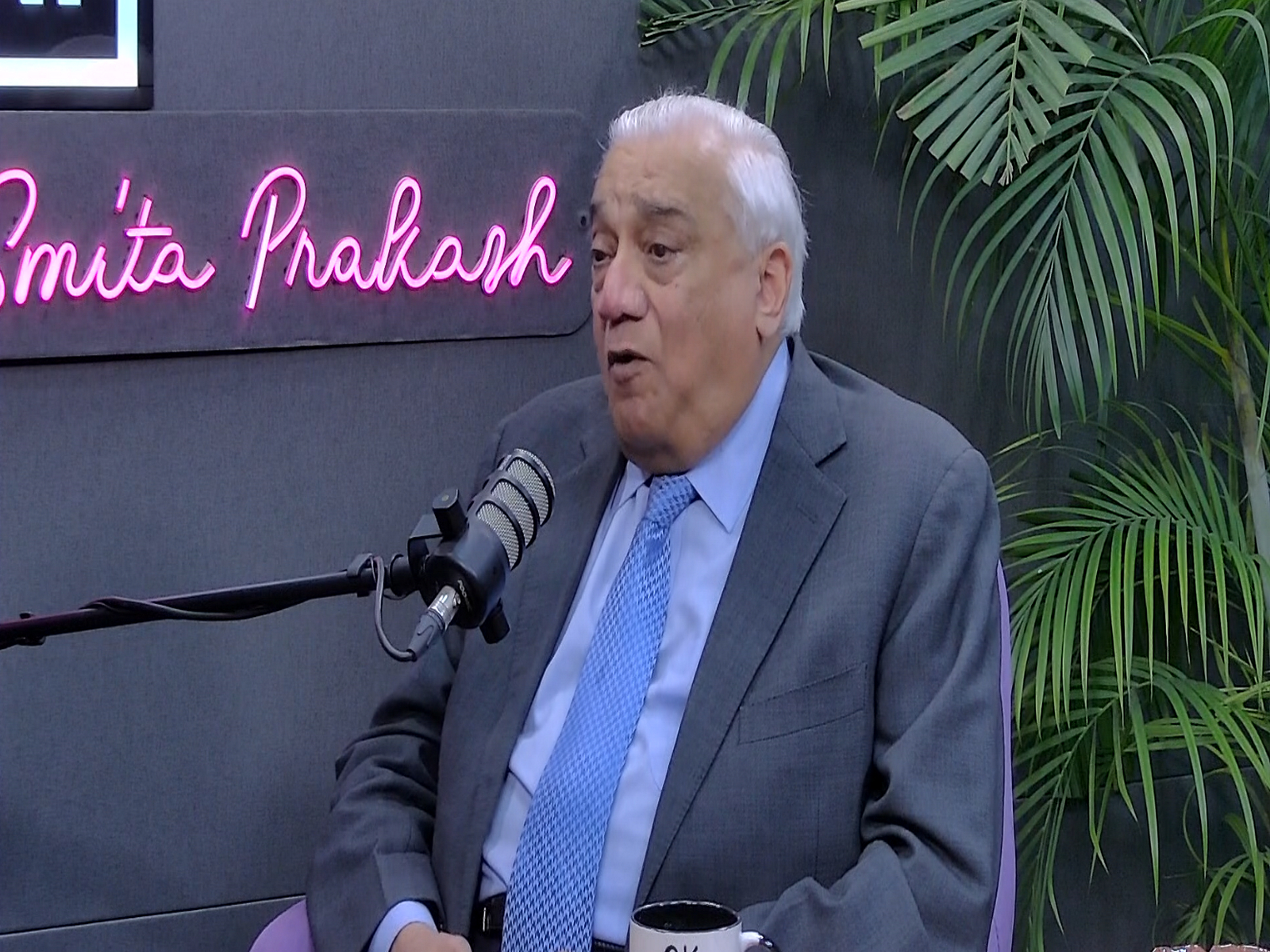
New Delhi [India], December 7 (ANI): Former Ambassador of India to Saudi Arabia, Oman and the UAE, Talmiz Ahmad, criticised the US for its reaction to Prime Minister Narendra Modi's meeting with Russian President Vladimir Putin, saying the era of US hegemony is over.
Speaking with ANI, the former Indian envoy highlighted India's growing assertiveness and resistance to perceived US interference in its internal affairs. Ahmad stated that the US has lost credibility due to its failures in Afghanistan, Iraq, and Libya.
"After the Cold War was over, you had only one, you had a unipolar world order, and the United States was the hegemon. But much has happened since then. The United States has lost credibility due to its misadventure in Afghanistan, Iraq and Libya. They are no longer the credible people power that they used to be when they were asserting hegemony. In the meantime, other players have entered the global scenario," Talmiz Ahmad told ANI.
This comes following the recently concluded Russian President Vladimir Putin's visit to India and the United States, alleging that India laid out the red carpet for a war criminal.
The former Indian diplomat further said that the world is now multipolar, with countries like China and India asserting their strategic autonomy.
"You have got China, which is challenging the Americans in various areas, particularly with regard to economy and technology and logistical connectivity. And you have various other countries, roughly referred to as middle powers, which are important in their region and are asserting a role for themselves in that regard. So this is why we call it a multipolar world order, where many countries, usually middle powers, are seeking to assert their views and roles in world affairs. And the days of hegemony are done."
He further said that this scenario is not a new Cold War but rather the rise of a multipolar order.
"Within the multipolar order, countries assert strategic autonomy. Earlier, we used to use the term non-aligned movement. Once the Cold War was over, it made no sense to use the term 'Non-Aligned'. So scholars started using the term strategic autonomy. When Dr. Jaishankar became the minister, he started talking about plurilateralism, minilateralism, etc. We are building positive, constructive relationships with certain countries, which are informal, subject-oriented, and based on informal consultations. And we take positions which serve our interests. Minilaterals, plurilaterals.
Ahmad emphasised that India's decisions are driven by national interest, not by pressure from the US or any other country. He questioned the US's right to dictate what India should or shouldn't do, citing the US's own chaotic, unpredictable leadership.
"Americans have been saying that going close to Russia or to China challenges the so-called liberal world order. The countries don't believe that. We are not challenging anybody. The days of hegemony are gone," he said.
Ahmad pointed out that many countries, including EU members, continue to engage with Russia, and that the US itself trades with Russia and China. He stressed that foreign policy should be based on seriousness, not emotional rhetoric or jingoism.
"United States' top leadership exemplifies chaos, anarchy, unpredictability. It has shifted very sharply to the right wing and is today pandering to the lowest common denominator, which means the lowest common intellectual capacity. Large sections of the European Union are engaged with Russia. Many of them are buying Russian energy. The Americans are interacting with the Russians and the Chinese and are building very substantial trade relations. Putin has reminded us that the Americans are purchasing nuclear fuel from Russia. Different countries are purchasing rare earths all the time. How dare they presume to tell India or any other country what we should do or what we should not do? We don't tell anyone else," Talmiz Ahmad further added. (ANI)
Tags:
Get the App