Zero-dose children in India declined from 0.11% in 2023 to 0.06% in 2024: Union Health Ministry
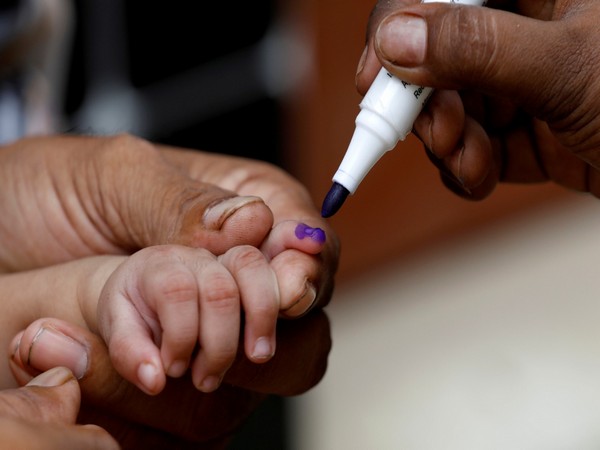
The percentage of zero-dose children (Those who have not received a single vaccine) in India has declined from 0.11% in 2023 to 0.06% in 2024, according to the Union Ministry of Health and Family Welfare. The ministry attributed the achievement to continued and sustained efforts and intensified implementation of vaccination drives and campaigns across the country.
ANI
Jun 28, 2025 16:12 IST

New Delhi [India], June 28 (ANI): The percentage of zero-dose children (Those who have not received a single vaccine) in India has declined from 0.11% in 2023 to 0.06% in 2024, according to the Union Ministry of Health and Family Welfare. The ministry attributed the achievement to continued and sustained efforts and intensified implementation of vaccination drives and campaigns across the country.
These achievements have positioned India as a global exemplar in child health, as acknowledged by the UN Inter-agency Group for Child Mortality Estimation (UN IGME) in its 2024 report. India has been bestowed with the prestigious Measles and Rubella Champion Award by The Measles and Rubella Partnership (American Red Cross, BMGF, GAVI, US CDC, UNF, UNICEF, and WHO) at the American Red Cross Headquarters in Washington, DC, USA on March 6th, 2024, for its committed endeavours, said the ministry.
The effect of the increased number of lifesaving vaccines in reducing mortality and morbidity in children due to diarrhea, pneumonia, meningitis & encephalitis is also clearly observable.
As per the latest SRS (2020-22), the Maternal Mortality Ratio (MMR) of India has declined from 130/lakh live births in 2014-16 to 88/lakh live births in 2020-22. As per the United Nations Maternal Mortality Estimation Inter-Agency Group (UN-MMEIG 2000-2023) report, the MMR of India stands at 80 per lakh live births, reflecting an 86% decline relative to the global reduction of 48% since 1990.
As per the United Nations Inter-Agency Group for Child Mortality Estimation (UNIGME 2024 Report), India achieved a 78% decline in the Under-Five Mortality Rate (U5MR) surpassing the global reduction of 61% and 70% decline in the Neonatal Mortality Rate (NMR) compared to 54% globally during 1990 - 2023.
In addition to focused attention on increasing vaccination coverage, India's Universal Immunisation Programme (UIP) embodies a comprehensive range of vaccines recommended by the World Health Organisation (WHO).
Till 2013, there were only six available vaccines in the program. From 2014, six new vaccines (namely Inactivated Polio-virus Vaccine, Rotavirus Vaccine (RVV), Pneumococcal Conjugate Vaccine (PCV), Measles-Rubella Vaccine, Adult Japanese Encephalitis Vaccine and Tetanus-Diphtheria Vaccine) have been introduced in the programme. Currently, India's UIP covers 12 vaccine-preventable diseases and has seen significant expansion.
With continued focus on improving vaccine coverage, India has taken a proactive and inclusive approach to reach underserved populations. The Govt of India, in consultation with all States/UTs, has launched targeted campaigns to address challenges among zero-dose children, particularly in urban slums, peri-urban areas, migratory populations, hard-to-reach regions, and communities affected by vaccine hesitancy. These efforts are also aligned with the National goal of eliminating Measles and Rubella.
"To amplify our reach, we are leveraging technology and community engagement. The U-WIN platform tracks immunisation status digitally, ensuring no child is missed. Public awareness campaigns are being intensified using mass media, community radio, social media, and even street plays to educate families. Healthcare workers, ASHAs, and ANMs will go door-to-door, not just to vaccinate, but to sensitise the beneficiaries about the benefits of vaccination," the ministry said in a press release.
Some key initiatives include:
Zero Dose Implementation Plan 2024: Rolled out across 143 districts in 11 states with a high burden of unvaccinated children.
Mission Indradhanush (Since 2014): Intensified in 2017 in collaboration with state governments, it has vaccinated 5.46 crore children and 1.32 crore pregnant women previously unreached or under-vaccinated.
Pulse Polio Campaigns: Through National Immunization Days (NIDs) and Sub-National Immunization Days (SNIDs), India has maintained polio-free status since 2014.
Village Health and Nutrition Days (VHNDs): Organized regularly for immunization and outreach activities at the community level.
Multi-tiered Task Forces: State (STFI), District (DTFI), and Block (BTFI) level task forces ensure coordinated and effective implementation.
Regular IEC (Information, Education, Communication) Campaigns: Help increase awareness and combat vaccine hesitancy.
The annual birth cohort in India (2.6 crore) exceeds the total population of several countries, including New Zealand, Australia, Finland, and Switzerland. Given the varying sizes of the countries across the globe, the percentage comparison shows it at par with the vaccination coverage levels observed in many high-income countries for e.g., New Zealand (DTP-1 93%), Germany & Finland (DPT-3 91%), Sweden (MCV-1 93%), Luxembourg (MCV-2 90%), Ireland (PCV-3 83%), United Kingdom of Great Britain and Northern Ireland (Rota C 90%). (WUNEIC report 2023).
The comparative results of countries on zero dose children as a percentage of the total population shows that Yemen (1.68%), Sudan (1.45%), Angola (1.1%), Afghanistan (1.1%), Nigeria (0.98%), DR Congo (0.82%), Ethiopia (0.72%), Indonesia (0.23%), Pakistan (0.16%) have far more zero dose children as a percentage of their population compared to India's (0.11% during 2023 as per the last Wuneic report released.
Any comparison of India with any other countries with high burden zero-dose children needs to take into consideration India's large population size and high vaccination coverage rate. Therefore, any interpretation or analysis based on isolated factors does not lend credence to the country's progress on its immunisation program, said the ministry.
The Universal immunisation program has always been prioritised by the Government of India to ensure that the children of our country are protected against deadly diseases. Elimination of Polio in 2014 and Maternal & Neonatal Tetanus in 2015, and the recent launch of the Measles Rubella campaign in 2025 is a testament to the fact. With focused strategies and committed healthcare workers, the endeavour will always be last-mile delivery to ensure comprehensive vaccination coverage.
Vaccination remains one of the most powerful and cost-effective public health interventions. India's unwavering commitment to immunization is evident through its Universal Immunization Programme (UIP), which provides free vaccination services annually to 2.9 crore pregnant women and 2.6 crore infants (0-1 year). (ANI)
Get the App