 हिंदी खबर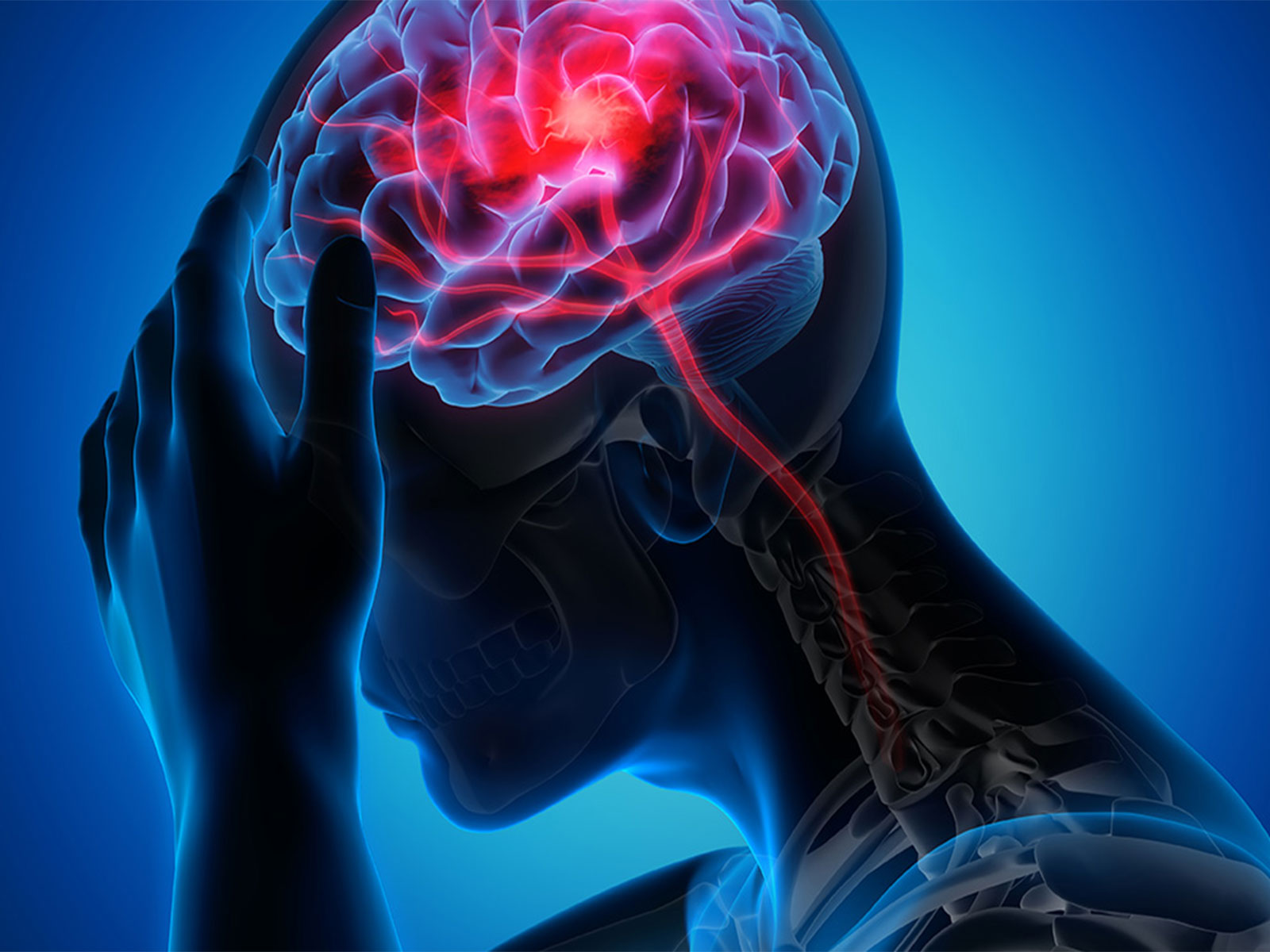

New Delhi [India], October 29 (ANI): On World Stroke Day, medical experts have issued fresh warnings about the rising incidence of strokes in India, particularly among younger adults, and emphasised the critical importance of early diagnosis, advanced imaging and AI-enabled treatment pathways.
Dr. Anup Kumar Thacker, Director of Neurology at Medanta Hospital, cited global and national statistics highlighting the magnitude of the problem.
Dr Thacker said, "More than 12.2 million new cases of stroke occur worldwide each year. One stroke occurs every 40 seconds, and one stroke death every 4 minutes. Stroke is the fourth leading cause of death and the fifth leading cause of disability in India. The incidence of stroke is rising in young people less than 45 years of age. Stroke has increased by 40 to 50% in young people over the last 2 to 3 decades. Young people comprise 20-30 % of all stroke cases."
Explaining the condition, Dr. Thacker said, "Brain stroke occurs when the blood supply to the brain is disrupted. Brain cells or neurons do not receive oxygen and nutrients, leading to their death. As time progresses, a larger area of the brain is affected. Since the brain controls all bodily functions, the functions controlled by the damaged brain are lost."
He stressed that stroke treatment is highly time-sensitive, noting, "Clot-busting injection works best if given within 4.5 hours of stroke onset. Millions (approximately 1.9 million) of neurons or brain cells die every minute after the onset of stroke symptoms -- therefore, every minute counts."
Experts have also emphasised that AI-enabled integrated pathology and imaging systems are transforming stroke diagnosis and management, enabling faster detection and treatment.
Padma Shri Dr MV Padma Srivastava, Chairperson of Neurology at Paras Health, Gurugram, said environmental and lifestyle factors drive rising stroke rates among younger adults, adding that PM2.5 exposure causes inflammation and vascular damage, "significantly heightening ischemic stroke risk."
She said, "Environmental and lifestyle factors are now major contributors to the rising stroke burden, particularly among younger adults. Chronic exposure to fine particulate matter (PM2.5), for instance, is known to trigger inflammation and vascular damage, significantly heightening the risk of ischemic stroke."
Dr Srivastava warned Delhi's high PM2.5 levels worsen stroke risk for heart patients, stressing "golden hour" treatment and new therapies like thrombectomy and AI imaging improve outcomes.
She added, "In cities like Delhi, where PM2.5 levels are often 10-15 times higher than WHO-recommended limits, individuals with hypertension, diabetes, or pre-existing heart disease face an even greater risk. This makes preventive screening and early diagnosis more critical than ever. Equally important is timely treatment; reaching a stroke-ready centre within the 'golden hour' can dramatically improve recovery and functional outcomes. With advances in clot-busting drugs, mechanical thrombectomy, and AI-enabled imaging that helps identify salvageable brain tissue, outcomes today are far better than a decade ago."
Padma Shri Dr Harsh Mahajan, Founder and Managing Director, Mahajan Imaging and Labs, said stroke cases are rising in younger adults due to stress, poor sleep, hypertension and pollution, adding AI-driven diagnostics help "act before a stroke occurs."
"The profile of a stroke patient has changed dramatically in the last decade. We are seeing strokes in younger, otherwise healthy adults, often triggered by high stress, poor sleep, uncontrolled hypertension, and prolonged exposure to air pollution. The key is to act before a stroke occurs, and that's where AI-driven diagnostics and integrated lab-imaging models are making a real difference," he added.
Dr. Mahajan further explained, "AI-powered imaging platforms now assist radiologists in identifying subtle clots, vessel blockages, or microbleeds that can be missed on early scans. When advanced CT, MRI, and diffusion-weighted imaging are combined with AI models trained on large datasets, interpretation time reduces and diagnostic accuracy improves."
His colleague, Dr Shelly Mahajan, noted that integrated lab + imaging diagnostics are now reducing treatment delays.
"Our approach combines real-time pathology with imaging to create a complete diagnostic map for each patient. We can now deliver coagulation and biomarker results within 45 minutes, critical information that enables neurologists to decide on thrombolysis or surgical intervention without delay. This integration of laboratory analytics with advanced imaging is not just improving precision; it is redefining the speed and quality of stroke care across institutions," she said.
When a stroke strikes, every minute without treatment kills 1.9 million brain cells pointed Dr. Madhukar Bhardwaj, Director & HOD - Neurology, at Aakash Healthcare.
Dr Bhardwaj reiterated the urgency of prompt action, highlighting the BE FAST acronym for spotting a stroke
"The longer a person has a stroke, the more likely they are to become incapacitated or die. Acting quickly is critical to survival and rehabilitation. The warning signs of a stroke are referred to as BE FAST, where B stands for balance. One of the earliest indicators of a stroke is the inability to walk properly or the loss of balance. E stands for eyes; if you have had a stroke, you may have difficulties seeing clearly or have double vision. F refers to face; your face droops to one side; A is for arms; difficulty lifting one of your arms; and S is for speech; slurred speech or inability to talk. T stands for time." (ANI)
World Stroke Day: Experts raise concern over brain strokes among young adults under 45
By Shalini Bhardwaj | Updated: Oct 29, 2025 20:00 IST




