 हिंदी खबर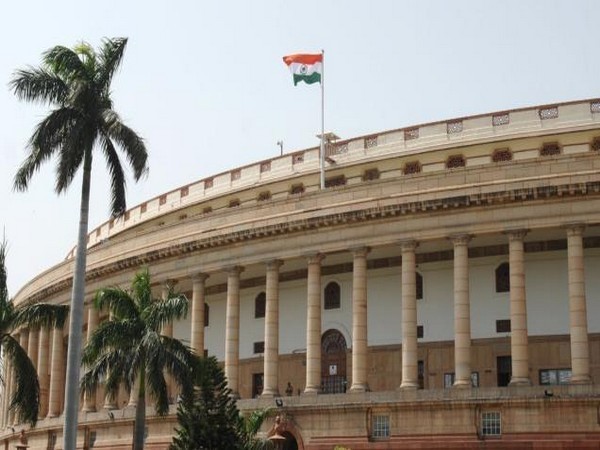

New Delhi [India], Aug 10 (ANI): Fear gripped the political leadership in Jammu and Kashmir as speculations surfaced earlier this month that the Bharatiya Janata Party (BJP)-led central government could abolish or try to amend Article 35A and Article 370 that accorded special status to the region.
Most of them, including Peoples Democratic Party (PDP) leader and former Jammu and Kashmir chief minister Mehbooba Mufti, voiced their opinions that "there will be no one left in Kashmir to give a shoulder to the Indian tricolour if 35A is struck down".
Echoing similar sentiments, former Chief Minister and head of National Conference (NC) Farooq Abdullah had earlier warned New Delhi, "Kashmiris will make you forget the upheaval of the Amarnath movement when they rise up against nullifying of 35A."
Article 35 (A) of the Indian Constitution allowed the Legislative Assembly of Jammu and Kashmir to define who was and was not a "permanent resident" of the region. To further break it down, this provision of the Constitution gave the legislators from Jammu and Kashmir the exclusive power to determine as to which people in or outside the region will have special rights and privileges.
The provision, inserted through a special Presidential order in 1954, also gave the Assembly powers to determine the recipients of grants, the right to purchase land and property, as well as settling permanently in the region.
The problem, to put it succinctly, is that with Kashmir the positive discrimination has tended to be insidious.
Prior to the abrogation of Article 370 and Article 35 (A), the Jammu and Kashmir People's Forum, in a memorandum to the Union Home Minister and to the National Human Rights Commission, had presented numerous cases of the communities whose fundamental rights were "legally" snatched away by the legislature--the right to property, right to vote, right to employment, right to marriage by choice, right to higher education, right to be a member of a panchayat or a cooperative society, right to avail bank loans.
In 1981, the Jammu and Kashmir legislature used its absolute Kashmiri majority to pass a law, the Jammu and Kashmir Resettlement Act, which opened the doors for those Kashmiris and their descendants who had migrated to Pakistan, or Pakistan occupied Kashmir (PoK) during partition in 1947, to return to the place as its legitimate citizens and take charge of their ancestral properties.
However, refugees from PoK and their descendants, numbering about 1.5 million today, have not only been kept out of this legal provision but the government has consistently refused to let them or their descendants settle in Jammu and Kashmir as their "subjects".
The above reasons expose the communal agenda of Kashmiri leadership and highlight Article 35A as a symbol of "Kashmiri colonialism" over the rest of Jammu and Kashmir.
Addressing the nation over the changing status of the region, Prime Minister Narendra Modi on Thursday had also said that Pakistan used Articles 370 and 35 A as a weapon to "instigate" people's sentiments against the country and expressed confidence that in the new order the state would be free of terrorism and separatism.
On the same day, the Prime Minister also stressed that the nation took a historic decision by scrapping article 370 which will ensure equal rights and duties for the citizens of Jammu, Kashmir, and Ladakh.
"As a country and as a family we have taken a historic decision. One such arrangement because of which people of Jammu and Kashmir and Ladakh were bereft of various right and which was a big obstacle to their development," he said.
Article 370 and Article 35 (A) were abrogated by both houses of the Indian Parliament earlier this week. The Jammu and Kashmir Reorganisation Bill, 2019, bifurcates the region into two union territories, with Jammu and Kashmir getting its own legislature, and Ladakh without a legislature. The two separate union territories will come into existence on October 31. (ANI)
Why Article 35 (A)-- a symbol of 'Kashmiri colonialism'-- must go
ANI | Updated: Aug 10, 2019 15:43 IST




