Systematic biases in estimates of India's socio-development indicators by international organisations, says EAC-PM working paper
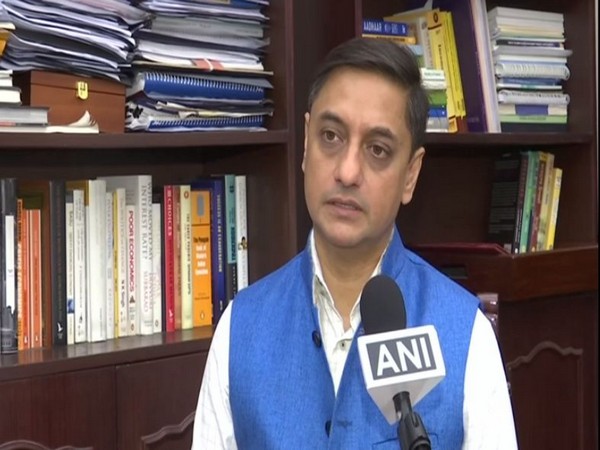
The working paper, co-authored by Sanjeev Sanyal, Member, Economic Advisory Council to PM (EAC-PM), also makes some recommendations including that the Registrar General of India should publish life expectancy estimates every year
ANI
Mar 16, 2023 21:04 IST

New Delhi [India], March 16 (ANI): An examination of well-known development indicators suggests that that there are systematic biases in estimates of socio-development indicators for India by international organisations, says a working paper co-authored by a member of EAC-PM.
The paper points to "systematic biases" in the methodology and standards used by the international agencies and also argues that misrepresentation of data is made possible by delays and deficiencies of India's own data gathering apparatus.
The working paper, co-authored by Sanjeev Sanyal, Member, Economic Advisory Council to PM (EAC-PM), also makes some recommendations including that the Registrar General of India should publish life expectancy estimates every year.
The paper co-authored by Aakanksha Arora, Deputy Director, and Dr Srishti Chauhan, Young Professional (EAC-PM), investigates if estimates of International organisations that India's socio-economic indicators are stagnant or deteriorating despite higher per capita income hold up.
The paper looks into three widely used data-driven development indicators - Childhood Stunting (India's NFHS estimates based on WHO growth standards), Female Labour Force Participation Rate (FLFPR) by ILO, and Life Expectancy at Birth by the UN.
"Childhood stunting, a malnutrition indicator, affects 35.5 per cent of Indian children under five as per the NFHS 2019-21, based on WHO growth standards. However, the WHO standards were set using a small sample from affluent areas of just six countries, including India. Even in this benchmark study, Indian children were smaller on average than those of other countries. Therefore, India needs to revisit local measurements to better gauge malnutrition," EAC-PM said in tweets.
It said India's female labor force participation rate (FLFPR) is one of the lowest in the world at 24 per cent as per ILO's latest 2022 estimates, far below even emerging economies like Vietnam and Tanzania.
"However, India's PLFS does not capture economically productive work done by women like poultry farming, milking of cows, etc. as part of their domestic duties. This pushes a significant proportion of women in the active labor force into the 'out of labor force' category. This is not only conceptually untenable but is ironically against the ILO standards followed internationally," the paper said.
This issue was highlighted by the latest Economic Survey 2022-23 which estimated an augmented FLFPR of 46.2 per cent correcting for this omission as compared to official PLFS estimate of 32.5 per cent for 2020-21.
"Interestingly, an ILO research paper identified the issue of a flawed questionnaire design and re-estimated FLFPR from 31.2 per cent to 56.4 per cent for 2012. It is then perplexing that ILO takes the trouble to model India's FLFPR and estimates it now in the 23-24 per cent range, a level far below the official PLFS estimate that it knows is already an underestimate," the working paper said.
It also noted that according to the United Nations Population Division, India's Life Expectancy at Birth estimate has sharply declined by 3.67 years from 70.91 in 2019 to 67.24 in 2021 and this indicator has a one-third weight in UNDP's Human Development Index
"The UN agency claims that the decline in India's Life Expectancy at Birth estimate reflects COVID-19 related mortality. However, this assumption is conceptually flawed, and India has repeatedly objected to WHO's excess death estimates. Authors' calculations reveal that India's toll stood at 375.8 when calibrated per one lakh population, compared to Brazil (645.4), U.S. (606.7), & Italy (587.7)," EAC-PM said in tweets.
It said systematically underestimated indicators of socio-economic progress undermine policy interventions and global indices.
"ESG norms demand accurate data, highlighting the need for global standards and proactive publication of domestic estimates. International agencies' flawed estimates and inappropriate benchmarks require questioning, while Indian authorities must demand transparency and accountability. As a member of many organizations, India has the right to unbiased estimates crucial for ESG-based decisions," it said.
The paper said that examination of the above three development indicators has demonstrated that "there are systematic biases in estimates of socio-development indicators for India by international organisations".
"These are just an illustration of a more widespread problem of consistent downward estimation of various indicators despite growing per capita income. These lead to an unduly negative narrative that underestimates the progress achieved so far and gives misleading feedback that hinders effective policy-making and targeted intervention.
"Moreover, the growing use of Environment Social and Governance (ESG) norms in investment and trade decisions will mean that real-world decision-making will be increasingly impacted by biased data. On one hand, flawed estimation by international agencies derives from their own conceptual ambiguity, flawed benchmarks, and shoddy methodology," the paper said.
The paper also said that poor survey design, inappropriate choice of benchmarks, and delayed data publication by domestic statistical agencies have not just failed to capture the ground reality of India's development but have also provided space or justification for the estimates of international agencies.
"For instance, we saw how blanket application of an inappropriate global standard for childhood growth resulted in a significant overestimation of malnutrition in India. In contrast, not following the ILO standards for women's economic contribution underestimated female labour force participation rate in India. Both cases are a reflection of the same problem - inadequate application of mind on the appropriateness of global benchmarks and definitions.
"In other words, our domestic data agencies and statistical apparatus need to be overhauled in order to provide better feedback for policy-making as well as narrow the space for skewed estimation by international agencies," the paper said.
It said both academics and activists should more actively question standards and estimates from international agencies, especially those involving international comparisons such as UNDP's Gender Inequality Index.
"If the Registrar General of India, for instance, were to publish Life Expectancy at Birth estimate annually, it would make it difficult for UN Population Division to publish its misleading estimates without detailed justification."
The paper said that at the international level, India must demand greater transparency and accountability from global agencies on these development indicators, particularly by virtue of being a member of agencies like ILO and WHO among others.
"This data issue needs to be urgently resolved in the context of the growing use of ESG norms in real-world decision-making," it said. (ANI)
Tags:
Get the App