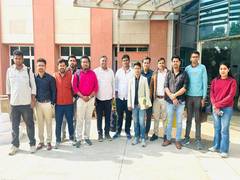
Snow Leopard: 'Ghost of Himalayas' are found year-round in J-K; Report offers new hope for high-altitude biodiversity
A landmark camera trapping study conducted by the Nature Conservation Foundation (NCF) and the Wildlife Protection Department of Jammu and Kashmir has confirmed year-round presence and breeding activity of snow leopards in the Union Territory -- marking a significant breakthrough for high-altitude biodiversity conservation in India.
ANI
Aug 18, 2025 19:35 IST

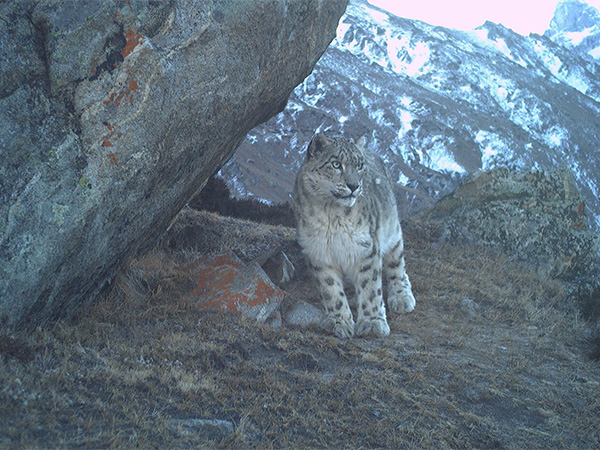
New Delhi [India], August 18 (ANI): The snow leopard, one of the world's most elusive big cats, though hard to track, is silently not only surviving but thriving and is a resident population in Jammu and Kashmir all year round, according to findings of a new survey.
The existence of these "grey ghosts of the mountains" came to be known through anecdotal sightings in the remote mountains of the Himalayas, and there was no verifiable source to confirm their presence except for some fleeting footage captured by camera traps.
This proved to be a major challenge for researchers to estimate the population of these apex predators, which are a highly vulnerable species.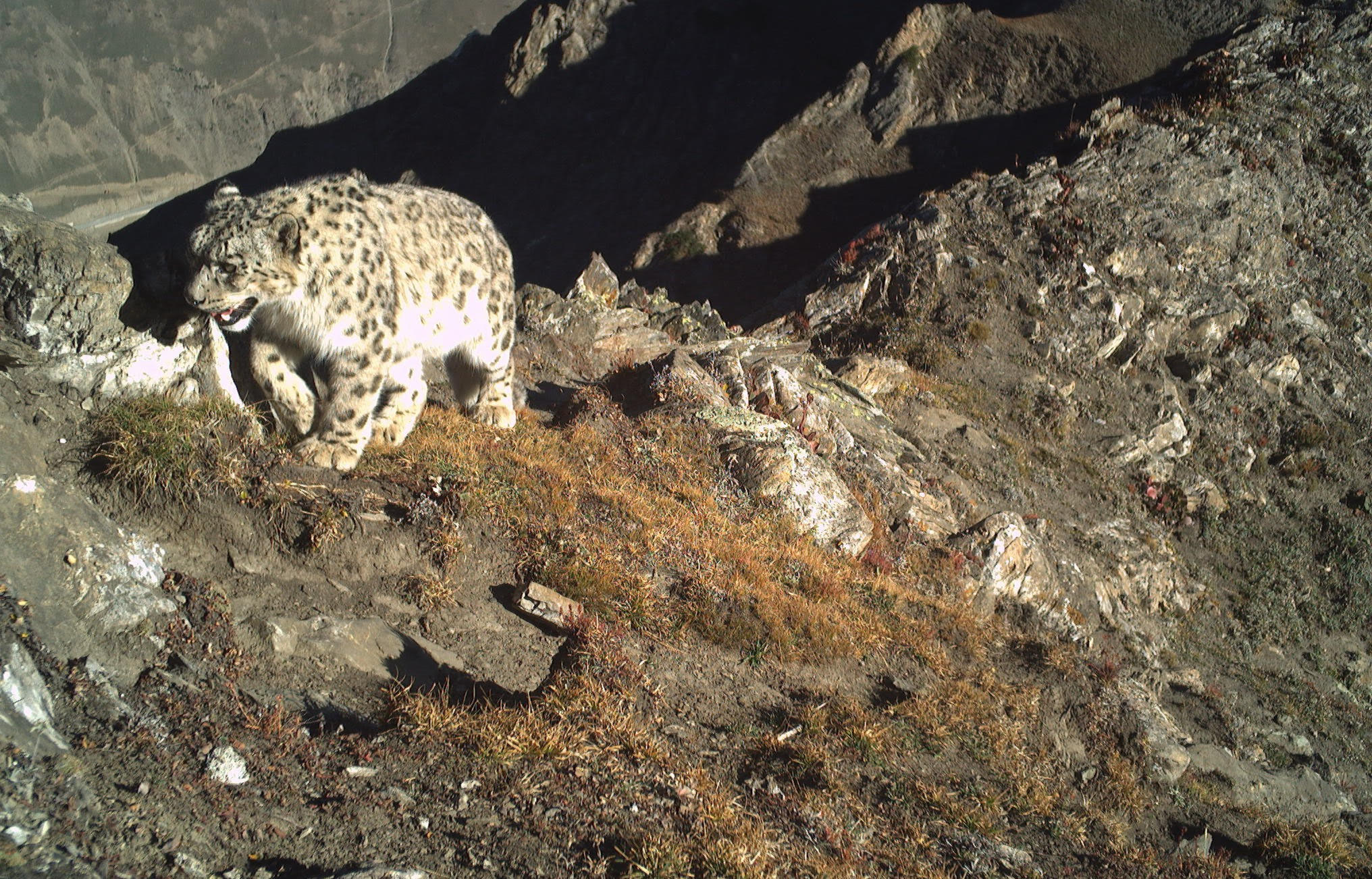
Now, a landmark camera trapping study conducted by the Nature Conservation Foundation (NCF) and the Wildlife Protection Department of Jammu and Kashmir has confirmed year-round presence and breeding activity of snow leopards in the Union Territory -- marking a significant breakthrough for high-altitude biodiversity conservation in India.
Conducted between 2022 and 2025 across the Kishtwar Himalayas, this effort was launched under the nationwide Snow Leopard Population Assessment in India (SPAI) protocol and supported by the Royal Enfield Social Mission.
"We started the project in 2022 and confirmed the presence of snow leopards in the UT of J-K," said Shahid Hameed, Wildlife Research and Project Coordinator at NCF and one of the co-authors of the study.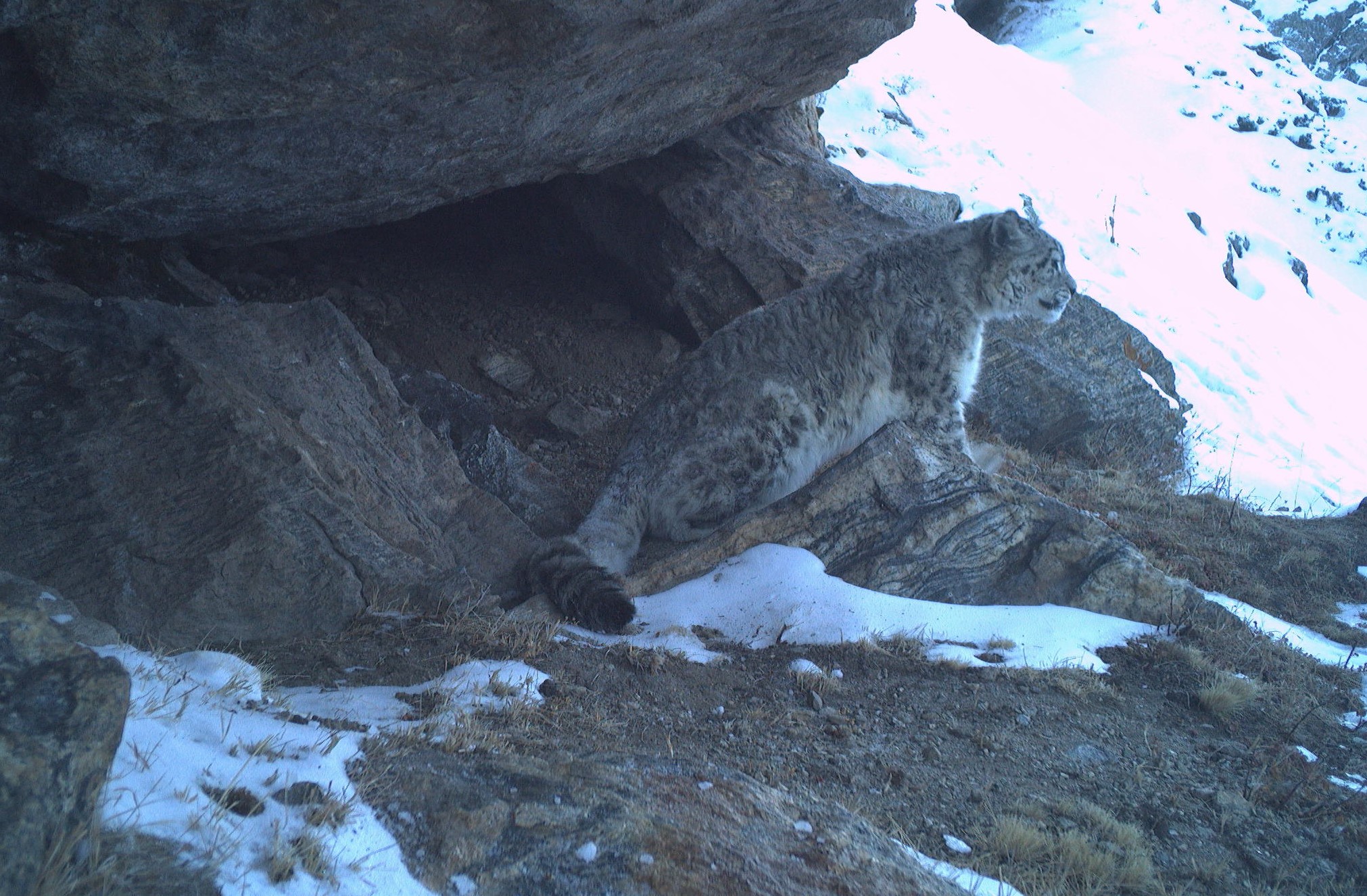
According to the Global Snow Leopard and Ecosystem Protection Programme (GSLEP), the total snow leopard population in the world is roughly estimated at between 4,000 and 6,500.
For India, the latest population estimate is 718, meaning India has around one-ninth of the total population of snow leopards.
Hameed said that previously, there was no verifiable source to confirm the presence of snow leopards, with surveys in the Western Himalayas being limited to Ladakh, Himachal Pradesh and Uttarakhand. However, later surveys established the presence of snow leopards for the first time in the Union Territory of J-K.
The first photographic records of snow leopards (Panthera uncia) in Kishtwar High Altitude National Park were obtained through camera trapping. This was documented in a study published in Oryx, a journal of Cambridge University Press and Assessment. The study, conducted by researchers from the University of Kashmir and the National Development Foundation, captured images of at least four different snow leopard individuals using camera traps.
"Our prior surveys were mostly done in the summer-autumn seasons; last year, we placed camera traps from late autumn to May 2025. This was the first systematic winter camera-trapping effort in these landscapes, despite snow accumulation reaching 10-12 feet and the risks of equipment loss," said Hameed.
Also, he said the snow leopards were previously found in the areas adjacent to Ladakh and Himachal Pradesh, and they were unclear whether the snow leopards of J-K are residents or migratory.
"For this, winter monitoring was important, and now we know they are the resident population with year-round presence in the landscape, he said.
The survey began in the year 2022 and confirmed the presence of snow leopards in Jammu and Kashmir, but the 2024-25 phase of the project brought new insights -- recording snow leopards during winter months in both Paddar (Jammu division) and Zojila (Kashmir division).
This, the survey suggests, is year-round use of the landscape, a critical indicator of stable habitat and a resident population.
The Nature Conservation Foundation Coordinator explained that camera trapping is one of the methods to record wildlife without actually being present in the field.
"The camera trap does the job of a field observer. We strategically place these cameras in the field based on our understanding of the landscape and ecology/behaviour of our target animal. These cameras are triggered by motion, and once an animal passes in front of the camera, the sensor detects the motion and activates the camera to take photos, said Hameed.
We predicted the distribution of snow leopards based on data collected across approximately 12,000 km2 from the Union Territory of Jammu and Kashmir,
Over 3,000 camera trap nights across Kishtwar High Altitude National Park (KHANP), Paddar, and Zojila resulted in the identification of at least 12 adult snow leopards, with an estimated presence of up to 20 individuals. Notably, the presence of at least a mother with cubs in Kishtwar confirms that this is a breeding population, according to the findings of the survey.
"These findings reaffirm the importance of Jammu and Kashmir as a key snow leopard stronghold. It is time to treat the Kishtwar Himalayas not as isolated valleys, but as part of an interconnected conservation landscape," said Hameed.
Apart from snow leopards, the study also documented the presence of 16 other mammal species in the region, including the rare Himalayan brown bear, Himalayan wolf, common leopard, Kashmir musk deer, stone marten, pika, Asiatic ibex, and red fox.
"Much of the credit must go to the continued commitment of the Jammu and Kashmir Wildlife Department to conserve their high-altitude homes," said Hameed.
According to Vigyat Singh, Director- Operations of the Eicher Group Foundation, the CSR arm of Royal Enfield, Snow leopards are more than just an indicator species. "Conserving their habitat reflects the overall health and resilience of high-altitude ecosystems."
"In some instances, both snow leopards and common leopards were detected at the same camera locations in Paddar, raising important questions about species interactions and the possible impact of climate change on range shifts," Singh explained.
The survey also included a landscape-level threat assessment based on interviews with over 300 households across Paddar, Warwan, Dacchan and Marwah. Livestock depredation and crop damage emerged as major challenges impacting the primary livelihood of the locals, with a need for more context-specific mitigation strategies. These losses shape community attitudes towards wildlife and demand the need for conflict resolution interventions.
As part of its community engagement efforts, the team conducted six outreach workshops, in collaboration with the Wildlife Research and Conservation Foundation (WRCF), reaching over 1,200 participants, including students and frontline forest staff.
These sessions included biodiversity awareness and demonstrations of field equipment, mock drills for handling human-wildlife conflict, and hands-on conservation education.
The report underscores the need for landscape-level, adaptive conservation strategies, in line with the vision of the Government of India's Project Snow Leopard and the Kunming-Montreal Global Biodiversity Framework, which places strong emphasis on the role of local communities in conservation.
"We are helping the Project Snow Leopard by providing robust data on the distribution and population sizes of the snow leopard and also helping them to prioritise the areas of urgent conservation through our science-based approach," said Hameed.
The Government of India launched Project Snow Leopard in 2008 with the goal of conserving high-altitude wildlife like snow leopards while ensuring that local communities are part of the process.
For the NCF study, Hameed said in landscapes where snow leopards were recorded, the researchers also mapped the threats faced by both snow leopards and local people.
"Agropastoral communities living in these high-altitude regions experience significant livestock depredation, and in response, retaliatory killing of snow leopards sometimes occurs," he said.
Snow leopards and their habitats currently face severe global threats, including rapid climate change, habitat degradation, prey depletion, retaliation due to livestock depredation, poaching, and illegal wildlife trade.
Asked about the impact on the big cats of climate-driven changes like landslides and flash floods that have impacted areas in Jammu and Kashmir recently, Hameed said, "The landslides and cloudbursts are directly linked to climate change and increasing anthropogenic pressures in these fragile and ecologically sensitive landscapes."
"While such events may not directly impact the snow leopard, they signal the severity of climate change is pronounced in these areas and foreshadow negative consequences for both the species and its habitat," he said.
The way forward for the study, said its authors, is to continue to monitor snow leopards in key areas and work across the Kishtwar Himalayas in the long term.
The idea, they said, is to understand how snow leopards are using this landscape across space and time, especially in navigating different types of land uses, seasonal variations and climate-driven changes such as glacial melt.
"We are also committed to better understanding threats faced by snow leopards and other mammals in this landscape such that we can devise appropriate conservation interventions," the authors said. (ANI)
Tags:
Get the App