Scientist Prahlada Ramarao recalls his journey of developing Akash missile system that foiled Pakistan's aerial intrusions
rahlada Ramarao, the Former DRDO scientist behind India's Akash missile system, recently shared insights into the crucial moments and challenges during the missile's development.
ANI
May 17, 2025 10:09 IST

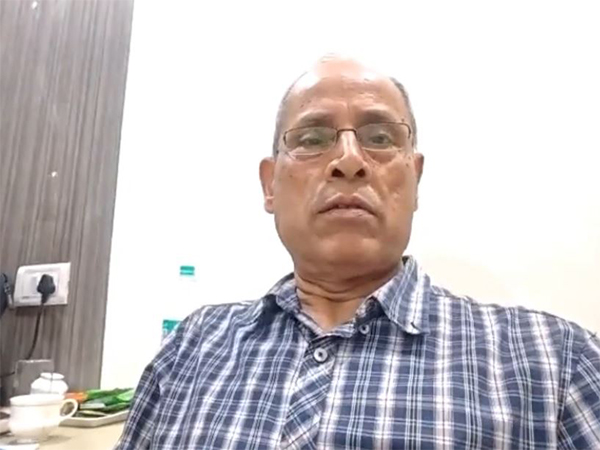
Raipur (Chhattisgarh) [India], May 17 (ANI): Prahlada Ramarao, the Former DRDO scientist behind India's Akash missile system, recently shared insights into the crucial moments and challenges during the missile's development.
The Akash missile, which has successfully intercepted enemy missile threats, was first conceptualised in 1983, when Ramarao was a young scientist at the Defence Research and Development Laboratory (DRDL) in Hyderabad. At that time, he was working under the guidance of Dr APJ Abdul Kalam, the Director of the lab.
In an interview with ANI, Ramarao reflected on the long journey of developing India's missile technology. He also highlighted his close collaboration with Kalam during the initial stages of the project in the 1980s.
Recalling his early experiences, Ramarao said, "In 1983, I was a junior scientist, working alongside Dr Kalam. He was my mentor, and we would frequently interact on testing and mathematical modelling. I vividly remember when Dr. Kalam asked me a question, and I prepared a chart to present my findings to him. He was satisfied with the way I had perceived the problem."
In 1984, the missile system was officially named "Akash." Ramarao's dedication and hard work eventually led to his appointment as the Project Director of the Akash missile program. At the time, he felt overwhelmed by the responsibility, given his youth and the scale of the project.
"In 1984, the name of the missile was given as AKASH. To my pleasant surprise, I was given the title of Project Director. I was young at that time and scared about handling such a massive responsibility. The project was taking longer than anticipated, with over 15 years of work, and I was concerned about whether I could manage it," Ramarao recalled.
The development of the Akash missile faced several hurdles. The missile, along with its radar systems and ground infrastructure, needed to function in perfect harmony to counter fast-moving, manoeuvring aircraft equipped with electronic warfare technology.
"It was complex--the missile was complex, the radar, the ground system, and the entire ecosystem were also complex. The target is the aircraft, which includes flying, manoeuvring... and also it carries electronic warfare. It is a very tough job. It took 15 years; for 10 years, we were doing research and development. In the last 3 years, we did the testing and later asked the armed forces to come for flight testing. That is how it took place," he explained.
Ramarao also highlighted the unique challenges posed by the missile's design, particularly its ability to engage multiple targets simultaneously.
"Everything was a challenge. We were all very young, most of us were under 30. The Air Force and Army had specified that the missile should be a multi-target handling surface-to-air missile system. If the enemy sent 6-8 aircraft, the missile had to destroy all of them at once. The radar had to be customised for beam agility, so the missile wouldn't miss a target," Ramarao said.
He further elaborated, "The enemy aircraft had to be matched with us, as in which missiles would go to which aircraft. That could have also been done because of the intelligence we have built in the radar and the command-control system inside the missile. This would ensure that it would match different targets, missiles simultaneously, accurately, and reliably."
The coordination between the radar, command and control systems, and the missile itself was crucial to ensure accurate targeting and simultaneous engagements of multiple targets.
"The radar had to be customised specially for beam agility. The electronic beams should be swift and at a fast speed so that we cannot miss the target," he said.
Another significant challenge was the missile's speed. Ramarao discussed the creation of a special system called the Ramjet propulsion system to enhance the missile's speed
"The other biggest challenge was the speed of the missile. We had to make a very special propulsion called RAMJET propulsion for the system. This also took a lot of time. We had 1,000 scientists working in about 12 laboratories all across the country. Coordinating all of them to get the desired results was a monumental task," he recalls.
"Despite the challenges, the entire team's dedication and the relentless support of Dr Kalam kept the project on track," he said.
With its successful testing and eventual deployment, the Akash missile system became a cornerstone of India's defence, playing a vital role in safeguarding the country against external threats.
Ramarao's perseverance and Dr Kalam's visionary leadership turned what began as an ambitious dream in the 1980s into a significant defence milestone for India.
Operation SINDOOR emerged as a calibrated military response to an evolving pattern of asymmetric warfare, one that increasingly targets unarmed civilians along with military personnel.
The terrorist attack on tourists in Pahalgam in April 2025 served as a grim reminder of this shift. India's response was deliberate, precise, and strategic.
Without crossing the Line of Control or international boundary, Indian forces struck terrorist infrastructure and eliminated multiple threats.
However, beyond tactical brilliance, what stood out was the seamless integration of indigenous hi-tech systems into national defence. Whether in drone warfare, layered air defence, or electronic warfare,
As part of Operation Sindoor, Battle-proven AD (Air Defence) systems like the Pechora, OSA-AK and LLAD guns (Low-level air defence guns). Indigenous systems such as the Akash demonstrated stellar performance.
AKASH is a Short Range Surface to Air Missile system to protect vulnerable areas and vulnerable points from air attacks.
The AKASH Weapon System can simultaneously engage multiple targets in group mode or autonomous mode.
It has built-in Electronic Counter-Counter Measures (ECCM) features. The entire weapon system has been configured on mobile platforms. (ANI)
Get the App