 हिंदी खबर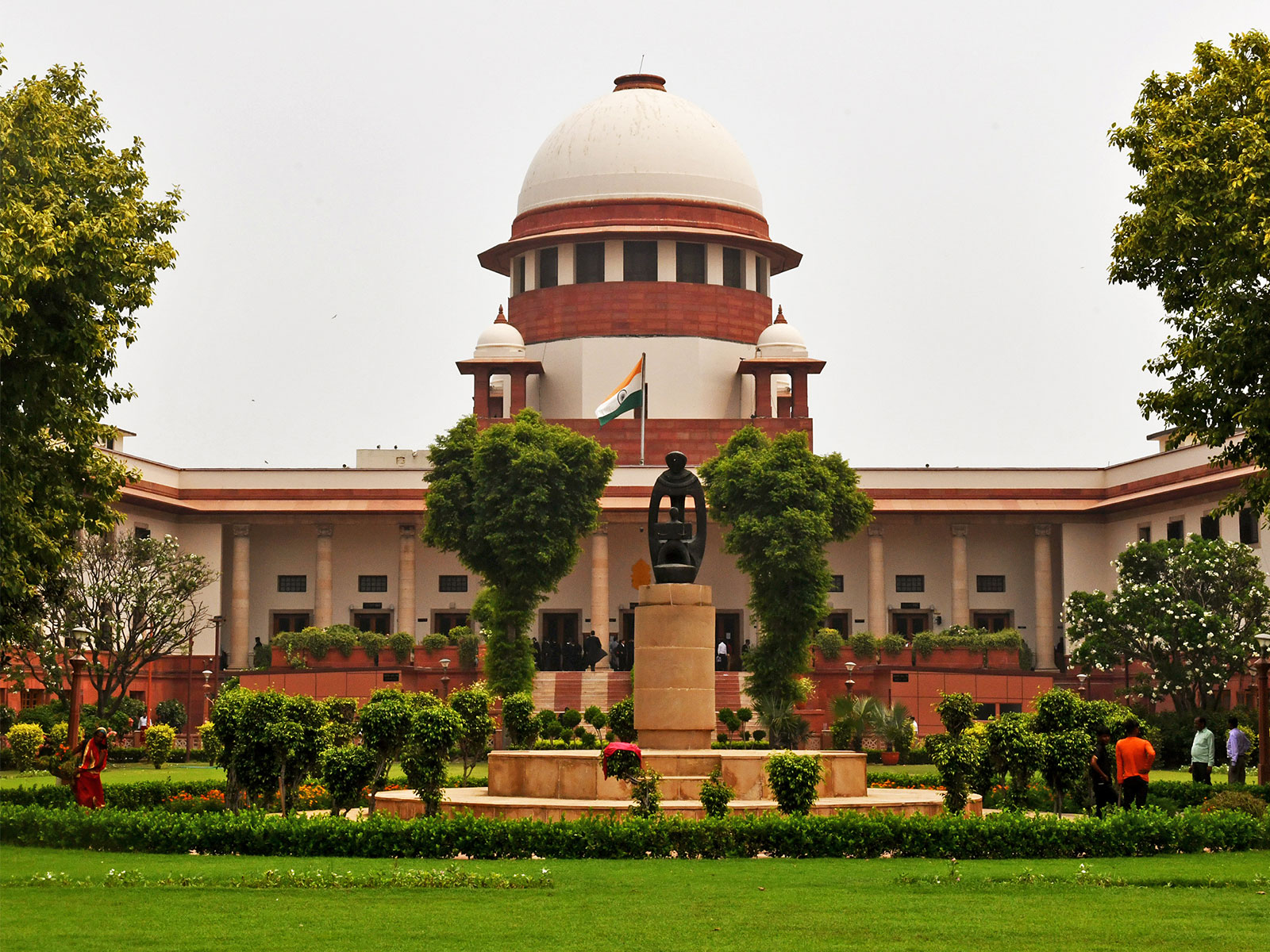

New Delhi [India], November 20 (ANI): The Supreme Court on Thursday pronounced its opinion advisory on whether it can "impose" timelines on the President and State Governors for acting on Bills passed by State Legislatures.
The Supreme Court has opined that courts cannot set timelines for the President and Governors to grant assent to bills passed by the state legislature.
At the same time, the bench led by Chief Justice of India BR Gavai clarified that governors cannot indefinitely withhold assent to bills.
The bench said that the governors must engage in dialogue with state legislatures to resolve concerns.
A Constitutional bench led by Chief Justice of India BR Gavai issued its opinion while answering 13 questions referred to it by the President Draupadi Murmu under Article 143 of the Constitution, pertinently, whether timelines can be fixed for the Governor and the President to grant assent to State Bills.
West Bengal Governor CV Ananda Bose called SC's statement a "landmark judgement" saying that the apex court has declared that "the Governor is not a rubber stamp."
"The landmark judgment by the Supreme Court has cleared the jurisdiction of the Government vis-a-vis the elected CM. The Court has unequivocally declared that the Governor is not a rubber stamp," CV Ananda Bose said.
DMK leader Saravanan Annadurai welcomed the Supreme Court's statement, given that the governor acts in accordance with the constitution.
"If the governors act in good faith, if the governors are going to expeditiously dispose of the bills that has been presented to them by the state assemblies. Then where is the question of deemed assent coming and the only question that has to be asked, is this - what other job does the Governor have other than giving assent to the bills?" he said.
"They live in luxurious mansions, which have been given to them only so that they give assent to the bills and act as per the Constitution. If you ask me, this is a setback when the BJP is in governance, yes, it is a setback. If governors act constitutionally, then it is not a setback," he added.
The DMK spokesperson further suggested that there is no need to have governors, and their work can be done by the Chief Justice of the state.
"In the present constitution of things, we don't require governors. The chief justice of the state can do all the work a governor does. He has no other role to play other then a ceremonial... That is why we call him a rubber stamp," he said.
The Presidential reference was made after the judgment delivered by a two-judge bench in the Tamil Nadu Governor case, which laid down timelines for the President and the Governor to act on Bills.
President Droupadi Murmu, in a rebuttal to that April 8 verdict, has questioned the validity of such a ruling, emphasising that the Constitution does not prescribe any such time frames.
The President's response highlighted that Article 200 of the Constitution of India delineates the powers of the Governor and the procedures for granting or withholding assent to Bills, as well as reserving a Bill for the President's consideration. However, Article 200 does not specify any timeline for the Governor to exercise these constitutional options.
Similarly, Article 201 outlines the President's authority and process for assenting to or withholding assent from Bills, but it does not impose any deadlines or procedures for the exercise of these constitutional powers.
Furthermore, the Constitution of India recognises numerous instances where the President's assent is required before legislation can take effect in a state. The discretionary powers of the Governor and the President, as provided under Articles 200 and 201, are shaped by multiple considerations, including federalism, legal uniformity, national integrity and security, and the doctrine of separation of powers.
In the April 8 verdict, the SC stated that the Governor does not have the veto power to sit over bills sent to him by the State legislature.
The Governor must assent to a bill when it is presented to him after reconsideration by the State assembly; he can refuse assent only if the bill is different, the apex court said. (ANI)
SC draws line on setting timelines for President, Governors, advocate for dialogue
ANI | Updated: Nov 20, 2025 23:11 IST




