PM Modi highlights GST reduction, income tax benefits calls it "double bonanza"
Prime Minister Narendra Modi, addressing the nation a day ahead of the implementation of recently made GST reforms, linked the move to the government's broader reform agenda and said the reduction in GST rates would complement income tax benefits given earlier this year, creating a "double bonanza" for citizens.
ANI
Sep 21, 2025 17:58 IST

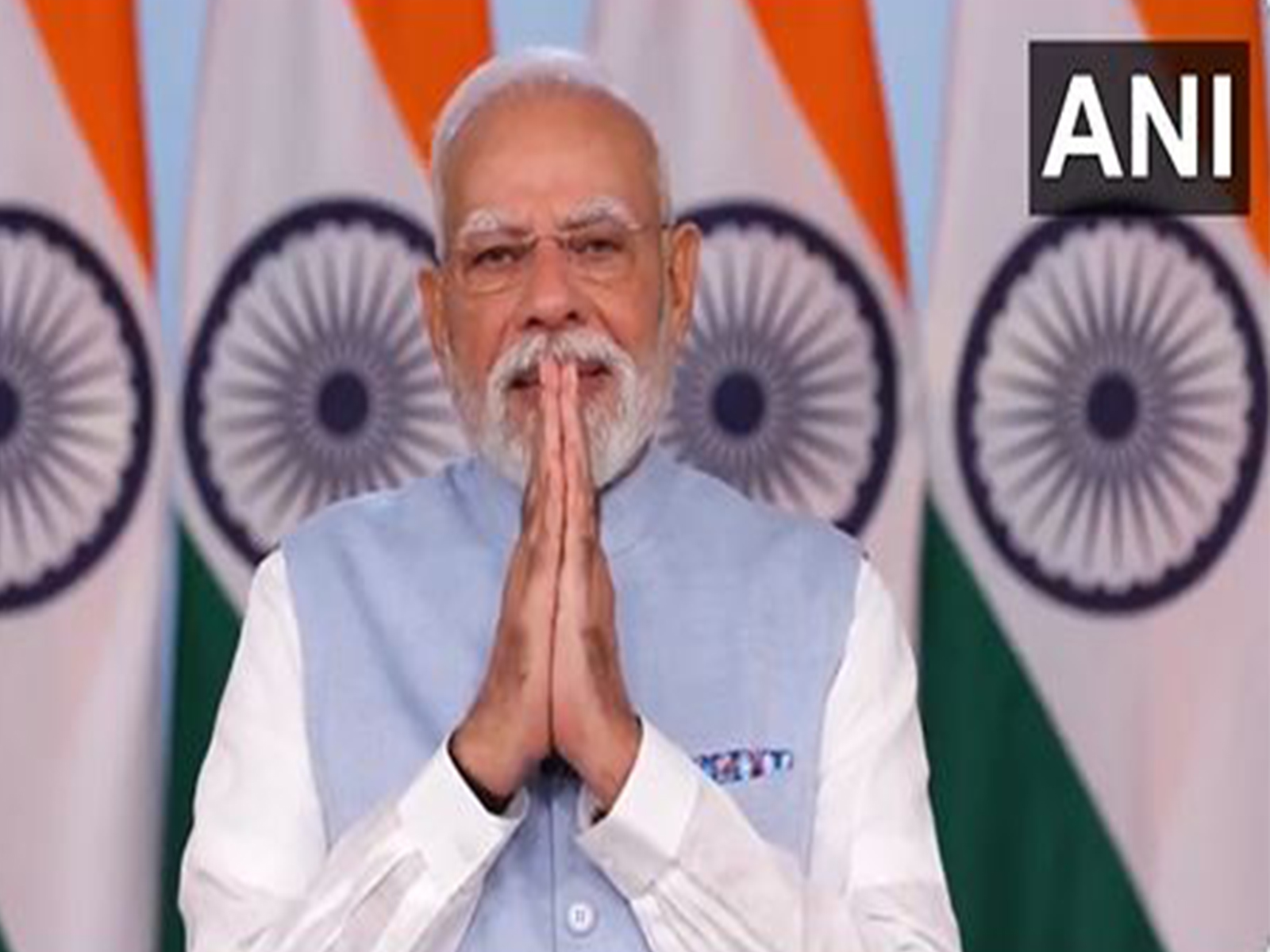
New Delhi [India], September 21 (ANI): Reduction in the Goods and Services Tax (GST) rates would complement income tax benefits given earlier this year, creating a "double bonanza" for citizens, Prime Minister Narendra Modi said on Sunday.
In his address to the nation on the eve of the implementation of the new Goods and Services Tax (GST) reforms, the Prime Minister linked the move to the government's broader reform agenda .
PM also lauded India's socio-economic progress, announcing that 25 crore people have overcome poverty in the last eleven years, giving rise to a dynamic "neo-middle class".
He described this neo-middle class as a powerful force driving India's development story
"In the last 11 years, 25 crore people in the country have defeated poverty. Having emerged from poverty, a large group of 25 crore people, known as the neo-middle class, is playing a significant role in the country today. This neo-middle class has its own aspirations and dreams," the Prime Minister said.
"This year, the government presented a gift by making income up to Rs 12 lakh tax-free and naturally, when income tax relief up to Rs 12 lakh is granted, the lives of the middle class undergo a profound transformation, bringing about so much simplicity and convenience...Now, the poor, the neo-middle class, and the middle class are receiving a double bonanza. With the reduction in GST, it will be easier for the citizens of the country to fulfil their dreams...," he said.
Calling reforms a "continuous process," Modi said the latest GST changes were crafted to meet the country's "current needs and future dreams."
"Reform is a continuous process. As times change and the country's needs change, next-generation reforms are equally necessary. These new GST reforms are being implemented, keeping in mind the country's current needs and future dreams..."
Further explaining the GST structure that will now have only two tax slabs--5% and 18%, the PM said that this move will directly benefit consumers by making essential goods and services more affordable.
"In the new form, there will now be only 5% and 18% tax slabs. This means that most everyday items will become cheaper. Food items, medicines, soap, brush, paste, health and life insurance, many such goods and services will either be tax-free or only a 5% tax will have to be paid. Out of the goods which were earlier taxed at 12%, 99% of the items have now come under the slab of 5% tax...," he said.
Reflecting on the journey of the GST since its rollout in 2017, the Prime Minister said the reforms represent the fulfilment of the country's long-standing dream of "One Nation, One Tax."
"In 2017, India embarked on a transformative journey by implementing GST reforms, marking the end of an era and the beginning of a new chapter in its economic history," he said
"For decades, our country's people and our country's traders were entangled in a web of various taxes. Octroi, entry tax, sales tax, excise, VAT, service tax--dozens of such taxes existed in our country. To send goods from one city to another, we had to cross countless checkpoints...," he added.
"I remember, in 2014, when the country entrusted me with the responsibility of Prime Minister, an interesting incident was published in a foreign newspaper during that initial period. It described the difficulties of one company, which said that if it had to send its goods from Bengaluru to Hyderabad, 570 km away, it was so difficult that they considered it and said that they would prefer to first send its goods from Bengaluru to Europe and then send the same goods from Europe to Hyderabad.
"This was the situation at that time due to the complexities of taxes and tolls...At that time, millions of such companies, along with millions of countrymen, faced daily problems due to the maze of various taxes. The increased expenses incurred in transporting goods from one city to another were borne by the poor, and customers like you were charged. It was essential to free the country from this situation"
PM Modi said the new reforms would usher in a countrywide "GST Bachat Utsav," benefiting poor, middle-class, farmers, traders, and entrepreneurs alike.
As PM's address came a day ahead of Navratri, he extended my best wishes and said, "From tomorrow, the festival of Navratri is starting. I extend my best wishes to you. From the first day of Navratri, the country is taking an important step towards Aatmanirbhar Bharat. Tomorrow, on the first day of Navratri, Next-Generation GST reforms will come into effect with sunrise."
The reform in the Goods and Services Tax structure was approved during the 56th meeting of the GST Council earlier this month is set to come into effect from September 22. The current four-rate system will now be replaced with a streamlined two-slab regime of 5 per cent and 18 per cent. A separate 40 per cent slab has been retained for luxury and sin goods.
This new framework is expected to ease compliance, reduce consumer prices, boost manufacturing, and support a wide range of industries, from agriculture to automobiles and from FMCG to renewable energy, and is intended to lower the cost of living, strengthen MSMEs, widen the tax base, and drive inclusive growth.
In the fast-moving consumer goods (FMCG) and dairy sector, major brands like Amul and Mother Dairy have announced substantial price cuts, reflecting the full benefit of the GST reduction.
Items like milk, butter, ghee, paneer, cheese, ice cream, snacks, and frozen foods have been brought under the 5 per cent slab, due to which 100 g of Amul butter will now cost Rs 58 instead of Rs 62, and Ultra High Temperature milk (UHT) has dropped to Rs 75 per litre from Rs 77. Mother Dairy has also slashed prices on milkshakes, paneer, ghee, and frozen products. (ANI)
Tags:
Get the App