 हिंदी खबर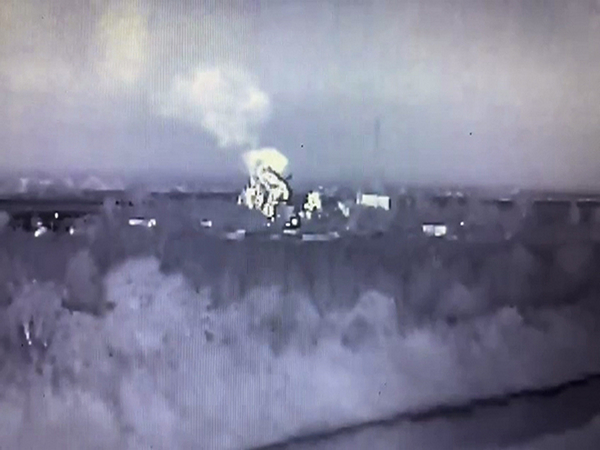

New Delhi [India], May 12 (ANI): India's firm response to Pakistan through 'Operation Sindoor' has delivered a multi-dimensional reply against our neighbour's support for terrorism, blending military precision with strategic non-military measures to neutralise threats, deter aggression, and isolate it economically and diplomatically, sources revealed.
The operation, launched on May 7 in retaliation to the April 22 Pahalgam terror attack that killed 26 people, has showcased India's zero-tolerance policy toward terrorism while maintaining strategic restraint and garnering international support.
On the military front, the Indian Armed Forces conducted coordinated precision missile strikes on nine terrorist facilities, targeting four in Pakistan, including Bahawalpur and Muridke, and five in Pakistan-occupied Kashmir, such as Muzaffarabad and Kotli.
These sites served as key command centres for terror groups Jaish-e-Mohammed (JeM) and Lashkar-e-Taiba (LeT), responsible for attacks like in Pulwama in 2019 and in Mumbai in 2008.
In response to Pakistan's retaliatory drone and missile attacks on May 7-9, targeting Indian cities and military installations, India deployed kamikaze drones to destroy Pakistani air defence systems, including neutralising a system in Lahore, sources revealed.
India's air defence system effectively neutralised all incoming threats, resulting in near-zero casualties or material losses from the drone attack and exposing flaws in Pakistan's HQ-9 system.
Further escalating its military response, India carried out strikes on the nights of May 9 and May 10, marking the first instance of a country damaging air camps of a nuclear-armed nation.
According to sources, within three hours, 11 Pakistani air bases, including Nur Khan, Rafiqui, Murid, Sukkur, Sialkot, Pasrur, Chunian, Sargodha, Skaru, Bholari, and Jacobabad, were attacked.
Before-and-after photos of the Shahbaz airbase at Jacobabad revealed extensive destruction.
The strikes targeted ammunition depots and bases like Sargodha and Bholari, which housed Pakistan's F-16s and JF-17 fighter jets, leading to the destruction of 20 per cent of Pakistan's air force infrastructure.
The sources also revealed that a significant strike on Bholari Air Base killed over 50 people, including Pakistan's squadron leader Usman Yousuf and four airmen, while also destroying several fighter jets.
Along the Line of Control (LoC), Indian troops responded to Pakistani artillery and mortar shelling in the Poonch-Rajouri sector of Jammu and Kashmir with calibrated counterfire, destroying terrorist bunkers and Pakistani positions.
Complementing its military actions, India employed non-military measures to impose economic and diplomatic costs on Pakistan.
India's suspension of the Indus Waters Treaty was a decisive move impacting Pakistan. The country relies on the Indus system for 80 per cent of its 16 million hectares of farmland and 93 per cent of its total water use, sustaining 237 million people and a quarter of its GDP through crops like wheat, rice, and cotton.
With limited storage capacity at Mangla and Tarbela dams, any disruption threatens agricultural losses, food shortages, water rationing, and blackouts, potentially triggering a fiscal crisis in Pakistan's fragile economy.
For India, the suspension enables full control over western rivers like Jhelum and Chenab, allowing new reservoirs to boost irrigation and hydropower in Jammu and Kashmir, Ladakh, Punjab, and Haryana; thus becoming a developmental advantage.
India also closed the Attari-Wagah border, suspending all bilateral trade with Pakistan and halting exports of key goods like onions while restricting imports such as cement and textiles. This severed the primary land-based trade route, imposing immediate economic costs on Pakistan amid its ongoing inflation and debt crisis.
Additionally, India cancelled the visas for all Pakistanis living in India. It deported them following the Pahalgam attack, banned Pakistani artists from performing or releasing content in India, and extended the ban to streaming platforms, cutting off Pakistan's cultural influence in India.
On the diplomatic front, India exposed Pakistan's terror ecosystem globally, further isolating it internationally.
Collectively, these measures have deepened Pakistan's isolation and significantly reaffirmed India's zero-tolerance stance on terrorism. (ANI)


