Op Sindoor: Decisive Indian victory redefining military strategy, deterrence says Urban Warfare expert John Spencer
Operation Sindoor has become a testament to India's growing military prowess, targeting nine key terror camps in Pakistan and Pakistan-occupied Kashmir (PoK), avenging the April 22 Pahalgam terror attack and redefining India's anti-terror strategy on the global stage, as described by John Spencer, Chair of Urban Warfare Studies at the Modern War Institute and Executive Director of the Urban Warfare Institute.
ANI
May 14, 2025 11:58 IST

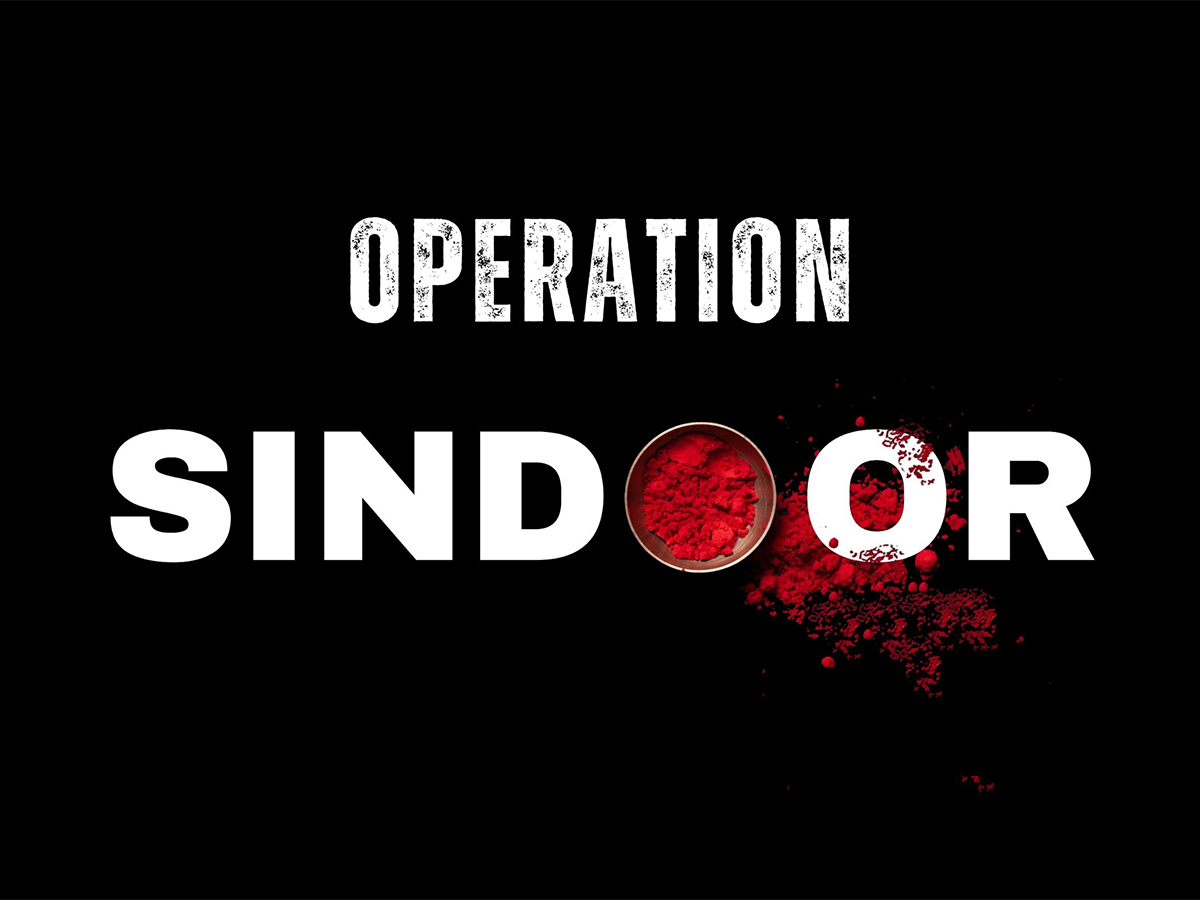
New Delhi [India], May 14 (ANI): Operation Sindoor has become a testament to India's growing military prowess, targeting nine key terror camps in Pakistan and Pakistan-occupied Kashmir (PoK), avenging the April 22 Pahalgam terror attack and redefining India's anti-terror strategy on the global stage, says John Spencer, Chair of Urban Warfare Studies at the Modern War Institute and Executive Director of the Urban Warfare Institute.
— John Spencer (@SpencerGuard) May 14, 2025
In an detailed article Posted on X, titled "Operation Sindoor: A Decisive Victory in Modern Warfare", Spencer stated that India had achieved a "massive victory" following Operation Sindoor, which he claimed is still not "completely over" despite the undertaking of the cessation of hostilities between India and Pakistan.
Spencer noted that the operation "exceeded its strategic aims" as it neutralised terrorist infrastructure and showcased India's military dominance, reinforcing deterrence as well as introducing a "new national security doctrine".
He called the action decisive and not just "symbolic" and that it was applied with clear intent. He stated that the cessation was "not merely a pause" but a "strategic hold" following this military victory.
Spencer noted that unlike the previous attacks executed by India following such terror attacks, India "didn't wait" nor appealed to the international forum for mediation or issued a diplomatic demarche but launched "warplanes".
The swift and precise calibration on May 7 sent a clear message that "terror attacks launched from Pakistani soil will now be treated as acts of war."
Spencer further recognised Prime Minister Narendra Modi's new doctrine as "India will not tolerate any nuclear blackmail. India will strike precisely and decisively at the terrorist hideouts developing under the cover of nuclear blackmail."
He further acknowledged PM Modi's unveiling of a strategic doctrine as he said, "Terror and talks can't go together. Water and blood can't flow together."
In his article Spence says that the nine precision strikes on major terror training camps, particularly Pakistan's Bahawalpur and Muridke, on May 7; the damages done to the 11 Pakistani military airbases; and the "temporary halt" in firing weren't just a tactical success but were a "doctrinal execution" under live fire. These actions had redefined India's stance against terrorism by drawing and enforcing a new red line: terror attacks from Pakistani soil will now be met with military force. Additionally, it, combined with a display of overwhelming military superiority, has restored deterrence and asserted India's strategic independence.
"Critics who argue India should have escalated further miss the point, as strategic success lies not in the scale of destruction but in achieving the desired political effect", Spencer writes.
"India was not fighting for vengeance. It was fighting for deterrence. And it worked," he wrote.
"India's restraint is not weakness--it is maturity. It imposed costs, redefined thresholds, and retained escalation dominance. India didn't just respond to an attack. It changed the strategic equation," Spencer noted.
He argues that in an era defined by "forever wars" and cycles of violence without strategic direction, Operation Sindoor stands apart. It offers a model of limited war with clearly defined ends, matched ways and means, and a state that never relinquished the initiative.
"India absorbed a blow, defined its objective, and achieved it--all within a contained timeframe. The use of force in Operation Sindoor was overwhelming yet controlled--precise, decisive, and without hesitation. That kind of clarity is rare in modern war," Spencer acknowledged.
He states that India of 2008 absorbed attacks and waited; this India hits back--immediately, precisely, and with clarity.
According to Spencer, Prime Minister Narendra Modi's doctrine, combined with India's advancing domestic defence industry and the professionalism of its armed forces, signals a country no longer preparing for the last war but for the next one. The halt in operations is not the end of Operation Sindoor but a pause. India holds the initiative. If provoked again, it will strike again.
Spencer believes that Operation Sindoor was a modern war--fought under the shadow of nuclear escalation, with global attention, and within a limited objective framework. By every measure that matters, it was a strategic success and a decisive Indian victory. (ANI)
Tags:
Get the App